UPS Package Eligibility & Cost Estimator
Enter package dimensions and weight to see eligibility status.
You’re staring at a box that looks like it might swallow your car. It’s huge, heavy, and you need to send it across the country (or the ocean) using UPS. But here is the hard truth: UPS isn’t a moving company. They have strict physical limits on what they will accept, and if you cross them, your package gets rejected, delayed, or hit with massive fees.
The short answer? The absolute largest single piece UPS will ship via standard ground services is generally capped at 150 pounds in actual weight and 130 inches in length plus girth combined. If you exceed these numbers, you are no longer shipping a "package"-you are shipping freight, and that requires a completely different logistics strategy.
| Metric | UPS Ground / Air | UPS Freight (LTL) |
|---|---|---|
| Max Actual Weight | 150 lbs (68 kg) | No single limit per pallet (up to 20,000+ lbs total) |
| Max Length + Girth | 130 inches (330 cm) | N/A (Based on linear feet/pallets) |
| Max Length (Single Side) | 108 inches (274 cm) | Depends on trailer type |
| Handling Type | Conveyor belt compatible | Forklift/Pallet jack required |
Understanding the Hard Caps: Weight and Dimensions
Let’s break down why those numbers exist. UPS Ground and UPS Air rely on automated sorting facilities where packages fly along conveyor belts. If a box is too long, it jams the belt. If it’s too heavy, it breaks the belt or injures the human workers who have to lift it into trucks.
Here are the specific limits you need to memorize before you tape that box shut:
- Actual Weight Limit: No single package can weigh more than 150 pounds (68 kg). This is non-negotiable for standard parcel services. Even if your box is small but weighs 151 pounds, UPS will likely refuse it or force you to split it.
- Length + Girth Limit: This is the formula that trips people up. You calculate this by taking the longest side of the box (Length) and adding the distance around the other two sides (Girth). The total cannot exceed 130 inches.
Formula: Length + [2 × Width] + [2 × Height] ≤ 130 inches - Maximum Length: Regardless of the girth, no single side of the package can be longer than 108 inches. If you have a surfboard or a long pipe, this is your bottleneck.
If your item exceeds any of these three criteria, you cannot use standard UPS labels. You must switch to UPS Freight, which handles Less-Than-Truckload (LTL) shipments using pallets and trailers instead of conveyor belts.
The Hidden Trap: Dimensional Weight
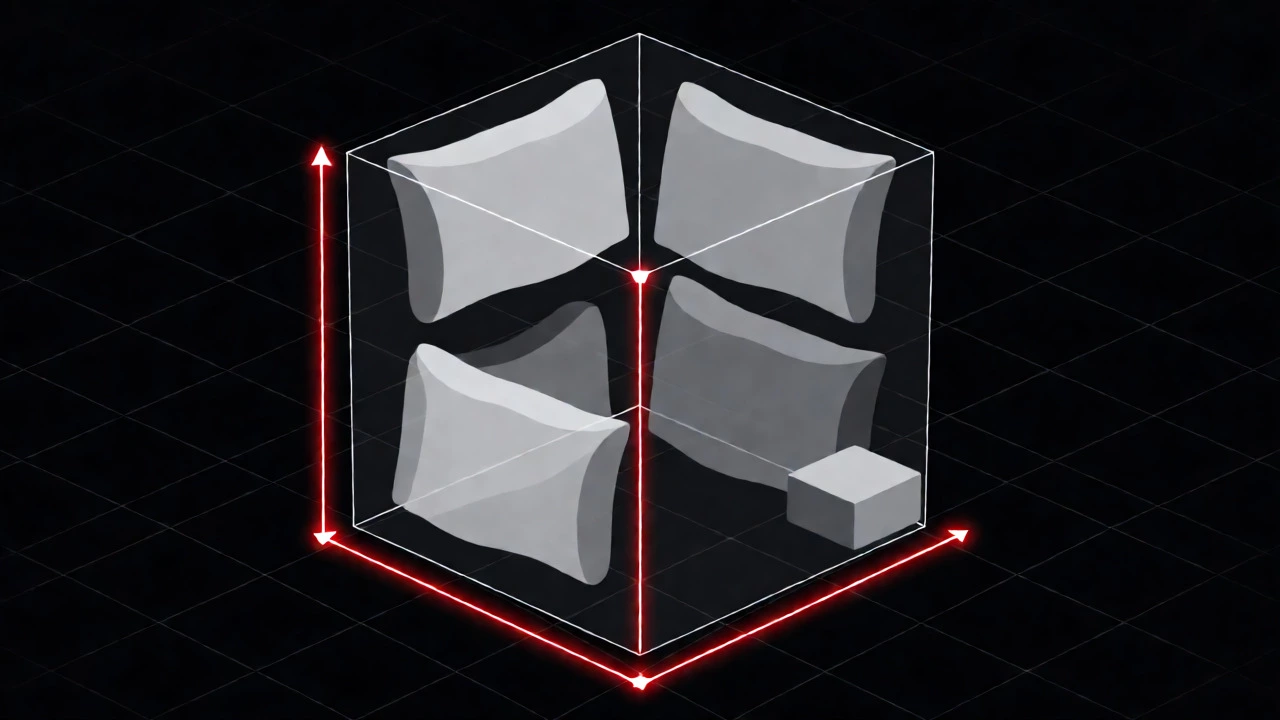
Just because your package fits within the 150-pound and 130-inch limits doesn’t mean you’ll pay a cheap price. Enter Dimensional Weight (Dim Weight), often called "volumetric weight." This is how UPS charges for space, not just mass.
Think about a giant box filled with pillows. It might only weigh 10 pounds, but it takes up as much space in the truck as a 50-pound box of books. UPS charges based on whichever is higher: the actual weight or the dimensional weight.
To calculate Dim Weight for domestic US shipments, use this divisor:
- Multiply Length × Width × Height (in inches).
- Divide the result by 139.
- If the number you get is higher than the scale weight, that’s what you pay for.
For international shipments, the divisor is usually 139 as well, but always check the specific service guide as it can vary by destination. A common mistake is packing loose items in oversized boxes. Always cut down your box size. Every inch you save reduces your billable weight significantly.
Oversize Fees: When Big Gets Expensive
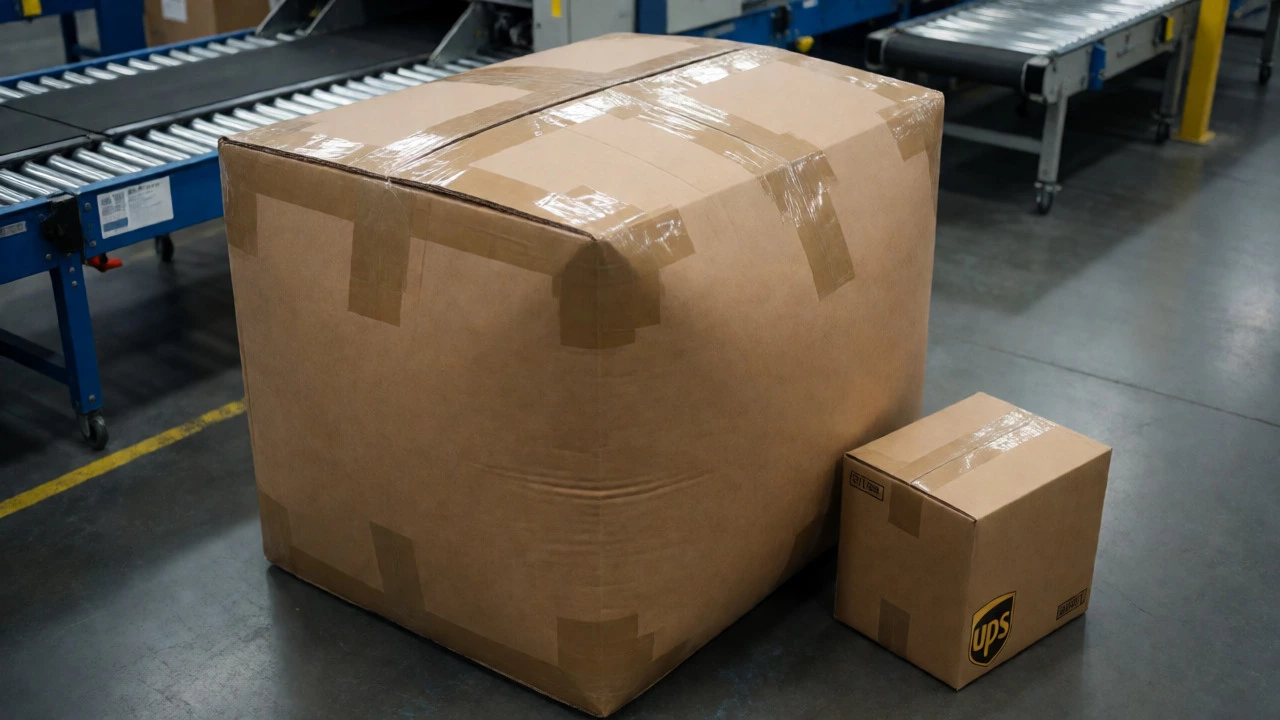
Even if you stay under the hard caps, UPS loves to charge extra for awkward shapes. These are known as Oversize Charges. You don’t need to be at the maximum limit to trigger these; you just need to be inconvenient.
You will likely face an oversize fee if:
- Your package’s Length + Girth exceeds 96 inches but stays under 130 inches.
- Your package’s actual weight is over 50 pounds (for some services) or 70 pounds (for others, depending on current rate cards).
- The package has irregular dimensions that make it difficult to stack or sort automatically.
In Toronto, I’ve seen shippers try to send a large appliance in a thin, flat box. It fits the dimension limits, but because it’s so light relative to its size, it bounces around on the conveyor belt. UPS flags this as "non-conveyable," and you get hit with a surcharge. Pro tip: Use rigid cardboard or wood crates for fragile, bulky items. Soft poly mailers for big items are a recipe for disaster and extra fees.
UPS Freight: The Alternative for Truly Huge Items
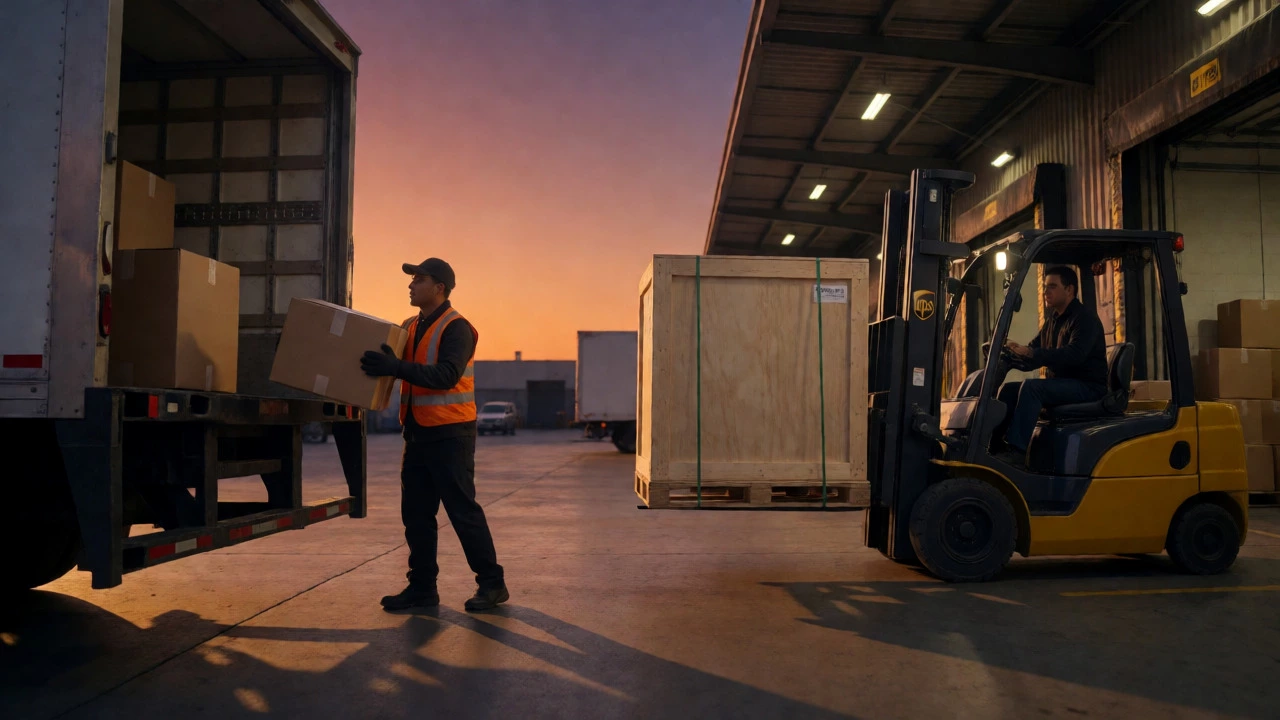
So, what do you do when your item weighs 200 pounds or is 12 feet long? You stop thinking about parcels and start thinking about freight. UPS Freight is designed for palletized goods. Unlike parcel services, freight doesn’t care about individual box dimensions as much as it cares about pallet footprint and total weight.
Key differences between Parcel and Freight:
| Feature | UPS Parcel (Ground/Air) | UPS Freight (LTL) |
|---|---|---|
| Packaging | Boxes, Envelopes | Pallets, Crates, Drums |
| Handling | Manual/Conveyor | Forklift |
| Delivery Speed | 1-5 Business Days | 2-7+ Business Days (depends on distance) |
| Insurance | Limited included coverage | Declared value protection available |
| Best For | Small electronics, clothing, documents | Furniture, machinery, bulk retail stock |
If you are shipping furniture, such as a sofa or a dining table, you almost certainly need UPS Freight. Parcel services will reject these items due to shape and weight, or charge prohibitive oversize fees. Freight allows you to consolidate multiple boxes onto one pallet, which is often cheaper per pound than sending five separate large parcels.
International Nuances: Customs and Local Carriers
Shipping internationally adds another layer of complexity. While UPS sets global standards, local regulations in the destination country can impose stricter limits. For example, shipping to remote areas in Canada or Australia might require smaller maximum sizes due to limited infrastructure in last-mile delivery hubs.
Also, remember that customs forms require accurate dimensions and weights. If you declare a package as 140 inches but UPS measures it at 135 inches, you’re fine. But if you underestimate the weight to avoid taxes, and UPS scales it heavier, you risk delays while customs officials verify the discrepancy. Always round up slightly on your declared weight to be safe.
For international shipments exceeding 150 pounds, UPS typically routes them through their air freight network rather than standard air parcel. This means longer transit times and different tracking protocols. Don’t expect overnight delivery on a 300-pound crate sent from Toronto to London.
Practical Tips to Avoid Rejection
Before you hand over your shipment, run this quick checklist to ensure smooth sailing:
- Measure Twice: Use a tape measure, not your hands. Measure the longest side, then the width and height. Calculate L+G yourself.
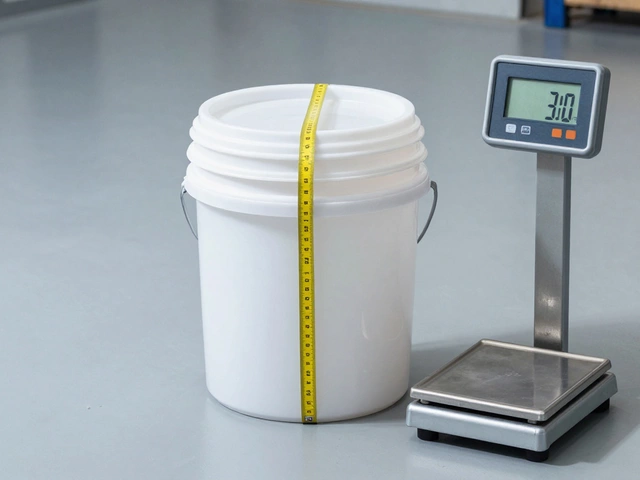
- Weigh Accurately: Use a commercial scale if possible. Home bathroom scales are inaccurate for heavy loads.
- Reinforce Corners: Large boxes collapse easily. Use corner protectors and strapping bands to keep the shape intact during transit.
- Check for Non-Conveyables: If your package is cylindrical (like a tube) or extremely flat, call UPS customer service first. They may require special handling instructions.
- Consider Splitting: If you have two 80-pound boxes, consider if they fit better together or separately. Sometimes splitting a heavy item into two lighter parcels avoids the 150-pound cap and reduces oversize fees.
Ultimately, knowing the largest package UPS will ship saves you time and money. Stay under 150 pounds and 130 inches for standard services. Go bigger, and you enter the world of freight. Plan accordingly, and your package will arrive without surprise bills.
Can I ship a package over 150 lbs with UPS?
Not via standard UPS Ground or Air parcel services. Packages over 150 lbs must be shipped via UPS Freight (Less-Than-Truckload). Freight uses pallets and forklifts, allowing for much heavier individual units, provided they are properly packaged and labeled.
How do I calculate Length + Girth for UPS?
Take the longest side of the package (Length). Then, measure the distance around the other two sides (Width and Height). Add the Length to twice the Width and twice the Height. Formula: L + (2W) + (2H). The total must not exceed 130 inches for standard UPS parcel services.
Does UPS charge extra for large packages?
Yes. UPS applies Oversize Charges for packages that are difficult to handle, even if they are under the maximum limits. This includes packages with a Length + Girth over 96 inches, or packages exceeding certain weight thresholds (often 50-70 lbs depending on the service level). These fees are automatic and appear on your invoice.
What is the difference between actual weight and dimensional weight?
Actual weight is what the scale reads. Dimensional (Dim) weight calculates the density of the package based on its volume. UPS charges whichever weight is greater. For example, a large lightweight pillow box may have a low actual weight but high dim weight, resulting in a higher shipping cost than a smaller, denser box of the same actual weight.
Can I ship a motorcycle with UPS?
A whole motorcycle is typically too large and heavy for standard UPS parcel services. It would likely require UPS Freight or specialized vehicle transport. However, parts like tires, seats, or engines can often be shipped via UPS if they meet the 150 lb and 130-inch L+G limits.