Zero-Budget eCommerce Profit Calculator
Enter your product details to see how much you can earn per sale using different fulfillment models. Remember: "No money" means you pay with time, not cash.
Unit Economics Breakdown
| Selling Price | $0.00 |
| Base Cost | -$0.00 |
| Payment Fees (~3%) | -$0.00 |
| Net Profit Per Unit | $0.00 |
Monthly Projection
Everyone says you need thousands of dollars to launch an online store. They talk about warehousing costs, inventory risks, and expensive software subscriptions. But here is the truth: you can start an eCommerce business with literally zero cash upfront if you leverage modern logistics models like dropshipping and print-on-demand. The barrier isn't money anymore; it's time and strategy.
If you have a laptop, internet access, and a few hours a day, you can build a brand that sells physical products without ever touching a box. This guide breaks down exactly how to do it in 2026, focusing on the logistical tricks that keep your bank account safe while you test ideas.
The Zero-Budget Reality Check
Before we get into the tactics, let's kill the myth that "no money" means "no effort." When you skip the financial investment, you pay with sweat equity. You won't be buying ads immediately, so you'll need to master organic traffic. You won't be hiring staff, so you'll handle customer service yourself. But the upside? If it fails, you lose nothing but time. If it works, you scale using profits, not loans.
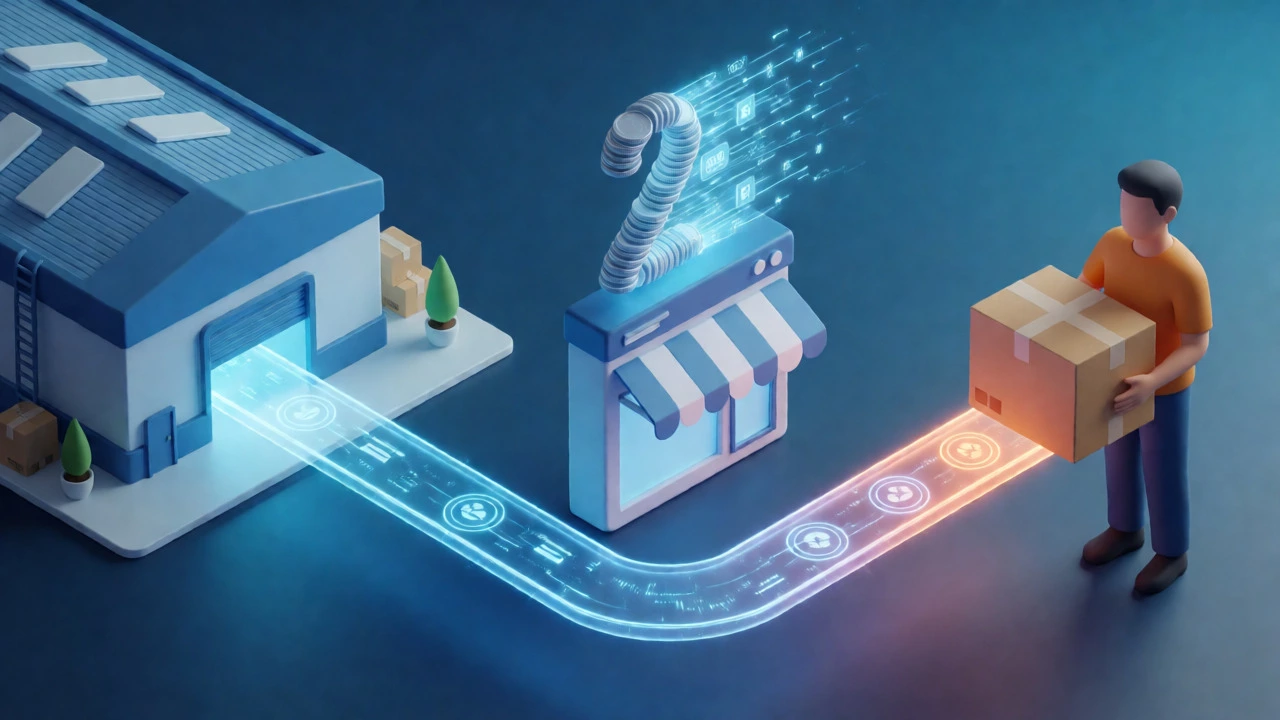
The core mechanism enabling this is outsourcing fulfillment. Traditional retail requires you to buy stock before selling it. Modern e-commerce lets you sell first, then buy from a supplier who ships directly to your customer. This reverses the cash flow problem entirely.
Choosing a Model That Doesn't Require Inventory
You cannot start with no money if you plan to buy 500 units of a gadget. You need a model where inventory costs are zero until after the sale clears. Two methods dominate this space.
| Model | Upfront Cost | Logistics Complexity | Profit Margin | Best For |
|---|---|---|---|---|
| Dropshipping | $0 | Low (Supplier handles shipping) | 15-30% | Trending gadgets, home goods |
| Print on Demand | $0 | Very Low (Automated printing/shipping) | 20-40% | Apparel, mugs, posters |
| Digital Products | $0 | None (Instant download) | 90-100% | E-books, templates, courses |
Dropshipping is a retail fulfillment method where a store doesn't keep the products it sells in stock. Instead, when a store sells a product using the dropshipping model, it purchases the item from a third party and has it shipped directly to the customer. As a result, the seller never sees or handles the product. In 2026, platforms like AliExpress, CJ Dropshipping, and Spocket integrate seamlessly with major storefronts, automating this process.
Print on Demand (POD) works similarly but applies specifically to custom-designed merchandise. You upload a design to a provider like Printful or Gelato. When a customer buys a t-shirt, the provider prints it, packs it, and ships it under your brand name. You pay only for the base cost of the shirt plus shipping after the customer pays you.
Building Your Storefront for Free
You don't need Shopify's $39/month plan right away. Several platforms offer truly free tiers that are robust enough for beginners.
- WooCommerce: This is a free plugin for WordPress. If you already have a blog, this is your best bet. You only pay for hosting (which can be as low as $3/month) and domain names. Many students use university-provided web hosting or free tiers from providers like InfinityFree to get started at absolute zero cost.
- Ecwid: Ecwid offers a free plan for up to 5 products. It embeds into any existing website or social media page. This is perfect if you want to test one specific niche without building a whole site.
- Social Commerce: Instagram and TikTok Shop allow you to tag products directly in posts. You can run a store entirely through DMs and checkout links initially, avoiding website costs altogether.
Pro Tip: Don't spend money on a custom logo. Use Canva's free tier. Don't hire a copywriter. Write simple, clear descriptions focused on benefits. Your goal is validation, not perfection.
Mastering Organic Traffic Without Ads
Since you can't afford Facebook ads, you must earn attention. This is where most people quit because they underestimate the grind. But it works. Here is the playbook for getting eyes on your store without spending a cent.
Short-form video is king in 2026. TikTok and Instagram Reels offer massive organic reach to new accounts. You don't need fancy equipment. Film your product being used in real life. Show the packaging. Answer common questions. Post consistently-once a day minimum. If one video goes viral, you could see hundreds of sales overnight. Since you're using dropshipping or POD, you can fulfill those orders without pre-buying stock.
SEO is slower but more stable. Start a blog on your free WooCommerce site. Target long-tail keywords like "best eco-friendly yoga mat for small apartments." These phrases have less competition. Write helpful guides, not just product pitches. Over six months, these articles will drive steady traffic that converts better than random social clicks.
The Logistics Hurdle: Shipping Times and Returns
This is the part most "gurus" ignore. If you dropship from China, shipping takes 7-14 days. Customers today expect Amazon Prime speed. How do you manage expectations?
Be transparent. State shipping times clearly on the product page. "Ships in 24 hours, arrives in 7-10 business days." Honesty builds trust. Better yet, choose suppliers with local warehouses. Many Chinese suppliers now have US and EU warehouses. Filter for "ships from USA" on AliExpress or use platforms like CJ Dropshipping which prioritize local fulfillment centers. This cuts delivery time to 2-4 days, rivaling big retailers.
Returns are tricky with no budget. Most dropshippers don't accept returns unless the item is damaged. Why? Because shipping a return back to China costs more than the product. Set a strict policy: "Returns accepted only for defective items." Include this in your footer and checkout terms. If you use Print on Demand, check the provider's return policy. Some allow easy exchanges, which keeps customers happy without eating your margins.
Pricing for Profit When Margins Are Thin
Let's do the math. You find a trending kitchen gadget on a supplier site for $10 including shipping. You list it on your store for $25. Your gross profit is $15. Sounds good? Not quite.
You need to account for payment processing fees (approx. 2.9% + $0.30), potential refunds, and marketing time. If you sell 10 units, you make $150 gross. After fees, maybe $140. If you spent 20 hours working, that's $7/hour. To make this sustainable, you need volume or higher margins.
Focus on perceived value. Bundle products. Sell a "Yoga Starter Kit" (mat + block + strap) instead of just a mat. Bundles increase average order value, spreading fixed costs over more revenue. Also, look for niches with passionate audiences willing to pay premium prices for unique designs, especially in POD.
Scaling Up: When to Spend Your First Dollar
Once you hit consistent sales-say, 5-10 orders a week-you can reinvest. Do not take profits out yet. Use them to upgrade your stack.
- Upgrade Hosting: Move from free hosting to a reliable $5-$10/month plan to improve site speed.
- Custom Domain: Buy a .com domain ($10/year). It looks professional.
- Sample Orders: Order samples of your top sellers. Test quality. Take your own photos/videos. This content performs better than generic supplier images.
- Paid Ads: Once you know what converts organically, try small ad budgets ($5/day) on Meta or TikTok to accelerate growth.
Remember, the goal of the zero-budget phase is proof of concept. Prove people want your product. Then use their money to fund your growth.
Can I really start an online store with $0?
Yes, technically you can. By using free platforms like Ecwid or WordPress with free hosting, and sourcing via dropshipping or print-on-demand, you avoid inventory and platform costs. However, you still need a device and internet connection, which are assumed prerequisites.
What is the biggest risk of starting with no money?
The biggest risk is poor quality control. Since you don't hold inventory, you rely on suppliers. If they ship bad products, your reputation suffers. Mitigate this by ordering samples once you have some cash flow and choosing suppliers with high ratings and local warehouses.
How long does it take to make the first sale?
With aggressive organic marketing on TikTok or Instagram, some stores see sales within the first week. With SEO alone, it might take 3-6 months. Consistency in posting content is the key variable, not luck.
Do I need a business license to start?
Requirements vary by location. In many places, you can operate as a sole proprietor without immediate registration, but you should check local laws. Often, you can register later when income becomes significant, keeping initial costs near zero.
Which niche is best for zero-budget startups?
Niches with high emotional appeal and visual virality work best. Pet accessories, home organization, fitness gear, and personalized gifts (POD) are strong contenders because they perform well on social media and have decent margins.