Last Mile Delivery Cost Estimator
Enter your estimated monthly shipping details to see how Last Mile DaaS compares to traditional expedited carriers.
Estimated Monthly Comparison
Imagine you just ordered a package online. You paid for it, the warehouse packed it, and a truck drove across the country. But here is the catch: that final trip from the local distribution center to your front door often costs more than the entire journey before it. This frustrating reality is why businesses are scrambling to solve the last mile delivery puzzle.
Enter Last Mile Delivery as a Service, or DaaS. It sounds like tech jargon, but it is actually a straightforward solution for companies that want to move goods quickly without building their own fleet of vans and hiring hundreds of drivers. Instead of owning the logistics, you rent them. Think of it like Uber for packages. You don't own the cars; you just need the ride.
The Core Concept of Last Mile DaaS
Last Mile Delivery as a Service is a business model where third-party providers handle the final leg of shipping using on-demand networks and software platforms. In traditional logistics, a company might hire full-time drivers or sign long-term contracts with big carriers like FedEx or UPS. With DaaS, you plug into a digital platform that connects your orders with available drivers in real-time.
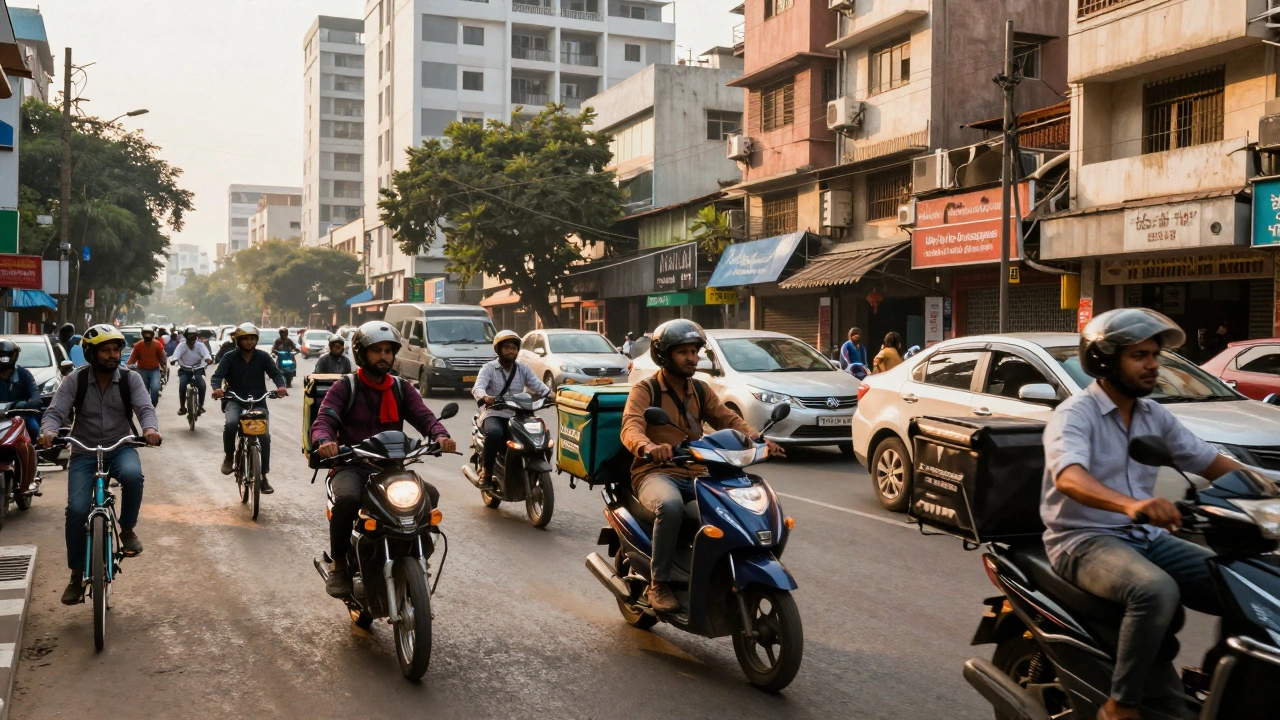
This model relies heavily on the gig economy. Drivers use their own vehicles-cars, bikes, scooters, or even drones in some advanced markets-and accept jobs through an app. For the merchant, this means scalability. If you have ten orders today and ten thousand tomorrow due to a holiday sale, the DaaS provider scales up instantly. You do not have to worry about idle drivers sitting around waiting for work during slow periods.
The key difference between DaaS and standard courier services is flexibility and integration. Standard services operate on fixed schedules and rigid zones. DaaS operates on algorithms that optimize routes dynamically, often offering same-day or even hour-specific delivery windows that legacy carriers struggle to match at a reasonable price.
How the DaaS Ecosystem Works
To understand how DaaS functions, you have to look at the three main players involved: the shipper (you), the platform (the tech), and the driver (the workforce). The magic happens in the middle layer-the software.
- Order Integration: When a customer places an order on your website, that data is sent via API to the DaaS platform. No manual entry required.
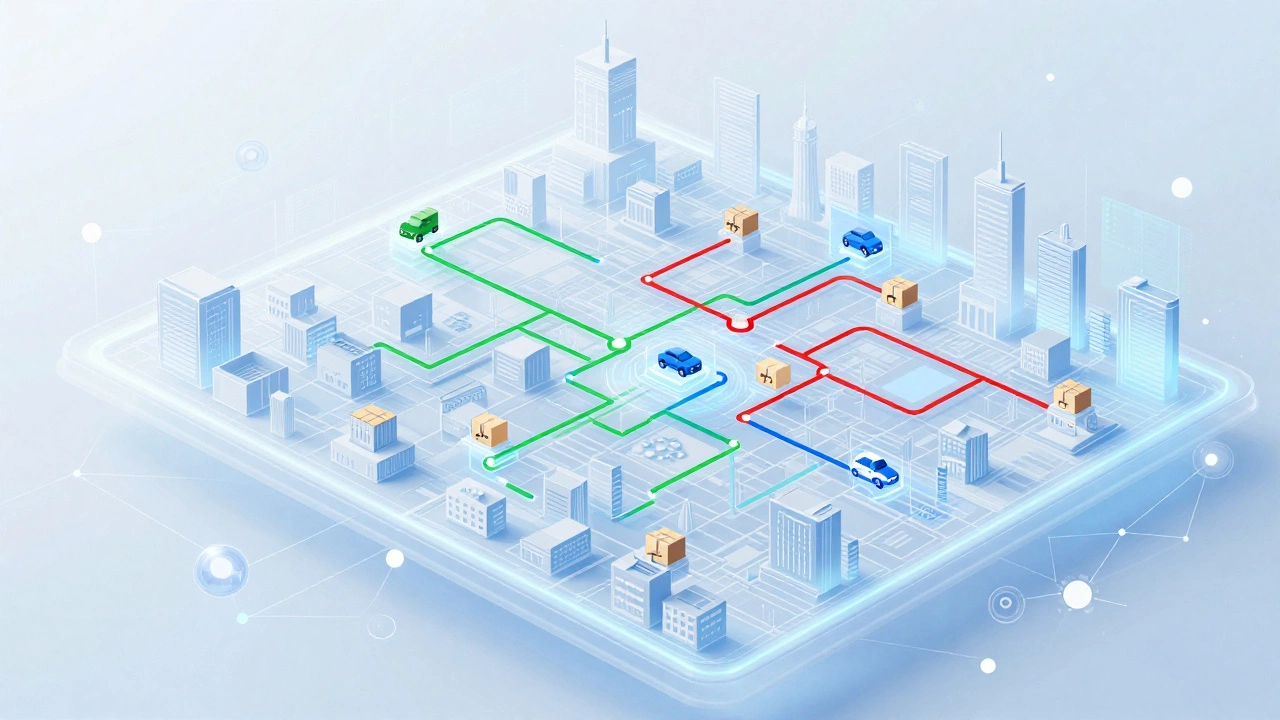
- Route Optimization: The platform’s algorithm looks at all pending deliveries in a specific area. It groups nearby orders together to create efficient clusters. This reduces empty miles and lowers costs.
- Driver Assignment: Available drivers near the pickup location receive a notification. They can accept or decline the job based on their current load and schedule.
- Execution & Tracking: Once accepted, the driver picks up the package. The customer receives real-time tracking updates, similar to what they see when ordering food delivery.
- Proof of Delivery: Upon arrival, the driver captures a photo or gets a digital signature. This data is sent back to your system automatically, closing the loop.
This process removes the friction of managing logistics. You focus on selling products, while the DaaS provider handles the complexity of moving them. The technology stack usually includes machine learning for demand forecasting and dynamic pricing, ensuring that rates adjust based on traffic, weather, and driver availability.
Why Businesses Are Switching to DaaS
The shift toward Delivery as a Service is not just a trend; it is a survival strategy for many e-commerce brands. Here is why companies are making the switch:
- Cost Efficiency: Traditional last-mile delivery can account for up to 53% of total shipping costs. DaaS models often reduce this by eliminating fixed overheads like vehicle maintenance, insurance, and salaries.
- Speed Expectations: Consumers now expect next-day or same-day delivery. Legacy carriers charge a premium for these speeds. DaaS providers compete on speed, often offering competitive rates for urgent deliveries because they utilize local drivers who are already in the neighborhood.
- Scalability: Seasonal spikes are a nightmare for companies with fixed fleets. DaaS allows you to scale up during Black Friday and scale down in January without firing or hiring staff.
- Customer Experience: Real-time tracking and precise time slots improve customer satisfaction. Happy customers return. Unhappy customers who wait all day for a two-hour window that never arrives will shop elsewhere.
For small to medium-sized businesses, DaaS levels the playing field. You get access to the same logistical capabilities as Amazon, without needing billions in infrastructure investment.
DaaS vs. Traditional Carriers: A Comparison
| Feature | Last Mile DaaS | Traditional Carrier (e.g., UPS/FedEx) | In-House Fleet |
|---|---|---|---|
| Flexibility | High (On-demand) | Low (Fixed schedules) | Medium (Dependent on staffing) |
| Cost Structure | Variable (Pay-per-delivery) | Volume-based discounts | Fixed + Variable (High overhead) |
| Speed | Same-day / Hourly | 1-3 Days typically | Customizable |
| Control | Moderate (Platform dependent) | Low (Black box logistics) | High (Full control) |
| Best For | E-commerce, Retail, Food | Bulk shipments, Long-distance | Large enterprises, Niche needs |
As the table shows, DaaS shines in agility. If you are shipping heavy pallets across the country, a traditional carrier is still better. But for individual parcels going to urban addresses, DaaS is often faster and cheaper. The trade-off is less direct control over the brand experience-you cannot put your logo on every van if you are using independent gig workers.
Key Players in the DaaS Market
The market for last mile delivery solutions is crowded, with various players targeting different niches. Understanding who does what helps you choose the right partner.
Lalamove is a prominent DaaS platform popular in Asia and expanding globally, focusing on instant delivery via motorcycles and vans. They excel in dense urban environments where speed is critical. Then there is Roadie, which leverages existing freight routes to offer cost-effective last-mile delivery in North America. Their unique value proposition is utilizing deadhead miles (empty return trips) from truckers, making it very affordable for shippers.
Other notable mentions include DoorDash Drive and Uber Direct, which have expanded from food delivery to general parcel delivery. These giants bring massive driver networks and robust apps to the table. For specialized needs, companies like Bringg provide logistics orchestration software that connects retailers with multiple delivery partners. Bringg doesn't always own the drivers; instead, it acts as the brain that manages the flow of goods across different providers.
Challenges and Risks of DaaS
While DaaS offers many benefits, it is not without its pitfalls. Before signing up, consider these challenges:
- Brand Consistency: When you use gig workers, you lose control over how your package is handled. A driver might drop a box rather than place it gently. This can lead to damaged goods and negative reviews, which hurt your brand reputation.
- Reliability Issues: Gig workers are independent contractors. They can cancel jobs last minute if they find a better-paying opportunity elsewhere. This unpredictability can disrupt your operations if you do not have backup plans.
- Data Security: You are sharing customer data (names, addresses, phone numbers) with third-party platforms. Ensuring these providers have strong cybersecurity measures is crucial to prevent data breaches.
- Regulatory Uncertainty: Laws regarding gig workers are changing rapidly. In some regions, courts are reclassifying gig workers as employees, which could drastically increase costs for DaaS providers, who may then pass those costs on to you.
To mitigate these risks, many businesses adopt a hybrid approach. They use DaaS for peak times or specific high-value areas, while maintaining a core relationship with traditional carriers for baseline volume.
The Future of Last Mile Delivery
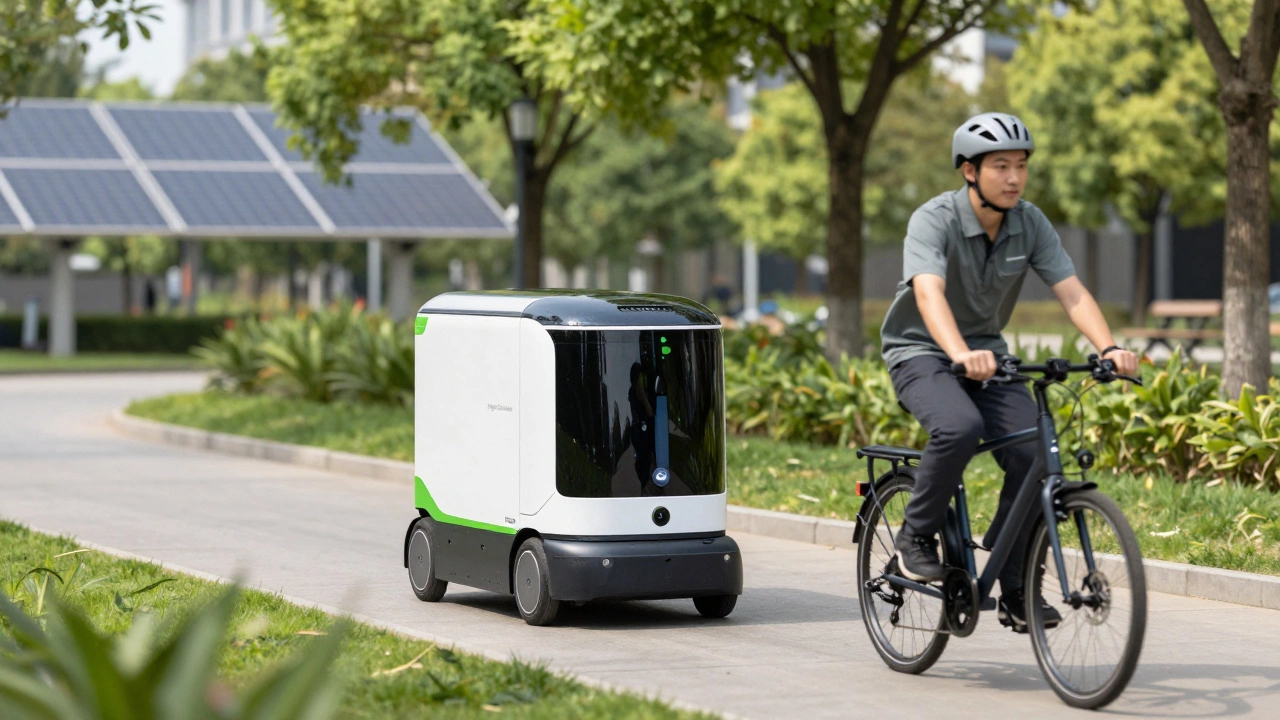
Looking ahead to 2026 and beyond, the DaaS landscape is evolving fast. Automation is the next big frontier. We are seeing the rise of autonomous delivery robots and drones. Companies like Starship Technologies are deploying sidewalk robots for local deliveries. While these aren't fully replacing human drivers yet, they are integrating into DaaS platforms to handle low-cost, short-distance drops.
Sustainability is also driving change. Customers care about carbon footprints. DaaS providers are increasingly offering "green" options, such as electric vehicle (EV) fleets or bicycle couriers. Algorithms are getting smarter at consolidating deliveries to reduce the number of trips needed. Expect to see more emphasis on eco-friendly metrics in your reporting dashboards.
Additionally, the integration of AI will make predictive logistics possible. Instead of reacting to orders, systems will anticipate demand and position drivers in high-probability areas before orders are even placed. This pre-positioning could slash delivery times further and reduce costs significantly.
Getting Started with DaaS
If you are ready to try Last Mile Delivery as a Service, start small. Do not overhaul your entire logistics network overnight. Pick one city or one product line to test. Integrate the DaaS API with your e-commerce platform. Monitor the key performance indicators (KPIs): delivery time, cost per package, and customer satisfaction scores.
Compare these metrics against your current method. If the DaaS option saves money and improves speed without sacrificing quality, expand gradually. Remember, the goal is not just to deliver packages, but to deliver happiness to your customers. In the world of e-commerce, the last mile is the first impression your customer has of your physical product. Make it count.
What is the difference between 3PL and DaaS?
A Third-Party Logistics provider (3PL) typically handles warehousing, inventory management, and broader supply chain logistics. DaaS focuses specifically on the final leg of delivery, often using on-demand gig workers rather than dedicated warehouses. 3PL is about storage and movement; DaaS is about immediate, flexible delivery execution.
Is DaaS suitable for large-scale enterprise shipping?
Yes, but usually as part of a hybrid strategy. Large enterprises often use DaaS for same-day or urgent deliveries in urban centers, while relying on traditional carriers or private fleets for bulk, long-distance, or rural shipments. DaaS provides the flexibility that rigid enterprise contracts often lack.
How much does Last Mile DaaS cost compared to standard shipping?
Costs vary by distance, weight, and urgency. Generally, DaaS is more expensive than standard ground shipping (3-5 days) but cheaper than expedited services (overnight) offered by major carriers. For same-day delivery, DaaS can be 20-40% cheaper than traditional express options because it utilizes local, on-demand capacity.
Can I customize the delivery experience with DaaS?
To some extent. Most DaaS platforms allow you to send custom notifications to customers with your branding. However, you cannot control the appearance of the driver's vehicle or uniform since they are independent contractors. Some premium DaaS tiers offer branded packaging kits or specific handling instructions.
What happens if a DaaS driver loses or damages my package?
Reputable DaaS providers carry insurance coverage for lost or damaged goods. The claim process is usually handled through their platform. It is important to check the liability limits and deductibles in your contract. Taking photos of packages before handoff is a best practice to avoid disputes.