Pallet Packing Calculator
Pallet Packing Calculator
When you order a large item online - like a fridge, a stack of boxes, or a batch of furniture - it doesn’t arrive in a cardboard box with a tracking number you check every hour. It arrives on a pallet. And that’s called a pallet delivery. If you’ve ever wondered how big, heavy, or bulky items move across the country without getting damaged, the answer starts with this simple wooden (or plastic) platform.
What Exactly Is a Pallet?
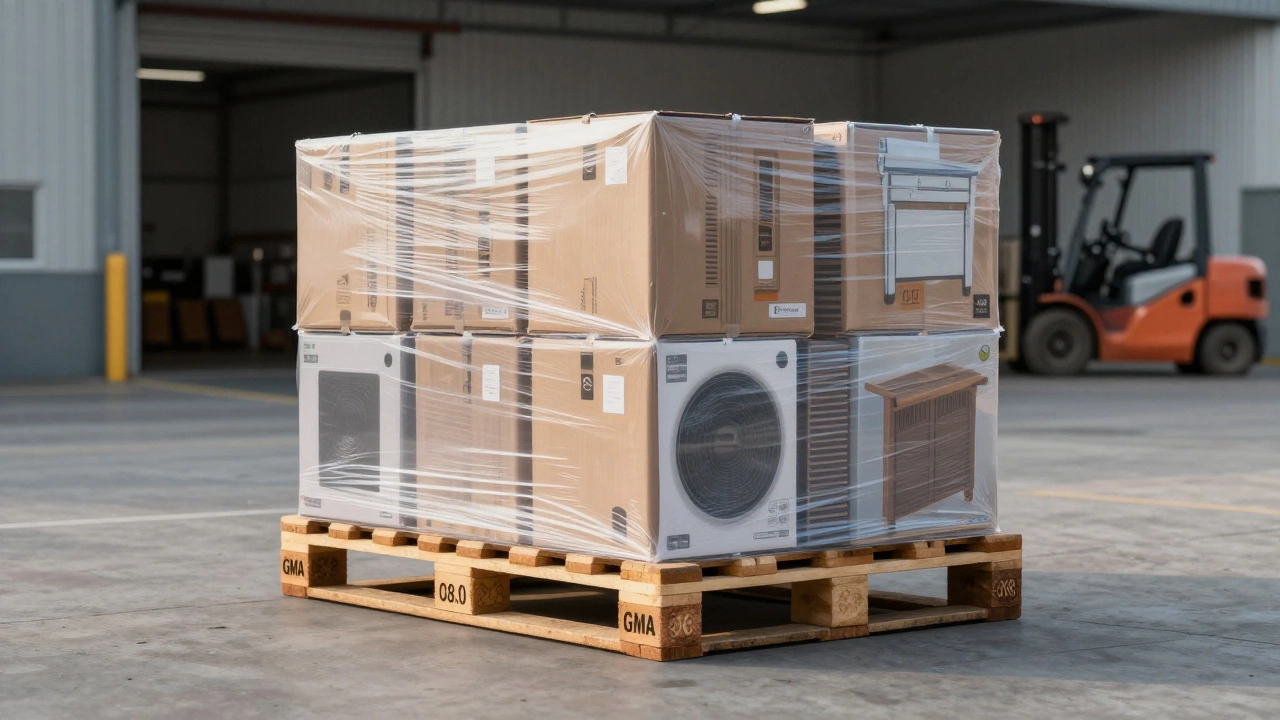
A pallet is a flat transport structure, usually made of wood, plastic, or metal, that holds goods together as a single unit. Think of it like a sturdy tray with space underneath for forklifts or pallet jacks to slide in and lift the whole load. Standard pallet sizes vary by region, but in North America, the most common one is 48 inches by 40 inches - often called a GMA pallet, named after the Grocery Manufacturers Association that helped standardize it.Pallets aren’t just for moving boxes. They’re designed to handle weight. A single pallet can carry up to 4,500 pounds when properly loaded and secured. That’s why they’re the backbone of industrial shipping. Without pallets, moving 100 cases of bottled water, 50 bags of cement, or 20 boxes of office supplies would mean manually lifting each one - slow, risky, and expensive.
How Does a Pallet Delivery Work?
A pallet delivery isn’t like a courier dropping off a package at your door. It’s part of a larger freight system. Here’s how it usually goes:- You or your supplier load goods onto a pallet, then shrink-wrap or strap them down so they don’t shift during transit.
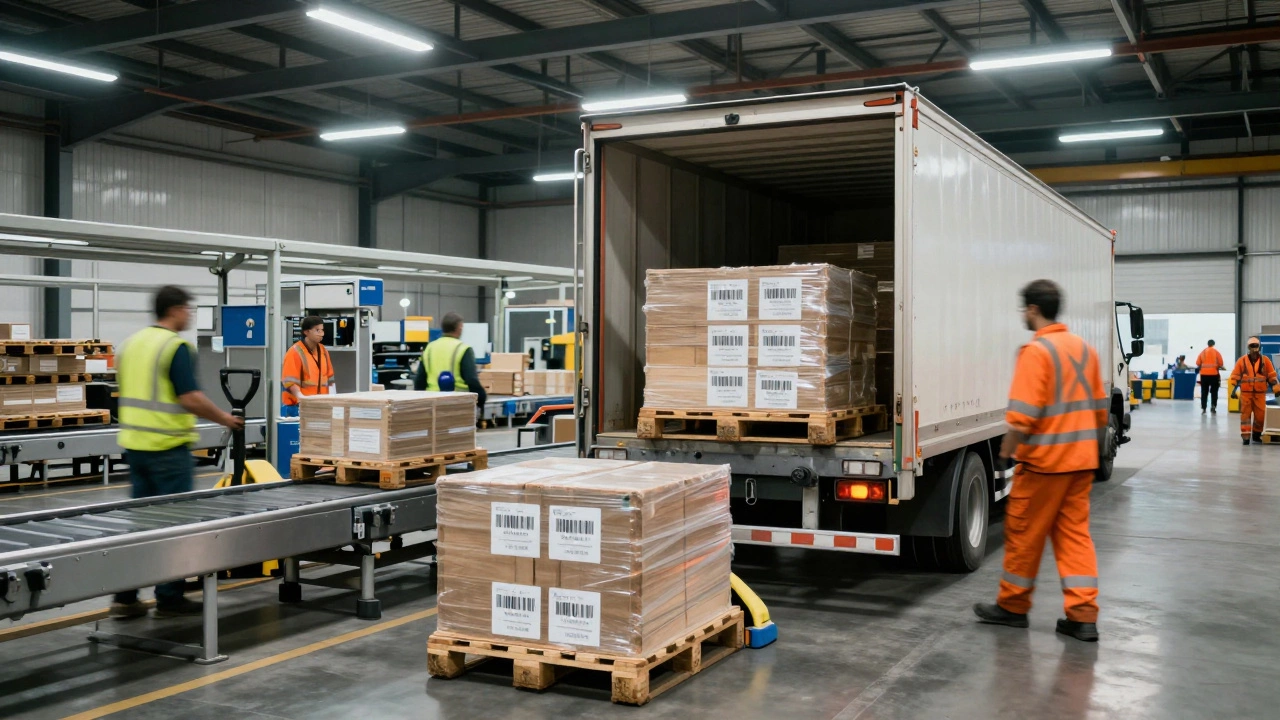
- The loaded pallet is picked up by a freight carrier - not a UPS or FedEx van, but a truck that hauls multiple pallets at once.
- The truck takes the pallet to a regional hub, where it’s sorted with other pallets heading to the same area.
- From there, it’s loaded onto another truck or rail car for final delivery.
- It arrives at a local terminal, and a forklift or pallet jack moves it to your loading dock or warehouse.
Most pallet deliveries are handled by LTL (Less-Than-Truckload) carriers. These companies specialize in moving smaller freight loads that don’t fill an entire truck. If you’re shipping 1-10 pallets, LTL is your go-to. If you’re shipping 20+ pallets, you might need a full truckload (FTL).
Why Use Pallet Delivery Instead of Regular Shipping?
You might ask: Why not just ship everything in boxes? The answer is efficiency. Pallets save time, money, and labor.- Speed: Forklifts can move a full pallet in seconds. Manually lifting 50 boxes? That takes 15 minutes.
- Protection: Wrapping goods on a pallet keeps them stable. Boxes stacked loosely can collapse or get crushed.
- Cost: Freight carriers charge by weight and space. A palletized load uses space efficiently, lowering per-unit costs.
- Automation: Warehouses use conveyor belts and robotic arms that are built to handle pallets. Non-palletized items? They need manual handling - which adds labor costs.
Companies like Amazon, Home Depot, and IKEA rely on pallet delivery because they move thousands of units daily. One pallet can hold 300 phone cases, 500 bottles of cleaning spray, or 12 baby cribs. That’s the power of standardization.
What Types of Goods Are Shipped on Pallets?
Not everything goes on a pallet - and not everything should. Here’s what typically does:- Boxes of electronics or appliances
- Cartons of beverages or canned goods
- Furniture (chairs, tables, bed frames)
- Industrial parts, tools, or machinery
- Building materials (drywall, lumber, tiles)
- Large quantities of retail inventory
Things that don’t belong on pallets? Fragile glassware without heavy-duty packaging, live plants, or items that need temperature control (those usually go in refrigerated containers). Pallets are for sturdy, stackable goods that can handle a little bump and vibration.
How to Prepare a Pallet for Delivery
If you’re shipping something on a pallet, you can’t just toss items on it and call it done. Here’s what you need to do:- Choose the right pallet: Use a standard GMA pallet unless your freight carrier specifies otherwise. Avoid damaged or warped pallets - they can cause delays.
- Stack evenly: Heavier items go on the bottom. Lighter ones on top. Keep the load balanced so it doesn’t tip during transport.
- Secure it: Use stretch wrap or straps to hold everything together. Wrap at least 3-4 times around the height of the load.
- Label clearly: Attach a shipping label to at least two sides. Include the tracking number, delivery address, and your contact info.
- Check weight limits: Most carriers cap pallet weight at 1,500-2,000 pounds. Exceed that, and you’ll pay extra or get refused.
Pro tip: If you’re shipping internationally, some countries require heat-treated wood pallets (marked with the IPPC stamp). Plastic pallets avoid this issue entirely.
Pallet Delivery vs. Parcel Delivery: What’s the Difference?
This is where people get confused. Parcel delivery is for small, lightweight items - think Amazon boxes, books, or shoes. It’s door-to-door, tracked online, and handled by drivers walking up to your porch.Pallet delivery? It’s for heavy, bulky, or high-volume shipments. It usually arrives at a loading dock, not your front door. You often need a forklift or a team to unload it. It’s not tracked like a package - you get updates on the hub level, not every stop.
Cost-wise, parcel shipping is cheaper for one or two boxes. But if you’re sending 100 boxes? Palletizing them saves you 40-60% in freight costs.
Who Uses Pallet Delivery?
You might think it’s only for big companies - but that’s not true. Here are common users:- Ecommerce sellers: Those shipping bulk orders from warehouses to customers’ doorsteps via regional hubs.
- Manufacturers: Sending raw materials or finished goods to distributors.
- Restaurants and grocers: Receiving cases of food, beverages, and packaging.
- Contractors and builders: Getting lumber, drywall, or roofing materials delivered to job sites.
- Small businesses: A local furniture store ordering 5 sofas from a supplier? That’s 5 pallets.
In fact, over 90% of all goods shipped in North America move on pallets at least once. It’s not a niche service - it’s the default way freight moves.
Common Problems with Pallet Delivery (And How to Avoid Them)
Even though pallet delivery is efficient, things can go wrong:- Damage from shifting: If goods aren’t strapped or shrink-wrapped, they’ll slide. Always secure your load.
- Wrong pallet size: Using a non-standard pallet can get you charged extra or delayed at hubs.
- Missing labels: If the tracking number isn’t visible, your pallet might get lost in a warehouse.
- Overweight pallets: Carriers have strict weight limits. Weigh your pallet before shipping.
- Delivery delays: Pallets move slower than parcels. Plan ahead - don’t wait until the last minute.
Tip: Always take photos of your pallet before handing it off. If damage occurs, you’ll have proof.
How Long Does Pallet Delivery Take?
It depends. A regional pallet delivery (within your province or state) usually takes 1-3 business days. Cross-country? 3-7 days. International? 7-14 days, depending on customs.Unlike parcel services that promise overnight delivery, pallet freight operates on a schedule. It moves in batches, not individually. That’s why it’s cheaper - but also why you can’t expect same-day service.
Final Thoughts: Is Pallet Delivery Right for You?
If you’re shipping more than 5 boxes at once, or if your items weigh over 50 pounds each, pallet delivery is almost always the smarter choice. It’s faster, safer, and cheaper than trying to ship everything as individual parcels.It’s not glamorous. You won’t get a text when it arrives. But if you run a business, manage inventory, or ship bulky goods - pallet delivery is the quiet engine that keeps your supply chain moving.
Can I ship a single item on a pallet?
Yes, you can. Even if you’re shipping just one large item - like a washing machine or a treadmill - it can be placed on a pallet for stability. Carriers will charge based on weight and dimensions, not the number of items. But if the item is small and light, parcel shipping may be cheaper.
Do I need a forklift to receive a pallet delivery?
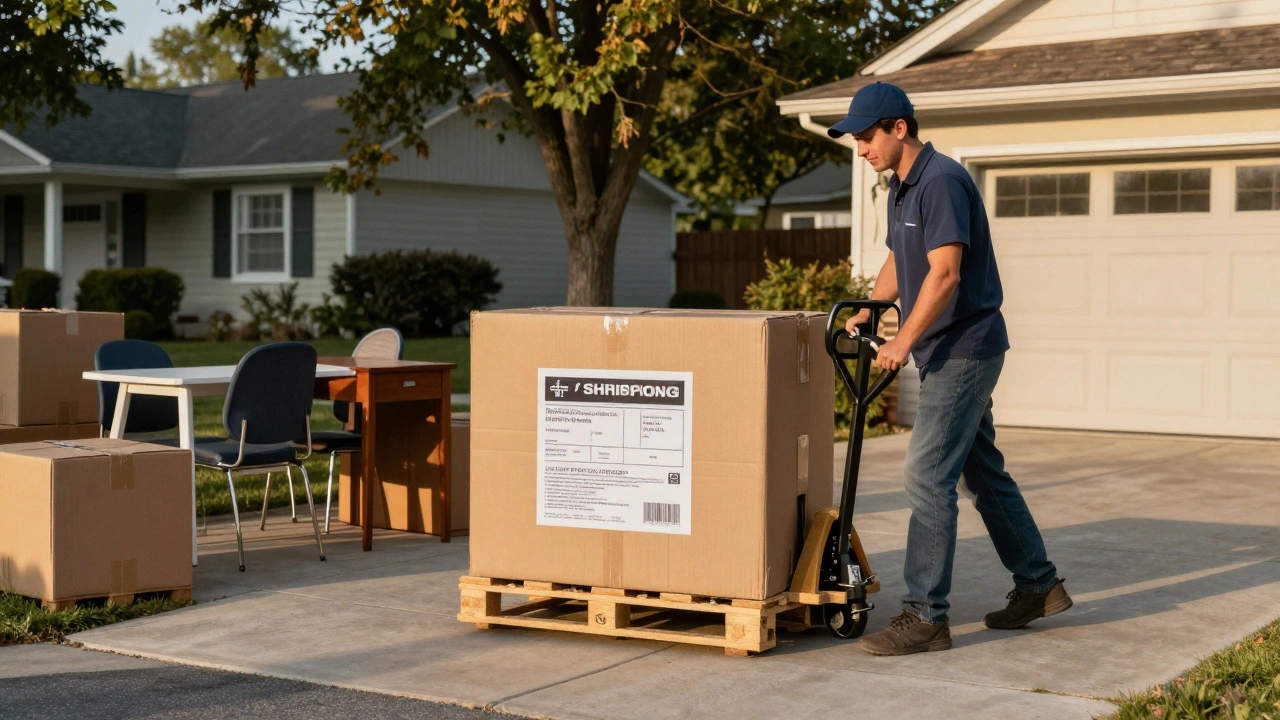
Not always, but it helps. Most pallet deliveries are left at a loading dock or curb. If you don’t have a forklift, you can use a pallet jack (manual or electric) to move it. For small loads, you might even be able to tip and roll it. But if you’re receiving multiple pallets or heavy loads, a forklift is strongly recommended.
Are pallets recycled or reused?
Yes. In North America, over 70% of wooden pallets are repaired and reused at least once. Many companies rent pallets instead of buying them - they return them after delivery. Plastic pallets are even more durable and can be reused over 100 times. Reuse is built into the system - it’s one reason pallet delivery is so cost-effective.
Can I ship hazardous materials on a pallet?
Yes, but with strict rules. Hazardous materials (like batteries, chemicals, or aerosols) must be properly labeled, packed in approved containers, and declared to the carrier. Most freight companies require special documentation and training. Always check with your carrier before shipping.
What’s the difference between LTL and FTL pallet delivery?
LTL (Less-Than-Truckload) means your pallet shares a truck with other shipments. It’s cheaper for 1-10 pallets. FTL (Full Truckload) means your shipment fills the entire trailer. It’s faster and more secure, but only cost-effective if you have 20+ pallets or need guaranteed delivery timing.