Logistics Partner Finder 2026
Define Your Requirements
Select your requirements on the left to see the recommended logistics partner.
Quick Take: Which Giant Should You Choose?
- For Global Scale: DHL and UPS lead the pack in sheer reach.
- For Massive Freight: Maersk and Kuehne + Nagel dominate the seas and air.
- For Tech-Driven Speed: FedEx continues to push the envelope in express delivery.
- For E-commerce Volume: Amazon Logistics is now a primary competitor to traditional 3PLs.
The Heavy Hitters of Global Trade
When we talk about the biggest players, we start with DHL is a German logistics company and the world's largest logistics company by revenue, specializing in international express delivery, forwarding, and supply chain management. They basically invented the modern global courier system. If you need a package in a remote village in Thailand by tomorrow, they're usually the only ones who can do it reliably. Their strength lies in their massive footprint in emerging markets, where they've built infrastructure that competitors simply can't match.
Then there is UPS is a US-based global shipping and receiving company known for its highly optimized ground networks and integrated logistics technology. Unlike some of their peers, UPS has mastered the "last mile" in North America. They don't just move boxes; they manage the entire flow of goods for retailers. Their use of ORION (On-Road Integrated Optimization and Navigation) has saved them millions of miles in fuel, making them one of the most efficient ground operations on the planet.
We can't ignore FedEx is a global courier delivery services company that pioneered the concept of overnight shipping and maintains a massive air fleet. While UPS owns the ground, FedEx often owns the air. For high-value, time-sensitive shipments-think medical isotopes or critical aerospace parts-FedEx's air network is the gold standard. They've recently shifted more toward an integrated network model, merging their express and ground units to cut costs and speed up delivery times.
The Masters of Freight and Sea
If you're moving thousands of tons of steel or raw materials, a courier isn't enough. You need a freight forwarder. Kuehne + Nagel is one of the world's leading sea and air freight forwarders, focusing heavily on high-value industrial logistics. They act as the architects of the supply chain, organizing the movement of goods across multiple modes of transport. They are particularly strong in pharmaceutical logistics, where temperature control is a matter of life and death.
Then there's the industry disruptor, Maersk is originally a shipping line that has evolved into an integrated end-to-end logistics company controlling everything from ships to warehouses. For decades, Maersk just owned the ships. Now, they want to own the entire journey. By acquiring land-based logistics firms, they've removed the middleman. If you use Maersk for both your ocean freight and your inland trucking, you have one point of accountability, which is a dream for any supply chain manager.
| Company | Primary Domain | Key Attribute | Best For |
|---|---|---|---|
| DHL | Global Express | Unmatched Reach | International Trade |
| UPS | Ground Logistics | Route Optimization | North American B2B |
| Maersk | Ocean Freight | End-to-End Control | Bulk Imports/Exports |
| FedEx | Air Freight | Speed/Reliability | Urgent Shipments |
| Amazon Logistics | E-commerce | Last-Mile Density | Direct-to-Consumer |
The Rise of the Tech-Logistics Hybrid
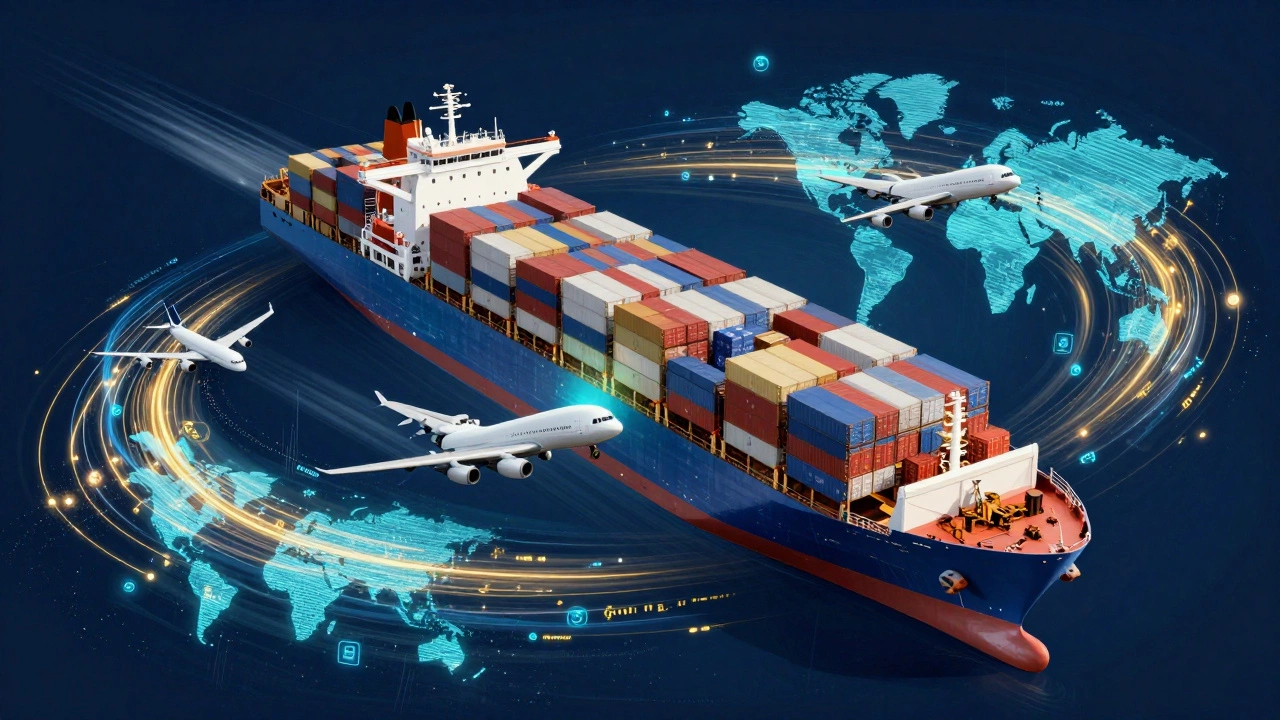
You can't discuss top logistics companies today without mentioning Amazon Logistics is the internal delivery arm of Amazon that has scaled to become one of the largest logistics providers globally. They've fundamentally changed how we think about shipping. By building their own fleet of planes and vans, they've shifted from being a retailer that ships to a logistics company that happens to sell things. For a small business using FBA (Fulfillment by Amazon), the logistics are basically invisible-which is exactly how they want it.
While Amazon dominates the consumer side, DB Schenker is a global provider of logistics and supply chain management services, known for its strong presence in Europe and Asia. They excel in complex industrial projects. If you need to move a massive turbine from Germany to a mine in Chile, Schenker is the type of company you call. They handle the heavy lifting and the bureaucracy of oversized cargo with surgical precision.
Then we have DSV is a Danish transport and logistics company that has grown aggressively through acquisitions to become a top-three global forwarder. DSV is the "efficiency machine" of the industry. They don't have the brand recognition of DHL, but they have an incredible ability to integrate acquired companies and squeeze every drop of profit out of a route. They are the go-to for companies looking for aggressive pricing and lean operations.
Specialists and Regional Powerhouses
Not every giant is a generalist. C.H. Robinson is one of the world's largest third-party logistics (3PL) providers, acting primarily as a digital broker between shippers and carriers. They don't necessarily own all the trucks; instead, they own the data. Their platform matches loads with available trucks in real-time. This "asset-light" model allows them to be incredibly flexible. If there's a sudden surge in corn shipping in the Midwest, they can pivot their capacity instantly.
Finally, we look at CEVA Logistics is a global supply chain management provider that specializes in automotive and high-tech sectors. They aren't trying to deliver a pizza to your door. They focus on the "big' stuff-managing the parts flow for car manufacturers. If a factory line stops because a bolt didn't arrive, that's a failure CEVA is paid specifically to prevent through rigorous just-in-time (JIT) delivery systems.
How to Choose Your Partner Without Getting Burned
Most companies make the mistake of choosing based on the lowest price per kilo. That's a recipe for disaster. A cheap rate often means your cargo is "lower priority," which is a fancy way of saying it will be the first thing bumped off a plane if the flight is full. Instead, look at the Transit Time Reliability. A company that delivers in 5 days 99% of the time is infinitely more valuable than one that delivers in 3 days but only 70% of the time.
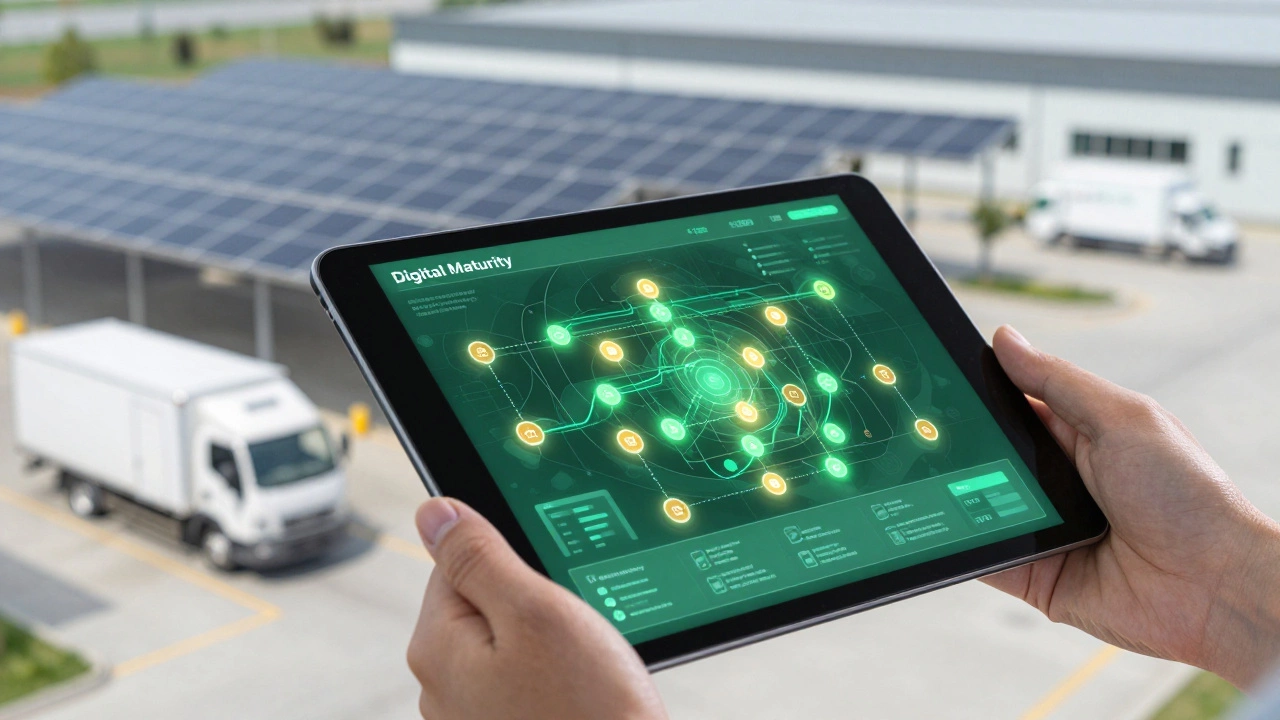
You also need to consider the Digital Maturity of the provider. In 2026, "tracking" is the bare minimum. You should be looking for real-time API integrations, predictive analytics that tell you a shipment is delayed *before* it happens, and automated customs documentation. If your logistics provider is still emailing you PDFs and spreadsheets, they are a liability to your business.
Finally, think about Sustainability Requirements. With new carbon taxes and ESG reporting, the "greenest" route is often the most cost-effective in the long run. Companies like Maersk are investing heavily in green methanol ships. If your customers demand a low carbon footprint, your logistics partner's fleet matters as much as their speed.
What is the difference between a 3PL and a 4PL?
A 3PL (Third-Party Logistics) provider like UPS or DHL handles the actual execution-warehousing, transportation, and picking/packing. A 4PL (Fourth-Party Logistics) provider acts as a consultant or manager. They don't necessarily own the trucks; instead, they manage multiple 3PLs on your behalf to optimize the entire supply chain. Think of a 3PL as the driver and a 4PL as the fleet manager.
Which logistics company is best for small businesses?
For most small businesses, Amazon Logistics (via FBA) or UPS are the best bets due to their integrated tools and scalability. If you're shipping internationally, DHL's specialized customs expertise can save you from having your goods stuck in a foreign warehouse for weeks. The key is to choose a partner that offers a self-service portal so you don't have to call a representative for every small change.
How do I handle shipping delays with these large companies?
The best way to mitigate risk is to avoid "single-sourcing." Even if you love DHL, have a secondary account with FedEx or UPS. Diversifying your carriers gives you leverage and a backup plan. Additionally, use a Transportation Management System (TMS) to monitor shipments across all carriers in one dashboard, allowing you to spot delays before they become critical.
Is Maersk actually a logistics company or just a shipping line?
They are transitioning. While they started as the world's largest container shipping line, they have spent the last few years acquiring warehouse companies and air freight capabilities. They are now an "integrated container logistics company," meaning they want to handle the move from the factory floor in China all the way to the warehouse door in the US.
What is "last-mile delivery" and why does it matter?
Last-mile delivery is the final step of the journey-the move from a distribution center to the customer's door. This is the most expensive and inefficient part of the entire chain. Companies like Amazon and UPS invest heavily here because the last mile is where the customer experience is won or lost. If the long-haul shipping was perfect but the driver left the package in the rain, the customer blames the logistics company.
Next Steps for Your Supply Chain
If you're currently using a single provider, start by auditing your last six months of shipping data. Look for the "failure rate"-how many shipments arrived late or damaged? Once you have that data, reach out to at least three of the companies mentioned above for a quote. Don't just ask for price; ask about their 2026 digital roadmap and how they handle customs for your specific product category. Testing a new provider with a small volume of shipments before switching your entire operation is the only safe way to scale.