Warehouse Automation ROI Calculator
Step 1: Select Technologies
Click to select which technologies you plan to implement.
AMRs
Autonomous Mobile Robots for goods-to-person picking.
SelectedSmart WMS
Cloud-based management with AI predictive slotting.
SelectedIoT Sensors
RFID tags and environmental monitoring for accuracy.
SelectedAR Training
Augmented Reality headsets for faster staff training.
SelectedStep 2: Operational Scale
Projected Impact Analysis
Estimated Annual Savings
Total Setup Cost
Payback Period
Efficiency Breakdown
Walk into a warehouse from ten years ago, and you’d hear the clatter of forklifts, the shout of supervisors, and see rows of workers scanning barcodes by hand. Walk into one today, and it might look like a scene from a sci-fi movie. Robots glide silently across floors, drones hover over shelves, and every box knows exactly where it is without anyone touching it. This isn’t just hype-it’s the new normal for supply chains that need to keep up with instant delivery expectations.
The shift toward modern warehousing technologies isn't about replacing people; it's about removing the bottlenecks that slow down operations. Whether you run a small distribution center or a massive fulfillment hub, understanding these tools is no longer optional. It’s how you survive the pressure of same-day deliveries and shrinking margins. Let’s break down the actual tech changing the game right now.
Autonomous Mobile Robots (AMRs): The New Floor Crew
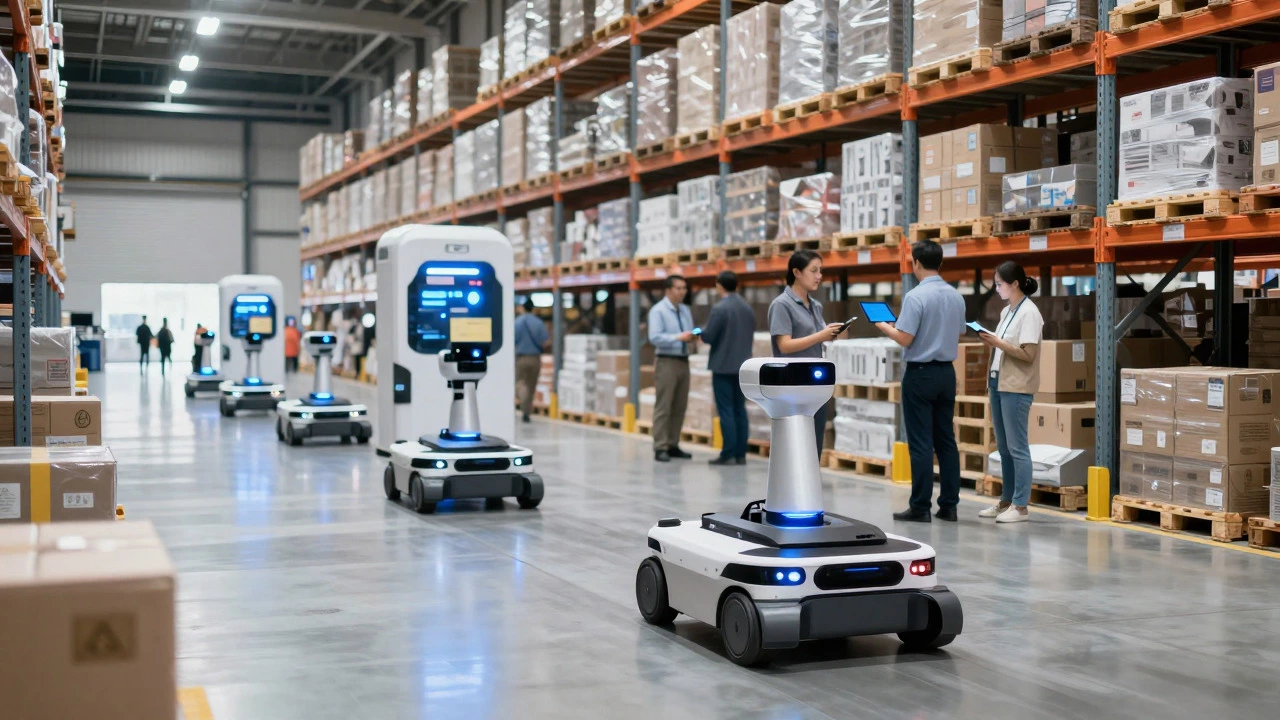
If there is one technology dominating warehouse floors, it is Autonomous Mobile Robots, or AMRs. Unlike older Automated Guided Vehicles (AGVs) that followed magnetic tapes on the floor, AMRs use LiDAR, cameras, and AI to navigate dynamically. They don’t just move boxes; they bring the goods to the picker. This is often called "goods-to-person" picking.
AMRs are autonomous robots that transport materials within warehouses using real-time mapping and obstacle avoidance. They operate without fixed infrastructure, allowing facilities to reconfigure layouts quickly as demand shifts.Companies like Amazon and Ocado have shown us what this looks like at scale, but smaller players are adopting similar solutions too. An AMR fleet can work 24/7 without breaks, reducing labor costs and increasing pick rates by up to 300%. But here is the catch: integrating them requires a Warehouse Management System (WMS) that can talk to the robots’ brain, known as a Fleet Management System (FMS). If your software doesn’t support API connections to these robots, you’re leaving money on the table.
- Flexibility: Add or remove robots based on seasonal peaks without rewiring the building.
- Safety: Built-in sensors stop movement instantly if a human walks into their path.
- Scalability: Start with five units and expand to fifty as needed.
Warehouse Management Systems (WMS): The Digital Brain
You can have all the robots in the world, but without a smart WMS, they’re just expensive toys. Modern WMS platforms have evolved from simple inventory trackers into complex decision engines. They don’t just tell you where an item is; they predict where it *should* be based on sales trends, seasonality, and even weather forecasts.
Cloud-based WMS solutions are now the standard. They offer real-time visibility across multiple locations, which is crucial if you run a distributed network. Integration with Enterprise Resource Planning (ERP) systems ensures that finance, procurement, and logistics are speaking the same language. Look for features like slotting optimization-automatically suggesting the best shelf location for each SKU to minimize travel time during picking.
A robust WMS also handles exception management. If a shipment is damaged or a count is off, the system flags it immediately rather than letting errors compound. This level of precision reduces shrinkage and improves customer satisfaction scores significantly.
Internet of Things (IoT) Sensors: Eyes Everywhere
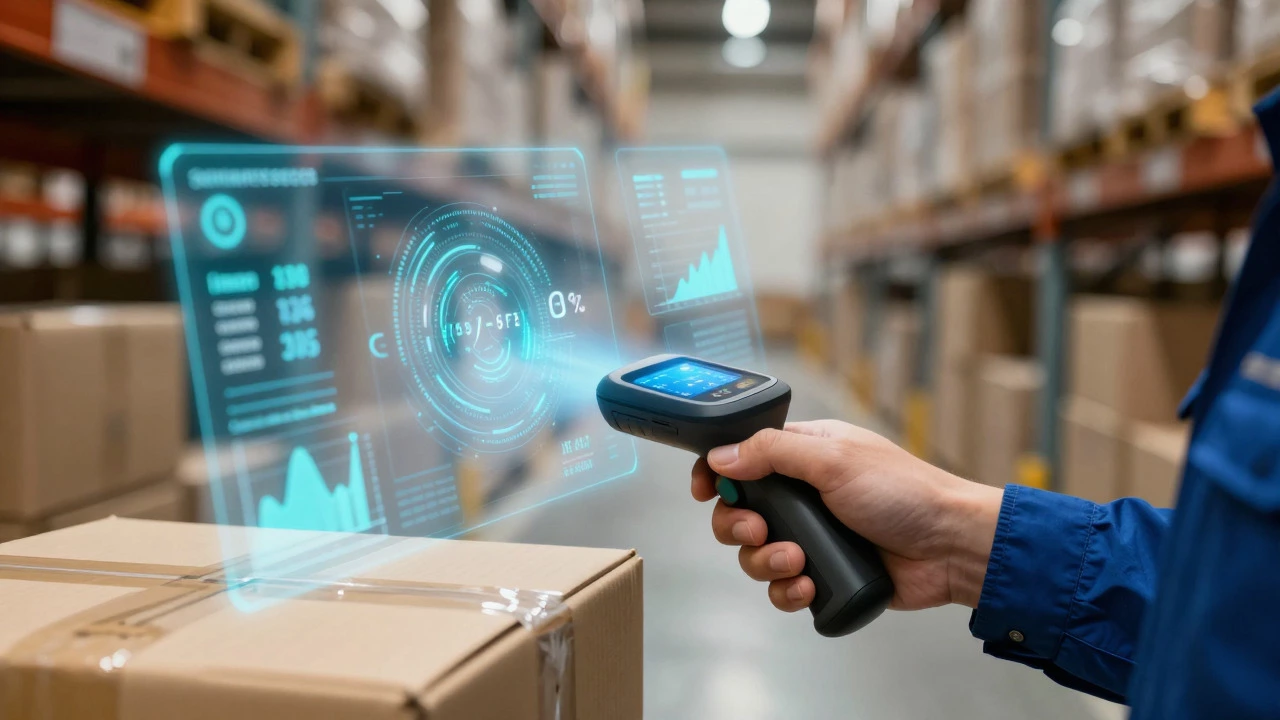
Imagine knowing the exact temperature of a refrigerated truck before it even arrives, or detecting a forklift battery drop before it dies mid-shift. That’s the power of the Internet of Things (IoT). IoT sensors attach to assets, pallets, and machinery to stream data continuously.
| Sensor Type | Function | Benefit |
|---|---|---|
| RFID Tags | Track individual items without line-of-sight scanning | 99.9% inventory accuracy |
| Environmental Sensors | Monitor temperature, humidity, and light | Prevent spoilage of perishables |
| Vibration Sensors | Detect anomalies in conveyor belts or motors | Predictive maintenance saves downtime |
| Smart Wearables | Guide workers via AR glasses or haptic feedback | Faster training and fewer errors |
Radio Frequency Identification (RFID) has matured enough to replace barcodes in many high-volume environments. Instead of scanning each box, you walk through a doorway, and the gate reads hundreds of tags simultaneously. This cuts receiving times from hours to minutes. For cold chain logistics, IoT is non-negotiable. Regulatory compliance demands proof that products stayed within safe temperatures throughout transit.
Artificial Intelligence and Predictive Analytics
Data alone isn’t useful unless you can act on it. Artificial Intelligence (AI) turns raw warehouse data into actionable insights. Machine learning algorithms analyze historical order patterns to forecast demand spikes. This allows managers to staff appropriately and position fast-moving items closer to packing stations before the rush hits.
AI also powers computer vision systems used in quality control. Cameras mounted above packing lines can detect missing components or incorrect labels faster than any human eye. Some advanced setups use AI to optimize route planning for outbound trucks, considering traffic, fuel efficiency, and delivery windows in real-time.
One powerful application is dynamic pricing for storage space. Third-party logistics providers (3PLs) use AI to adjust rates based on current occupancy levels, much like airline tickets. This maximizes revenue utilization during low-demand periods while attracting volume when capacity is tight.
Digital Twins: Simulating Before Building
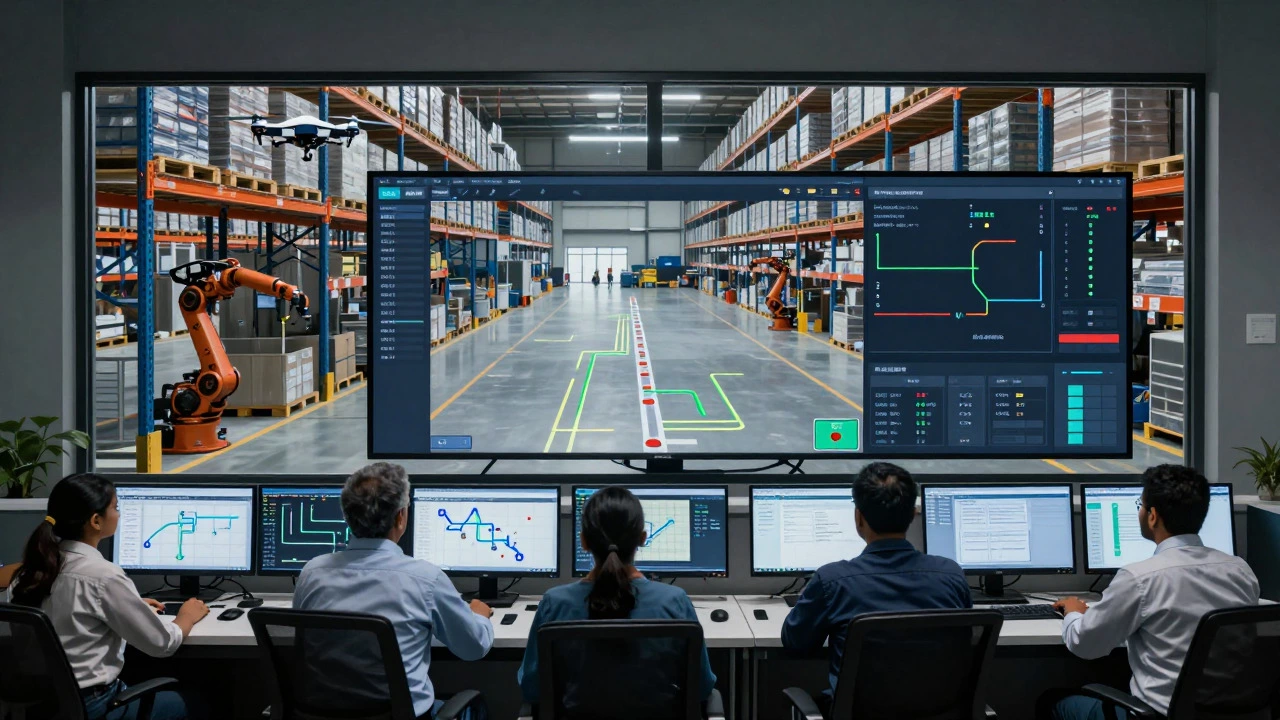
Changing a warehouse layout is risky. You might block a fire exit, create congestion points, or reduce throughput. A digital twin solves this by creating a virtual replica of your physical facility. You can simulate changes in the digital model before implementing them in reality.
Digital Twin is a virtual representation of a physical warehouse that mirrors real-time operations for simulation and analysis. It enables stress testing of processes under various scenarios without disrupting actual workflows.For example, if you plan to introduce new robotic arms, the digital twin calculates whether they will interfere with existing conveyor paths. It models worker flow, equipment usage, and energy consumption. This reduces implementation risks and provides a clear ROI projection before spending capital on hardware. As warehouses become more automated, having a digital counterpart becomes essential for continuous improvement.
Augmented Reality (AR) in Training and Picking
Training new warehouse staff used to take weeks. Now, with Augmented Reality (AR) headsets, it takes days. Workers see visual cues overlaid on their field of view-arrows pointing to the correct bin, checklists appearing when they scan an item, and step-by-step instructions for assembling kits. This hands-free approach keeps eyes on the task, not on a screen.
AR also assists in remote expert support. If a machine breaks down, a technician wearing AR glasses can share their view with an engineer miles away. The expert draws circles around parts or annotates the live feed, guiding the repair in real-time. This reduces mean time to repair (MTTR) and minimizes costly downtime.
Blockchain for Supply Chain Transparency
While blockchain gets a lot of buzz in finance, its role in warehousing is growing quietly. It creates an immutable ledger of every transaction involving a product-from manufacturer to end consumer. This is vital for industries like pharmaceuticals, luxury goods, and food, where counterfeiting and contamination are serious concerns.
When combined with IoT sensors, blockchain verifies not just ownership but condition. Did the vaccine stay cold? Was the organic produce handled correctly? Smart contracts automatically release payments once predefined conditions are met, speeding up settlements between suppliers and distributors. Trust becomes programmable, reducing administrative overhead and disputes.
Implementing Technology: Where to Start?
Jumping into full automation overnight is a recipe for disaster. Most successful transformations start small. Begin with a thorough audit of your current processes. Identify pain points: Is it slow picking? High error rates? Poor inventory visibility? Address those first.
- Assess Infrastructure: Do you have reliable Wi-Fi coverage everywhere? Robotics need strong connectivity.
- Upgrade Software: Ensure your WMS can integrate with third-party apps and APIs.
- Pilot Projects: Test one robot or one sensor type in a controlled area. Measure results against KPIs.
- Train Staff: Involve employees early. Show them how tech makes their jobs easier, not harder.
- Scale Gradually: Expand successful pilots across other zones or facilities.
Remember, technology serves people, not the other way around. The goal is to augment human capability, eliminate repetitive tasks, and provide better data for smarter decisions.
How much does it cost to automate a warehouse?
Costs vary wildly depending on size and scope. A single AMR might cost $15,000-$30,000, while a full-scale automated storage and retrieval system (AS/RS) can run into millions. However, many providers now offer Robotic Process Automation (RPA) as a service, lowering upfront capital expenditure. Focus on ROI metrics like picks per hour and labor savings rather than sticker shock.
Will robots replace warehouse workers?
Not entirely. Robots handle heavy lifting and repetitive movement, freeing humans for complex problem-solving, customer service, and maintenance roles. The job market is shifting toward technical skills like robot supervision and data analysis. Companies that reskill their workforce see higher retention and productivity.
Is cloud-based WMS secure enough?
Yes, modern cloud providers invest heavily in cybersecurity, often exceeding what most companies could afford on-premise. Look for SOC 2 Type II certification and encryption standards. Regular backups and multi-factor authentication add extra layers of protection against breaches.
What is the biggest challenge in adopting warehouse tech?
Change management. Employees may fear job loss or struggle with new interfaces. Leadership must communicate clearly, involve teams in selection processes, and provide adequate training. Cultural resistance is often harder to overcome than technical hurdles.
Can small businesses afford these technologies?
Absolutely. Many vendors offer scalable solutions designed for SMEs. Starting with basic barcode scanning apps, affordable RFID readers, or leasing robots instead of buying them makes entry feasible. Even modest tech upgrades yield significant efficiency gains.