International Shipping Cost Estimator
Enter your package details below to see if you are paying for "air" (dimensional weight) or actual weight, and estimate potential savings by choosing the right service level.
Package Details
Analysis & Savings
Enter package details and click Calculate to see results.
Ever watched a $20 t-shirt cost $45 to ship? You aren't alone. International shipping is one of the biggest budget killers for small businesses and online shoppers alike. But here’s the secret: carriers don’t charge based on what you think your package weighs. They charge based on what they decide it weighs. If you’re paying list rates without optimizing dimensions, packaging, or routing, you’re leaving money on the table every single time.
Mastering Dimensional Weight
Most people focus on actual weight-the number on the scale. Carriers like FedEx and UPS care about dimensional weight (DIM weight). This is a pricing technique used by commercial freight carriers that charges shippers for the volume of space their shipment occupies in a truck, railcar, cargo container, or cargo aircraft rather than just its actual physical weight.
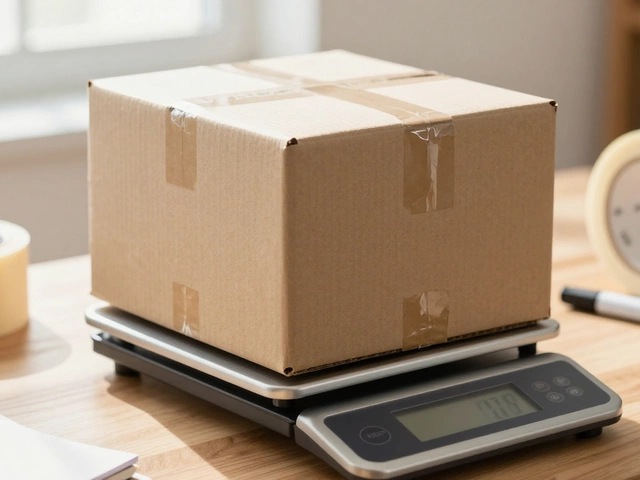
Think of it this way: a box full of pillows weighs almost nothing but takes up huge space. The carrier loses money if they charge you by the pound because they could have filled that space with dense electronics. To fix this, measure your boxes accurately. If your box is 12x12x12 inches, that’s 1728 cubic inches. Divide that by the carrier’s DIM divisor (usually 139 for domestic, sometimes different for international) to get the billable weight. If that number is higher than the actual weight, you pay the higher number. Trim excess cardboard. Use right-sized boxes. Shrink wrap instead of bulky foam. These small changes can cut your billable weight by 20-30%.
Choosing the Right Service Level
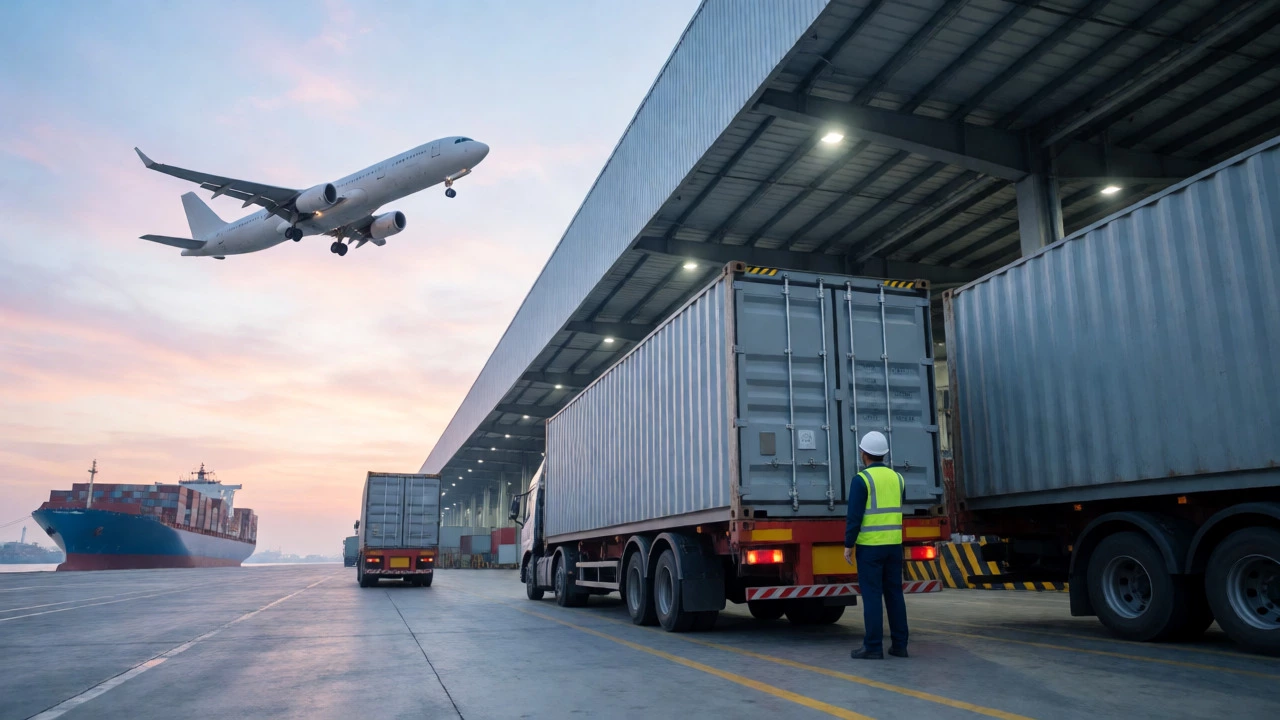
Speed costs money. Do you really need overnight delivery? For most e-commerce orders, standard economy shipping saves 40-60% compared to express options. When selecting a service, consider the destination country’s infrastructure. Shipping to Western Europe via air freight is fast but pricey. Using ground transport within the EU after clearing customs can be cheaper. For Asia, sea freight is significantly slower but drastically cheaper for non-urgent bulk items.
| Service Type | Estimated Time (China to US) | Relative Cost | Best For |
|---|---|---|---|
| Air Express (DHL/FedEx) | 3-5 Days | High ($$$) | Urgent samples, high-value items |
| Air Freight (Standard) | 7-10 Days | Medium ($$) | Medium-weight e-commerce orders |
| Ocean Freight (LCL) | 20-35 Days | Low ($) | Bulk inventory, heavy goods |
Leveraging Freight Forwarders
If you ship more than a few packages a month, going direct to a carrier is often a mistake. Freight forwarders act as travel agents for your cargo. They buy massive amounts of space from airlines and ships at discounted rates and resell smaller portions to you. Companies like Flexport or local brokers can negotiate rates you’d never see on a public price sheet.
Why does this work? Volume. A forwarder might fill an entire plane section. They pass some savings to you while keeping a margin. Plus, they handle the messy paperwork. Customs declarations, bills of lading, and insurance certificates are handled by their team. You avoid costly errors like misclassified HS codes, which can trigger audits and fines.
Understanding Customs Duties and Taxes
Shipping isn’t just about moving the box; it’s about getting it through the border. Unexpected customs duties surprise many sellers. In Canada, for example, de minimis values (the threshold below which no duty/tax is charged) vary by trade agreement. Under CUSMA (formerly NAFTA), shipments under CAD $40 are generally duty-free if shipped by courier, but taxes may still apply.
To save money, ensure accurate Harmonized System (HS) codes. Different countries classify products differently. A "plastic toy" might have a different tariff rate than a "plastic figurine." Check the destination country’s tariff schedule. Also, consider DDP (Delivered Duty Paid) vs. DDU (Delivered Duty Unpaid). With DDP, you pay the duties upfront. This looks expensive but prevents customer rejection of the package upon delivery, saving you return shipping costs.
Packaging Efficiency and Material Costs
Your packaging adds weight and size. Double-walled cardboard is heavier than single-walled. Plastic mailers are lighter than boxes. For soft goods like clothing, poly mailers can reduce dimensional weight significantly compared to rigid boxes. However, protection matters. Broken items mean refunds and restocking fees.
- Weigh everything: Use a digital scale accurate to grams.
- Measure precisely: Round up to the nearest inch for billing calculations.
- Consolidate: Ship multiple items together rather than individually.
Buying packaging materials in bulk reduces per-unit costs. But don’t over-pack. Excess tape and filler add weight. Use void-fill strategies that minimize volume, such as air pillows instead of loose paper.

Negotiating Rates and Contracts
List prices are for walk-ins. If you commit to volume, ask for discounts. Even small businesses can negotiate. Approach carriers or forwarders with data: show them your monthly volume, average weight, and top destinations. Ask for tiered pricing. As your volume grows, your rate should drop automatically.
Review contracts annually. Fuel surcharges fluctuate. Peak season surcharges apply in November and December. Understand these variables so you aren’t blindsided. Some carriers offer fixed-rate programs for specific lanes, protecting you from fuel volatility.
Technology and Automation
Manual label creation leads to errors. Use shipping software that integrates with your store. Platforms like Shopify or WooCommerce plugins compare rates across carriers in real-time. They select the cheapest option that meets your delivery promise. This automation saves hours and ensures you never overpay for a simple package.
Track performance metrics. Monitor cost-per-order. If shipping costs exceed 15-20% of your product price, investigate. Maybe you need to raise free-shipping thresholds or adjust product weights in your database.
What is dimensional weight?
Dimensional weight (or dim weight) is a pricing technique used by carriers that charges based on the volume of the package rather than just its actual weight. It is calculated by multiplying length x width x height and dividing by a dimensional factor (often 139 for imperial units).
Do I have to pay customs duties on international shipments?
It depends on the destination country's de minimis value and the type of goods. Many countries allow low-value shipments to enter duty-free, but VAT or GST may still apply. Always check the specific import regulations for the target market.
Is it cheaper to use a freight forwarder or direct carrier?
For small, occasional shipments, direct carriers might be simpler. For regular volumes, freight forwarders usually offer better rates due to bulk buying power and can handle complex logistics like customs clearance more efficiently.
How does peak season affect shipping costs?
During peak seasons (typically November through January), carriers impose surcharges due to high demand. Rates can increase by 10-20%. Planning ahead and booking early can mitigate some of these costs.
Can I reduce shipping costs by changing packaging?
Yes. Using lighter materials like poly mailers for clothes and minimizing box size reduces both actual weight and dimensional weight, leading to lower carrier charges.