Warehouse Efficiency & Savings Calculator
Current Operations Data
Efficiency Analysis
Enter data to analyze
Monthly Cost Comparison
*Automated model assumes 80% labor reduction and optimized overhead.
It sounds like a paradox. You see news headlines screaming about Amazon closing warehouses while simultaneously reading reports that the company is hiring thousands of new workers. If you are watching the logistics industry from the outside, it looks like chaos. But if you look closer at the data, it’s actually a calculated, aggressive pivot toward efficiency. Amazon isn’t shrinking; it is evolving. And the engine driving this change is logistics software paired with heavy-duty robotics.
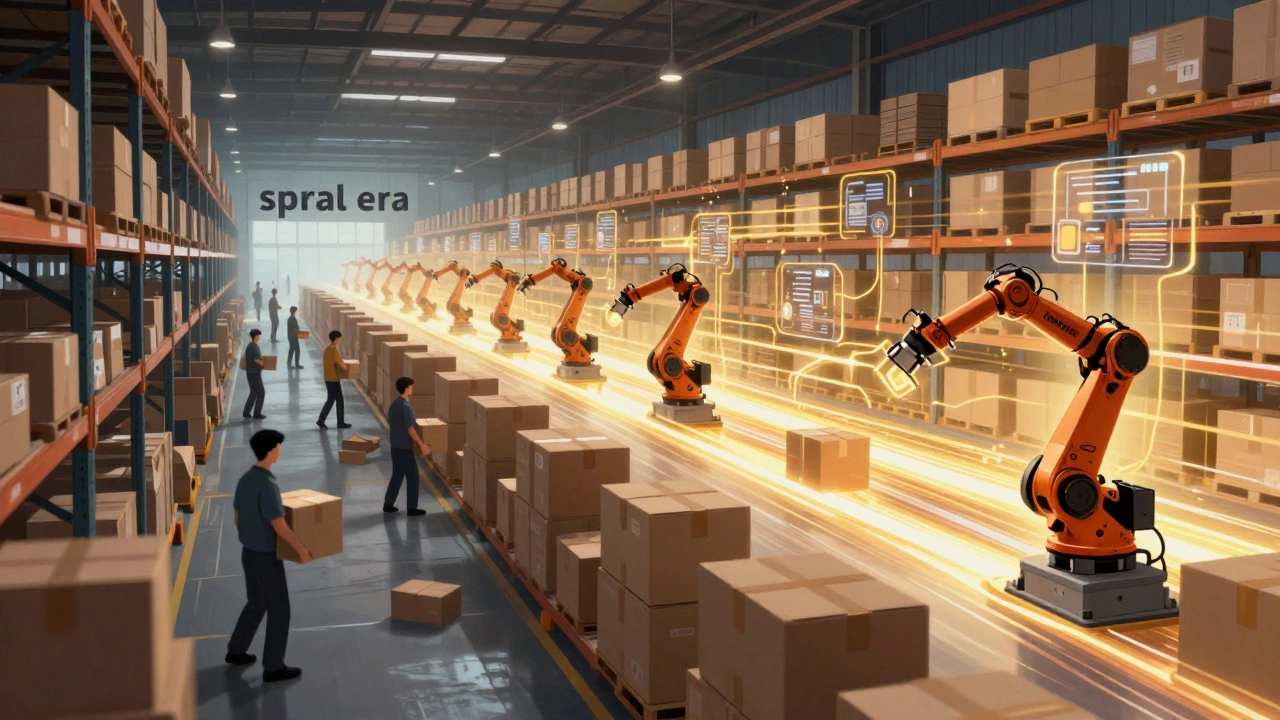
In 2025 and moving into 2026, we are witnessing the end of the 'sprawl' era in e-commerce fulfillment. For years, the strategy was simple: build as many buildings as possible to get packages to customers faster. Now, the strategy has flipped. It is no longer about how much space you have, but how fast that space can process goods. This shift explains why some doors are closing while others are opening wider than ever before.
The Efficiency Over Volume Strategy
To understand why warehouses are shutting down, you first have to understand what makes a modern fulfillment center profitable. In the past, a warehouse was just a big box where people walked miles a day to pick items off shelves. That model is incredibly expensive. Labor costs rise, real estate gets pricier, and speed hits a ceiling because humans need breaks.
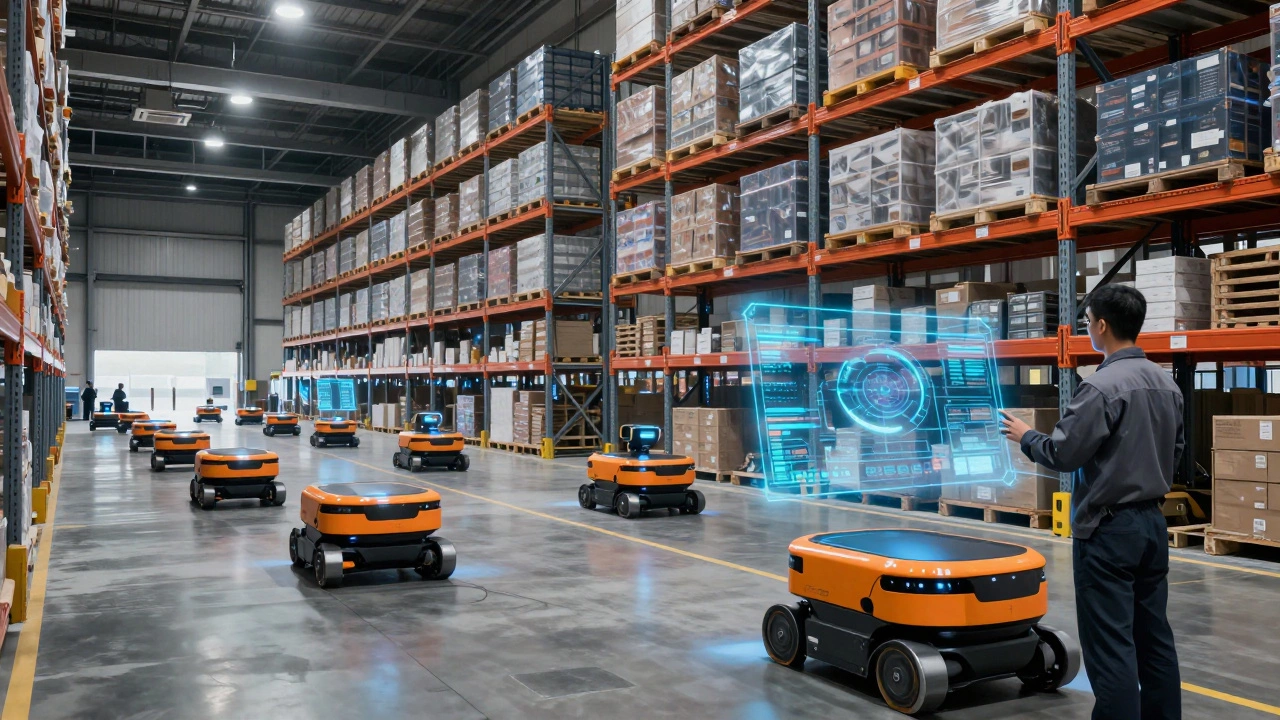
Amazon is closing older facilities that cannot support its new automated systems. These older buildings often have low ceilings, narrow aisles, or floor structures that can't handle the weight of heavy robotic equipment. Instead of retrofitting these outdated spaces-which costs millions-they tear them down or sell them and build new 'Generation 3' or 'Generation 4' facilities. These new hubs are designed specifically for robots.
This is where Warehouse Management Systems (WMS) become critical. A WMS is the brain of the operation. In an automated facility, the software doesn't just track inventory; it directs every robot, conveyor belt, and sorting arm in real-time. Older warehouses simply lack the digital infrastructure to run this level of complexity. Closing them allows Amazon to consolidate operations into high-tech zones where software and hardware work in perfect sync.
Consolidation and Regionalization
Another major factor is the shift from national distribution to regional hyper-efficiency. Years ago, Amazon needed a warehouse in almost every state to ensure two-day shipping everywhere. Today, with better predictive algorithms, they know exactly where demand will spike before it happens.
Instead of having ten small, inefficient warehouses across a region, Amazon prefers three massive, highly automated mega-hubs. This consolidation reduces overhead. Fewer buildings mean fewer property taxes, less energy consumption for heating and cooling, and streamlined management. The logistics software analyzes delivery patterns to determine the optimal number of locations. If the data shows that one central hub can serve a metropolitan area faster than three scattered ones, the smaller ones get closed.
| Feature | Traditional Warehouse | Automated Mega-Hub |
|---|---|---|
| Labor Intensity | High (Human pickers) | Low (Robotics + Supervisors) |
| Space Usage | Wide aisles for carts | Dense vertical storage |
| Software Role | Inventory tracking only | Real-time orchestration |
| Operational Cost | Rising due to wages | Stable after initial investment |
The Role of AI in Inventory Prediction
Artificial Intelligence has changed the game for inventory placement. In the old days, you stocked items based on last year's sales. Now, Predictive Analytics allow companies to move stock before a customer even clicks 'buy'. If Amazon knows that snow shovels will sell out in Chicago next week, the software moves those shovels to a local hub today.
This precision means you don't need as many warehouses to hold backup stock. You can hold less inventory overall because it moves so quickly. When inventory turns over faster, you need less physical space to store it. Consequently, underutilized warehouses become liabilities. They sit half-empty, costing money without generating proportional value. Closing these underperforming sites frees up capital to invest in faster transportation networks, like drone delivery or electric vans.
Real Estate Market Pressures
Let’s talk about money. Real estate costs have skyrocketed in many parts of North America and Europe. Holding onto large, inefficient properties is a financial drain. By closing older warehouses, Amazon can sell these assets to developers who want to turn industrial land into residential complexes. This provides a cash injection that funds the construction of newer, smarter facilities.
Additionally, environmental regulations are tightening. Older warehouses often fail to meet modern energy efficiency standards. Retrofitting them with solar panels and LED lighting is costly. Building new, green-certified facilities is often cheaper in the long run. The decision to close is often a financial calculation involving tax incentives, energy costs, and potential sale profits.
Impact on the Workforce
When warehouses close, jobs disappear. This is the most sensitive part of the story. However, the narrative isn't entirely negative. While manual picking jobs decrease, technical roles increase. The new automated warehouses need engineers, software technicians, and robotics maintenance specialists. The barrier to entry is higher, but the pay is also significantly better.
Amazon and other logistics giants are investing in retraining programs. The goal is to transition the workforce from repetitive physical labor to skilled technical supervision. This shift aligns with broader trends in the logistics sector, where human error is minimized by software oversight. The future worker in a warehouse won't be walking miles with a scanner; they will be monitoring dashboards and fixing broken conveyors.

What This Means for Third-Party Sellers
If you are a third-party seller using Fulfillment by Amazon (FBA), these closures might worry you. Will your shipments slow down? Generally, no. The consolidation is designed to make the network more resilient, not weaker. With fewer, better-connected hubs, transit times between facilities are optimized. Your products still reach customers on time, often faster.
However, you may notice changes in inventory placement fees. As space becomes premium, Amazon adjusts its pricing models to encourage sellers to keep stock levels lean. Using advanced E-commerce Logistics Software can help you manage this. Tools that integrate with Amazon’s API can predict when you need to restock and where your inventory is likely to be stored, helping you avoid unexpected fees.
The Future of Logistics Infrastructure
We are moving toward a hybrid model. Large mega-hubs will handle bulk processing, while smaller 'micro-fulfillment centers' located in urban areas will handle last-mile delivery. These micro-centers are often hidden inside existing retail stores or vacant commercial buildings. They are small, cheap to rent, and close to customers.
This decentralization complements the closure of mid-sized, inefficient warehouses. The middle layer is disappearing. You either have a massive automated fortress or a tiny urban node. Everything in between is being phased out. This trend is driven by the same force: the relentless pursuit of speed and cost reduction through technology.
Adapting Your Business Strategy
For businesses relying on traditional shipping methods, the lesson is clear. Efficiency wins. If you are managing your own warehouse, ask yourself: Is my software talking to my hardware? Are you using data to predict demand, or are you reacting to it? The companies that survive the next decade will be those that treat their logistics network as a dynamic, software-driven ecosystem rather than a static collection of buildings.
Investing in robust logistics platforms is no longer optional. It is the difference between thriving and becoming another closed warehouse. The market rewards speed, accuracy, and adaptability. Those qualities are built on code, not concrete.
Is Amazon reducing its overall size?
No, Amazon is not shrinking. It is consolidating. It is closing older, inefficient warehouses to replace them with fewer, larger, and highly automated facilities. This increases total capacity and speed despite having fewer physical locations.
Why are older warehouses being closed?
Older warehouses often lack the structural integrity for heavy robotics, have low ceilings that limit vertical storage, and require expensive retrofits to meet modern energy standards. It is more cost-effective to close them and build new tech-ready facilities.
How does logistics software influence warehouse decisions?
Logistics software analyzes data on shipping times, labor costs, and inventory turnover. It identifies underperforming locations and predicts optimal placement for new hubs. This data-driven approach ensures that every open warehouse adds maximum value to the network.
Will warehouse closures affect delivery speeds?
Delivery speeds are likely to improve. Automated warehouses process orders faster than manual ones. Consolidation reduces the complexity of the network, allowing for more direct routes and faster handling of goods from receipt to dispatch.
What happens to the jobs lost in closed warehouses?
Many workers are offered transfers to nearby active facilities. Others are provided with training for technical roles in automated warehouses, such as robotics maintenance or system monitoring. The nature of the work shifts from manual labor to technical oversight.
Are other companies following Amazon's lead?
Yes. Major retailers and logistics providers are adopting similar strategies. The industry-wide trend is moving toward automation, consolidation, and software-driven efficiency to combat rising labor and real estate costs.