E-Commerce Profitability Calculator
Store Parameters
Financial Forecast
- Total Revenue (Gross) $0.00
- Returns Loss -$0.00
- Net Sales $0.00
- Cost of Goods Sold -$0.00
- Marketing Costs -$0.00
- Total Orders 0
*Estimates do not include shipping fees, platform subscriptions, or taxes.
When you type an address into a box on your phone and tap "Buy Now," you are triggering one of the most complex supply chains in human history. But what actually happens behind that screen? That is the core question when asking what is e-commerce. It is not just about selling things on the internet; it is a massive ecosystem involving digital storefronts, secure payment gateways, and intricate logistics networks that move physical goods from warehouses to doorsteps.
In 2026, e-commerce has moved beyond being a novelty or a side hustle. It is the dominant way global trade happens. For anyone looking to start a business, invest in tech, or simply understand where their money goes, understanding the mechanics of online commerce is essential. This guide breaks down the definitions, the different models, the hidden world of logistics, and the trends shaping the future of buying and selling online.
The Core Definition: More Than Just a Website
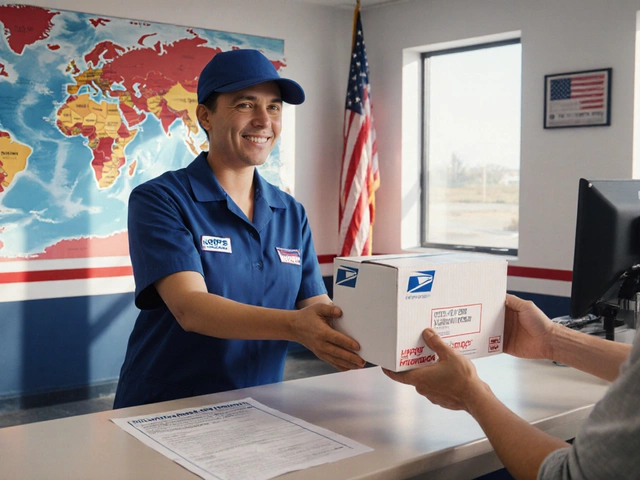
At its simplest level, E-commerce is the buying and selling of goods or services using the internet, and the transfer of money and data to execute these transactions. However, this definition only scratches the surface. E-commerce is the bridge between digital desire and physical fulfillment.
Think of it as a three-part engine:
- The Frontend: The website or app you interact with (User Experience/UI).
- The Backend: The software managing inventory, orders, and customer data (ERP systems).
- The Fulfillment: The physical movement of products via shipping and logistics partners.
If any part of this engine fails, the transaction collapses. A beautiful website means nothing if the payment gateway crashes. Great marketing fails if the warehouse cannot locate the item. Understanding e-commerce requires looking at all three components working together.
The Five Main Types of E-Commerce Models
Not all online sales are created equal. The relationship between the buyer and the seller determines the model. Knowing which model fits your goals is the first step in building or analyzing an online business.
| Model | Description | Key Example | Primary Challenge |
|---|---|---|---|
| B2C | Business sells directly to consumers. | Amazon, Zara | High customer acquisition costs. |
| B2B | Business sells to other businesses. | Alibaba, Salesforce | Longer sales cycles and complex contracts. |
| C2C | Consumers sell to other consumers via a platform. | eBay, Etsy, Vinted | Quality control and trust issues. |
| C2B | Consumers offer products/services to businesses. | Upwork, Influencer Marketing | Monetizing individual value at scale. |
| B2G | Businesses sell to government agencies. | GSA Schedules vendors | Strict regulatory compliance. |
B2C (Business-to-Consumer) is what most people think of when they hear "online shopping." You buy shoes from Nike.com. The transaction is fast, emotional, and often impulsive. Margins can be thin because competing for attention is expensive.
B2B (Business-to-Business) operates differently. A restaurant owner buys kitchen equipment from a supplier online. These deals involve larger volumes, recurring orders, and negotiated pricing. Trust and reliability matter more than flashy design.
C2C (Consumer-to-Consumer) platforms like eBay or Facebook Marketplace allow individuals to sell used goods. The platform takes a fee but does not own the inventory. This model relies heavily on community trust and user-generated reviews.
The Hidden Backbone: E-Commerce Logistics
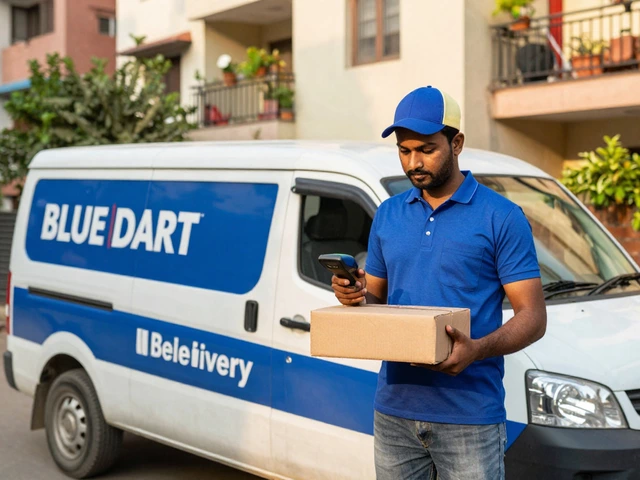
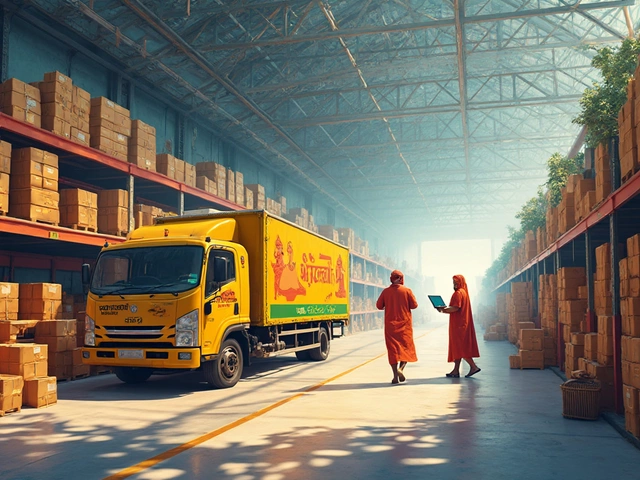
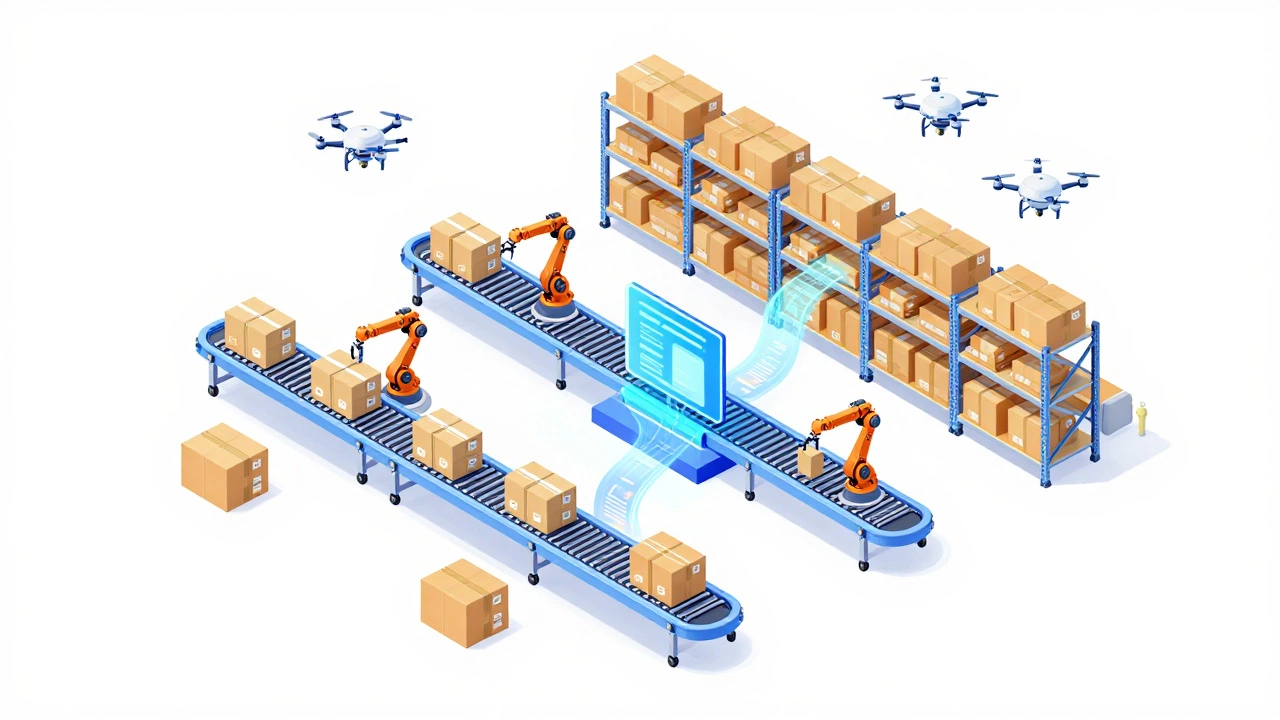
You might have heard the phrase, "The product is sold online, but the business is won in the warehouse." This is true because E-commerce Logistics is the process of planning, implementing, and controlling the efficient flow and storage of goods from point of origin to point of consumption in online retail.
Logistics is no longer just about shipping boxes. It is about speed, visibility, and returns management. In 2026, customers expect next-day or even same-day delivery. Meeting this expectation requires sophisticated infrastructure.
Inventory Management Systems
Before a box leaves the warehouse, software must know exactly where every item sits. Modern Inventory Management Systems (IMS) use real-time data synchronization. If you sell a shirt on Instagram, Shopify, and Amazon simultaneously, the IMS ensures you do not oversell stock. Without this, you face backorders, angry customers, and lost revenue.
Fulfillment Centers vs. Dropshipping
There are two main ways to handle the physical goods:
- Traditional Fulfillment: You buy bulk inventory, store it in a warehouse (either your own or a third-party logistics provider, known as 3PL), and ship it when an order comes in. This offers higher margins but requires upfront capital.
- Dropshipping: You never touch the product. When a customer buys from you, your supplier ships it directly to them. This lowers risk but reduces control over packaging, shipping speed, and quality.
For serious brands in 2026, hybrid models are becoming popular. High-volume items are stored in local fulfillment centers for speed, while niche items are dropshipped to avoid dead stock.
The Returns Game
Returns are the silent killer of e-commerce profits. Industry averages show return rates between 20% and 30% for apparel. Efficient reverse logistics-the process of handling returns-is critical. Companies that make returning items easy (free labels, instant refunds) build loyalty, but they must optimize the inspection and restocking process to minimize loss.
Technology Powering Modern E-Commerce
The tools available today have transformed how we shop. It is not just about a static catalog anymore.
Artificial Intelligence (AI) drives personalization. Algorithms analyze your past purchases to recommend products you are likely to buy. AI chatbots handle customer service inquiries instantly, reducing wait times. Predictive analytics help retailers stock the right products before demand spikes.
Augmented Reality (AR) is solving the "try-before-you-buy" problem. Furniture stores let you project a sofa into your living room via your phone camera. Jewelry brands allow virtual try-ons. This reduces uncertainty and lowers return rates.
Payment Gateways have evolved beyond credit cards. Digital wallets like Apple Pay, Google Pay, and emerging crypto-payment options provide frictionless checkout experiences. One-click purchasing reduces cart abandonment significantly.
E-Commerce Trends Shaping 2026 and Beyond
The landscape changes quickly. Here is what is driving growth right now:
Social Commerce is blurring the line between entertainment and shopping. Platforms like TikTok and Instagram allow users to purchase items without leaving the app. Live streaming shopping events, popular in Asia for years, are gaining traction globally. Influencers act as real-time salespeople.
Sustainability is no longer optional. Consumers care about carbon footprints. Brands that offer plastic-free packaging, carbon-neutral shipping, or circular economy programs (reselling used goods) attract loyal customers. Transparency in sourcing is a major competitive advantage.
Hyper-Personalization goes beyond recommendations. Dynamic pricing adjusts based on demand and user behavior. Email campaigns trigger specific messages based on browsing history. The experience feels tailored to each individual, increasing conversion rates.
Voice Commerce is growing with smart speakers. While still niche for complex purchases, buying groceries or refilling household supplies via voice commands is becoming convenient for many households.

Challenges Facing Online Retailers
Despite the opportunities, e-commerce is not easy. Competition is fierce, and margins are under pressure.
Cybersecurity Threats are constant. Data breaches can destroy trust overnight. Protecting customer payment information and personal data requires robust security protocols, regular audits, and compliance with regulations like GDPR in Europe or CCPA in California.
Shipping Costs remain a pain point. Fuel prices, labor shortages, and last-mile delivery complexities drive up costs. Passing these costs to customers can lead to cart abandonment. Finding the balance between free shipping thresholds and profitability is a delicate dance.
Customer Acquisition Costs (CAC) are rising. Advertising on social media and search engines is more expensive than ever. Brands must focus on retention, email marketing, and organic content creation to lower their reliance on paid ads.
How to Get Started in E-Commerce
If you want to enter this space, start small and validate your idea.
- Choose Your Niche: Do not try to sell everything. Focus on a specific audience with a specific problem. Passionate niches have better engagement.
- Select a Platform: Use established platforms like Shopify, WooCommerce, or BigCommerce. They handle security, hosting, and payments, letting you focus on products.
- Source Products: Decide between manufacturing, wholesale, or dropshipping. Test small batches before committing to large inventory.
- Build Brand Identity: Create a logo, tone of voice, and visual style that resonates with your target audience. Consistency builds trust.
- Launch Marketing: Use a mix of SEO, social media, and email marketing. Drive traffic to your site and capture emails for future campaigns.
- Analyze and Iterate: Track metrics like conversion rate, average order value, and customer lifetime value. Adjust your strategy based on data.
E-commerce is a marathon, not a sprint. Success comes from consistent improvement, listening to customer feedback, and adapting to market changes.
Is e-commerce profitable in 2026?
Yes, e-commerce can be highly profitable, but competition is intense. Profitability depends on finding a profitable niche, optimizing customer acquisition costs, maintaining healthy margins, and providing excellent customer service. Many successful businesses report net profit margins between 10% and 20% after expenses.
What is the difference between e-commerce and retail?
Retail refers to the sale of goods to consumers, which can happen in physical stores or online. E-commerce specifically refers to retail transactions conducted electronically over the internet. All e-commerce is retail, but not all retail is e-commerce.
Do I need my own warehouse for e-commerce?
No, you do not need your own warehouse. Many businesses use Third-Party Logistics (3PL) providers who store, pack, and ship products on their behalf. Alternatively, dropshipping allows you to sell without holding any inventory at all.
What are the biggest risks in starting an online store?
Major risks include high customer acquisition costs, inventory mismanagement, cybersecurity threats, and relying too heavily on a single traffic source (like one social media platform). Diversifying marketing channels and keeping cash reserves helps mitigate these risks.
How important is mobile optimization for e-commerce?
It is critical. In 2026, over 70% of e-commerce traffic comes from mobile devices. If your site is not mobile-friendly, loads slowly, or has difficult navigation on phones, you will lose the majority of potential customers immediately.
Can I sell services through e-commerce?
Absolutely. E-commerce includes both physical goods and digital services. Examples include online courses, consulting bookings, software subscriptions (SaaS), and freelance services. The transaction mechanism is the same, even if no physical product ships.
What is the role of AI in modern e-commerce?
AI powers personalized product recommendations, dynamic pricing, fraud detection, and customer service chatbots. It also helps predict inventory needs and optimize marketing campaigns by analyzing vast amounts of user data in real time.
How do I handle international shipping in e-commerce?
International shipping involves customs duties, taxes, and longer delivery times. Use reliable freight forwarders or 3PLs experienced in cross-border trade. Clearly communicate shipping costs and import fees to customers upfront to avoid surprise charges and returns.