Logistics Role Finder
Not sure which title to use? Select the primary goal or responsibility that best describes the role you are looking for or performing.
Select a Responsibility:
Select a responsibility on the left to see the matching job title and details.
Logistics Coordinator
The Daily Problem Solver
Perfect for those who enjoy the fast pace of rerouting trucks and managing real-world chaos.
Supply Chain Manager
The Big-Picture Strategist
Focuses on the entire product lifecycle, from sourcing raw materials to final distribution.
Warehouse Manager
The Ground Control Expert
Responsible for the physical space, inventory accuracy, and equipment management.
Freight Forwarder
The Cargo Travel Agent
Specializes in navigating international paperwork and booking space across different carriers.
Dispatcher
The Voice in the Ear
Manages the "final mile," assigning loads and handling emergencies on the road.
Quick Summary: Common Roles
- Logistics Coordinator: The daily "problem solver" who handles scheduling and tracking.
- Supply Chain Manager: The big-picture strategist overseeing the entire flow of goods.
- Warehouse Manager: The person in charge of the physical storage and inventory.
- Freight Forwarder: The agent who organizes the transport of goods between different carriers.
- Dispatcher: The direct link between the company and the drivers on the road.
The Entry-Level Hub: Logistics Coordinators and Specialists
When people ask "what is a logistics person called," they are often thinking of the Logistics Coordinator is a professional responsible for the daily operational flow of goods, managing schedules, and communicating with carriers. This is the engine room of any shipping operation. If you have ever wondered how a package gets from a factory to your door without getting lost, the coordinator is the one making the phone calls and updating the spreadsheets.
A coordinator doesn't just watch a screen. They deal with real-world chaos. For example, if a snowstorm hits the 401 highway in Ontario, the logistics coordinator is the person frantically rerouting trucks to avoid a six-hour delay. They act as the bridge between the sales team and the delivery drivers. In smaller companies, you might see this role called a Logistics Specialist or a Shipping Clerk, but the core job remains the same: keep the product moving.
The Strategists: Supply Chain Managers
If the coordinator is the one driving the car, the Supply Chain Manager is the person who designs the entire road map, overseeing the procurement, production, and distribution of products. This role is much broader than simple logistics. While logistics focuses on the movement of goods, supply chain management looks at the entire lifecycle of a product.
A supply chain manager asks questions like, "Should we source our raw materials from Mexico or Vietnam to save 10% on costs?" or "How can we reduce our carbon footprint by optimizing our delivery routes?" They use complex data to predict demand. If they underestimate how many iPhones people will buy in November, the company loses millions in potential sales. They aren't just managing trucks; they are managing the financial health of the business.
The Ground Control: Warehouse and Inventory Roles
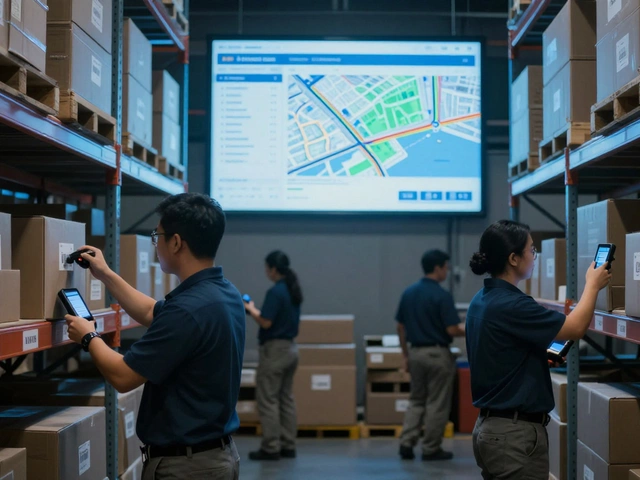
You can't move goods if you don't know where they are. This is where the Warehouse Manager comes in. This person is the king or queen of the four walls. They are responsible for the physical space where goods are stored, the people working inside it, and the equipment used to move heavy pallets.
Under the manager, you'll find roles like Inventory Controllers and Picking/Packing Specialists. An Inventory Controller is obsessed with accuracy. If the computer says there are 500 blue widgets but there are only 480, that is a failure that ripples through the whole system. They use tools like WMS (Warehouse Management Systems) to keep track of every single item in real-time. Without a disciplined warehouse person, the most expensive shipping software in the world is useless.
| Job Title | Primary Goal | Key Skill | Typical Tool |
|---|---|---|---|
| Logistics Coordinator | Daily Execution | Multi-tasking | TMS Software |
| Supply Chain Manager | Strategic Planning | Data Analysis | ERP Systems |
| Warehouse Manager | Physical Storage | Team Leadership | WMS / Forklifts |
| Freight Forwarder | International Transit | Regulatory Knowledge | Customs Portals |
| Dispatcher | Driver Management | Communication | GPS Tracking |
The Middlemen: Freight Forwarders and Customs Brokers
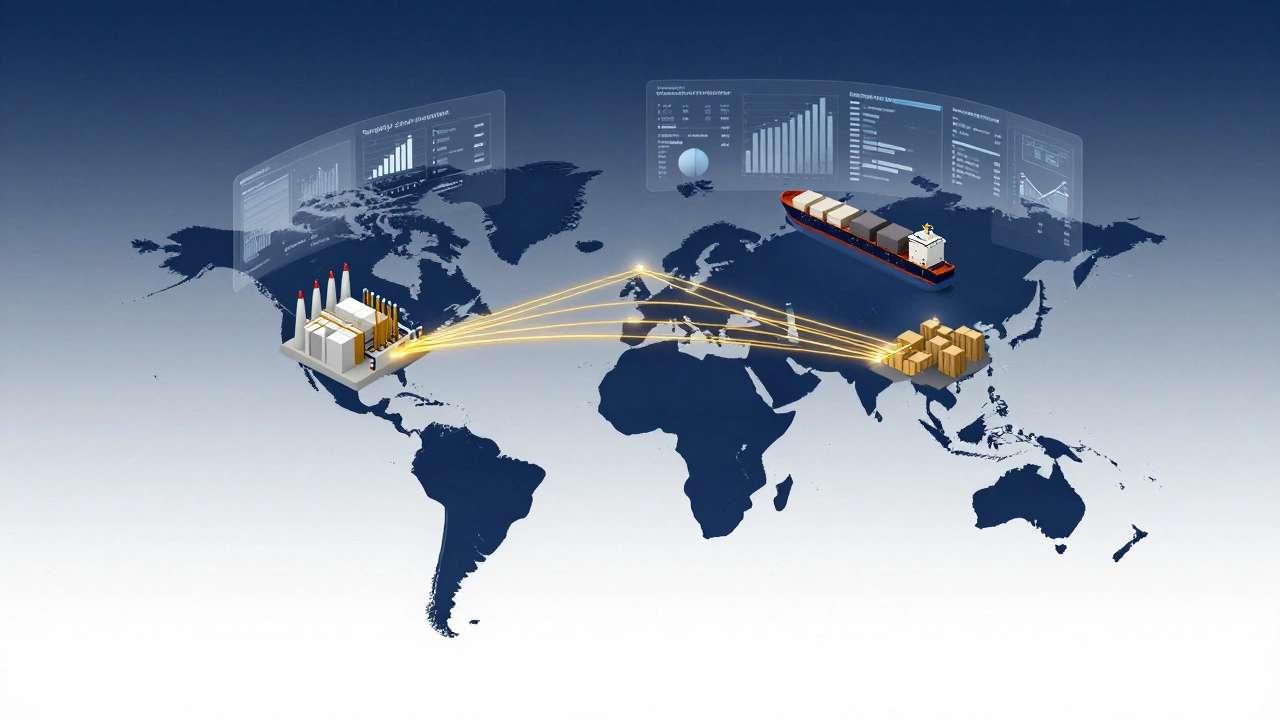
When a business needs to move goods across an ocean, they don't usually call a ship directly. Instead, they hire a Freight Forwarder. Think of them as travel agents for cargo. They don't own the ships or planes; they own the relationships and the knowledge of how to get a 40-foot container from a pier in Long Beach to a warehouse in Mississauga.
Forwarders deal with the nightmare of international paperwork. This is where Customs Brokers enter the picture. A customs broker is a licensed professional who ensures that shipments comply with government laws. They calculate tariffs and taxes so the cargo doesn't get seized at the border. If a company imports 1,000 solar panels, the broker ensures they are classified correctly under the Harmonized System (HS) codes to avoid massive fines.
The Final Mile: Dispatchers and Fleet Managers
The most stressful part of any logistics chain is the "final mile"-the distance from the last distribution center to the customer's door. This is the domain of the Dispatcher. The dispatcher is the voice in the driver's ear. They assign loads, track GPS locations, and handle the inevitable emergencies, like a truck breaking down on the highway or a customer refusing a delivery.
Above the dispatcher is the Fleet Manager. While the dispatcher focuses on the where and when, the fleet manager focuses on the how. They manage the health of the trucks, schedule oil changes, and ensure drivers are following safety laws (like Hours of Service regulations). If a fleet manager ignores a vibrating engine in a semi-truck, it could lead to a catastrophic failure that stops an entire delivery route for a day.

Which Title Should You Use?
If you are writing a resume or a job description, the title you choose depends on the scope of the work. Are you managing a process or a person? Are you looking at a map of the world or a map of the warehouse? If the job is about making sure the truck leaves on time today, use Logistics Coordinator. If the job is about deciding which trucks to buy for the next five years, use Supply Chain Manager.
In the modern era, many of these roles are merging. With the rise of 3PL (Third-Party Logistics) providers, one person might handle coordination, forwarding, and warehouse oversight all at once. However, in large corporations like Amazon or Walmart, these roles are strictly separated to ensure maximum efficiency and accountability.
Is a logistics coordinator the same as a supply chain manager?
No. A logistics coordinator focuses on the tactical, day-to-day movement of goods (shipping, receiving, and tracking). A supply chain manager focuses on the strategic, long-term planning of the entire network, including sourcing raw materials and managing supplier relationships.
What is the difference between a freight forwarder and a carrier?
A carrier is the company that actually owns the transport assets (like a trucking company or an airline). A freight forwarder is an intermediary who organizes the shipment, books the space with the carrier, and handles the documentation, but doesn't necessarily own the vehicles.
What are the most important skills for any logistics person?
The most critical skills are problem-solving under pressure, attention to detail, and strong communication. Because logistics is essentially managing a series of potential disasters, the ability to pivot quickly when a plan fails is more valuable than any specific software certification.
Do I need a degree to become a logistics professional?
For entry-level roles like dispatchers or warehouse coordinators, experience and certifications (like a forklift license or a basic supply chain cert) are often enough. However, for high-level Supply Chain Manager roles, a degree in Logistics, Business Administration, or an APICS certification is usually required.
What is a 3PL and how does it change job titles?
3PL stands for Third-Party Logistics. These are companies that provide logistics services to other businesses. In a 3PL environment, titles often include "Account Manager" or "Operations Lead," because the person is managing the logistics for a client rather than for their own company's internal products.
Next Steps for Your Logistics Career
If you are just starting out, don't get too hung up on the title. Focus on the job-to-be-done. If you love the fast pace and the thrill of solving an immediate crisis, look for coordinator or dispatcher roles. If you enjoy analyzing data and predicting trends, aim for supply chain analysis or management.
For those already in the field, the best way to move up is to bridge the gap between roles. A warehouse manager who learns how to use a Transport Management System (TMS) to optimize shipping routes becomes a candidate for a Logistics Director role. The industry is moving toward total integration; the people who understand both the physical warehouse and the digital supply chain are the ones who get promoted.