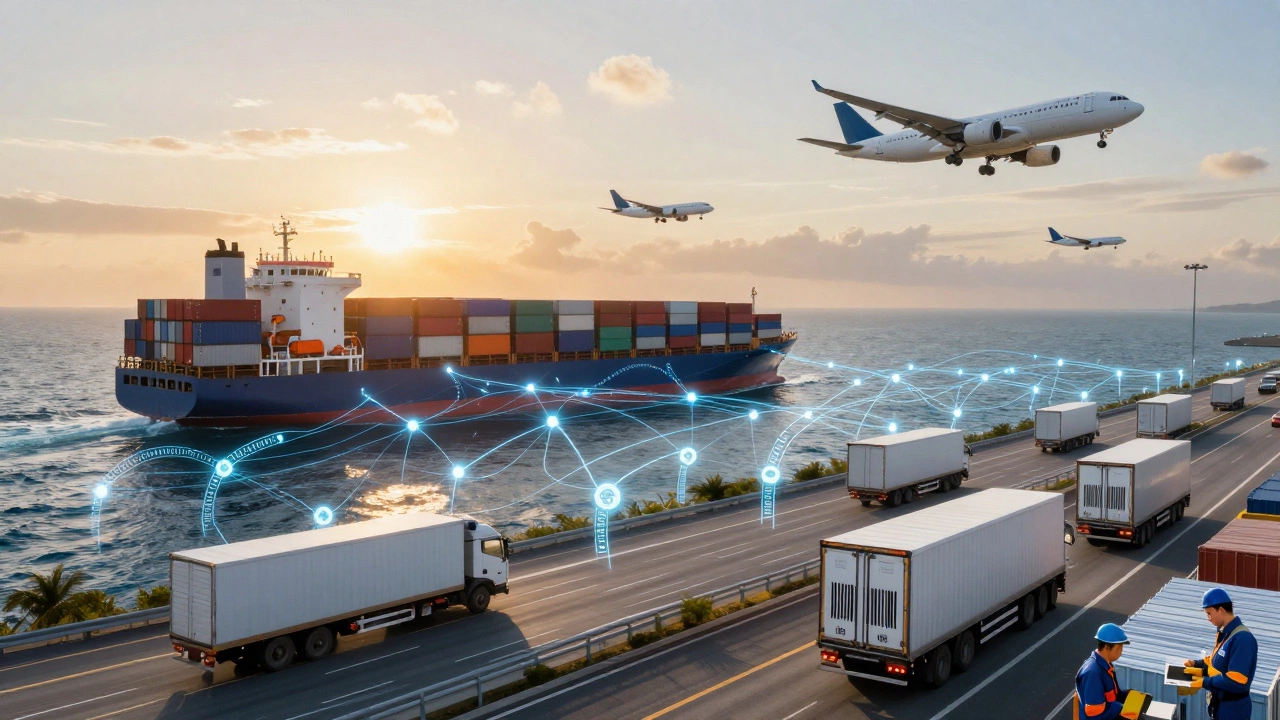
Supply Chain Basics: What You Need to Know to Move Goods Efficiently
When you order something online, it doesn’t just appear at your door. That’s the work of the supply chain, the end-to-end system that moves products from makers to customers. Also known as logistics network, it’s what keeps stores stocked, warehouses full, and packages arriving on time. It’s not magic. It’s a series of connected steps—planning, sourcing, making, moving, and delivering—that happen every single day, often without you noticing.
Behind every delivery is a warehouse management system, the digital brain that tracks inventory, directs workers, and avoids overstock or empty shelves. Companies like Amazon, Walmart, and even small e-commerce shops rely on these systems to handle hundreds or thousands of items daily. Without them, orders get lost, delays pile up, and customers leave. And it’s not just about storage—it’s about timing. A delay in one stage, like customs or truck scheduling, can ripple through the whole chain.
The e-commerce logistics, the part of the supply chain focused on online sales and last-mile delivery, has changed everything. Today, people expect fast, cheap, and free shipping. That means the supply chain basics have to be tighter than ever. Forecasting demand, packing efficiently, choosing the right carrier, and handling returns aren’t optional—they’re the difference between a happy customer and a bad review.
You don’t need a degree in logistics to understand this. Think of it like cooking a meal. You need ingredients (raw materials), a recipe (planning), a kitchen (warehouse), a chef (team), and delivery to the table (last-mile shipping). Mess up any step, and the meal’s ruined. That’s why businesses that get the supply chain basics right win. They save money, keep customers loyal, and grow faster.
What you’ll find below are real, practical breakdowns of how this all works—from how Amazon moves millions of packages to why your 100-pound box costs $1,200 to ship overseas. You’ll see what roles actually exist in logistics, how carriers like DHL and USPS compare, and what tech is making warehouses faster. No fluff. Just what you need to know to make smarter decisions, whether you’re shipping a bike, running an online store, or just curious about how your stuff gets here.