Logistics Cost & Revenue Estimator
Shipment Details
Cost Breakdown
| Base Freight Charge | $0.00 |
| Warehousing & Storage | $0.00 |
| Fuel Surcharge (FSC) | $0.00 |
| Accessorial Fees | $0.00 |
| Premium Services | $0.00 |
Total Estimated Cost:
$0.00
Revenue Insight:
Enter details and calculate to see insights on how logistics companies maximize profit through these line items.
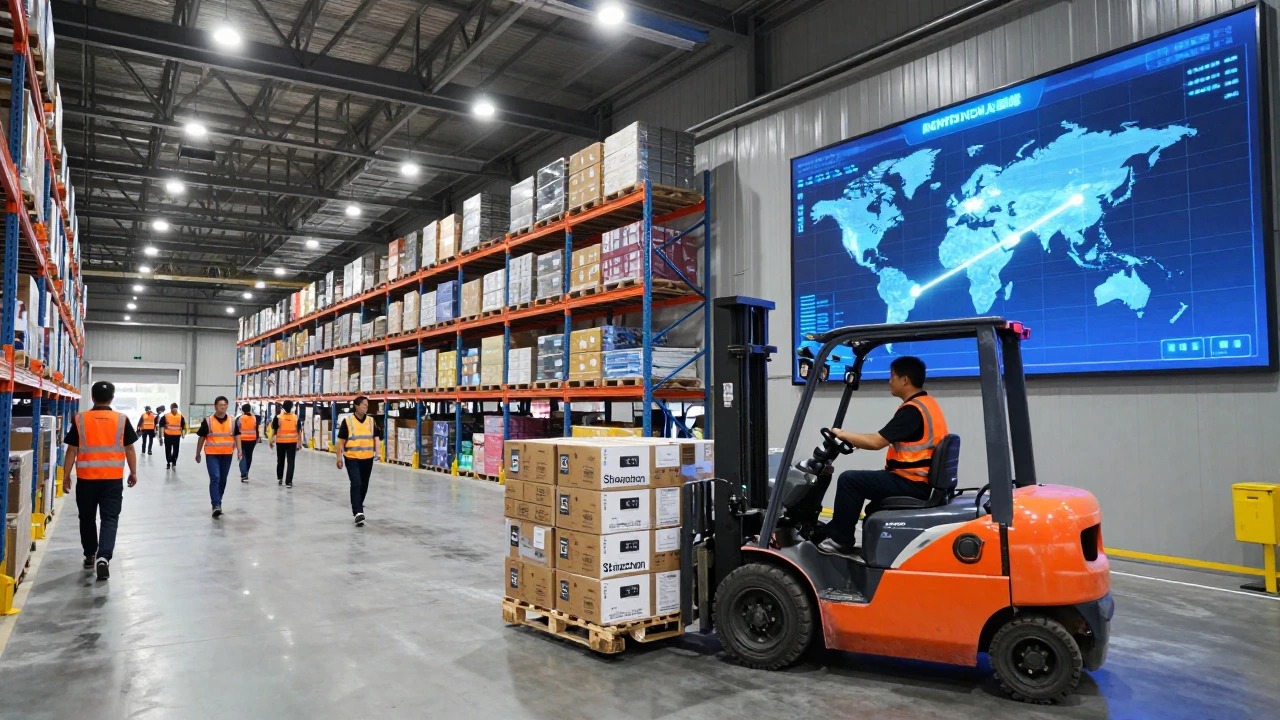
Picture this: A pallet of electronics sits in a warehouse in Shenzhen. Within 48 hours, it needs to be on a shelf in Toronto. That journey doesn’t happen by magic. It happens because a logistics company is a business that manages the flow of goods from origin to consumption orchestrated every step. But here’s the question most people never ask: How do they actually make money moving stuff around?
It’s not just about charging for gas and truck rentals. The logistics industry is a complex web of fees, surcharges, technology licenses, and value-added services. For a regular person or even a small business owner, the billing statement can look like a puzzle. Understanding these revenue streams helps you negotiate better rates, avoid hidden costs, and see why your shipping bill might spike during peak season.
The Core Revenue Engine: Freight Charges
At its simplest, a logistics company makes money by charging for transportation. This is the baseline. If you hire a mover, you pay for the move. In global trade, this is called freight charges. These charges are rarely flat rates. They depend heavily on weight, volume, distance, and mode of transport.
For ocean freight, companies charge per container (FEU or TEU). For air freight, it’s usually per kilogram, but there’s a catch: dimensional weight. If your box is light but huge, you pay for the space it takes up, not just its mass. Road freight often uses mileage-based pricing plus fuel adjustments. This core service generates the bulk of revenue for asset-heavy players like Maersk is a Danish multinational shipping company or FedEx is an American multinational delivery services company.
- Ocean Freight: Charged per container unit. Prices fluctuate with oil costs and port congestion.
- Air Freight: Charged per kg. Premium pricing for speed.
- Road Freight: Charged per mile/km plus fuel surcharges.
Warehousing and Storage Fees
Moving goods is only half the battle. Storing them is where many logistics firms find stable, recurring revenue. Warehousing isn’t just renting out floor space; it’s a service model. Companies charge for inbound receiving, put-away, storage (by pallet position or square footage), and outbound picking and packing.
In the era of e-commerce, this has evolved into Fulfillment Centers. Here, the logistics provider handles everything from inventory management to last-mile dispatch. They charge a monthly storage fee plus a transaction fee for every order processed. This model creates high customer stickiness. Once a brand integrates its inventory into a provider’s system, switching costs become prohibitive. This is why companies like Amazon FBA is Fulfillment by Amazon, a logistics service for sellers dominate the conversation-they lock customers into their ecosystem through integrated storage and shipping.
Surcharges and Accessorial Fees
If freight is the bread, surcharges are the butter-and sometimes the salt. These are additional charges applied to cover specific risks or operational complexities. For shippers, these line items often feel like penalties, but for logistics providers, they protect profit margins against volatility.
| Surcharge Type | Trigger Condition | Purpose |
|---|---|---|
| Fuel Surcharge (FSC) | Rise in diesel/jet fuel prices | Hedges against fuel cost volatility |
| Congestion Surcharge | Port delays or traffic bottlenecks | Compensates for idle time and equipment detention |
| Liftgate Fee | Delivery location lacks loading dock | Covers extra labor and equipment usage |
| Residential Delivery | Final destination is a home, not a business | Accounts for longer stop times and security risks |
| Peak Season Surcharge | High demand periods (e.g., Q4 holidays) | Manages capacity constraints and incentivizes early booking |
These fees are critical. During the pandemic, for example, port congestion in Los Angeles and Long Beach led to massive surcharges. Logistics companies didn’t just absorb those costs; they passed them on, ensuring profitability despite operational chaos.
Value-Added Services (VAS)
This is where the real margin expansion happens. Basic transport and storage have thin margins due to competition. Value-Added Services differentiate providers and allow for premium pricing. VAS includes anything beyond simple point-A-to-point-B movement.
Think about kitting-bundling multiple products into one SKU before shipping. Or reverse logistics: handling returns, inspecting damaged goods, and restocking or refurbishing them. For electronics manufacturers, this might include serial number scanning and data entry upon arrival. For fashion brands, it could mean hang-tagging or quality checks. Each of these tasks adds labor and complexity, which translates directly to higher fees. A logistics provider that offers comprehensive VAS becomes a strategic partner, not just a vendor.
Technology and Data Monetization
Modern logistics is as much about software as it is about trucks. Many large logistics firms now generate significant revenue from their proprietary technology platforms. They offer visibility tools that let shippers track shipments in real-time. Some charge subscription fees for access to advanced analytics dashboards.
Consider Freightos is a digital freight marketplace connecting shippers with carriers. While not a traditional carrier, it monetizes data by providing market intelligence and benchmarking reports. Traditional players like DHL and UPS also sell software solutions for supply chain optimization. They license their routing algorithms, warehouse management systems (WMS), and transportation management systems (TMS) to third parties. This tech-driven revenue stream is less volatile than physical freight, providing a steady cash flow even when shipping volumes dip.

Customs Brokerage and Compliance
International shipping requires navigating a maze of regulations. Customs clearance is a specialized service. Logistics companies employ licensed customs brokers who handle documentation, tariff classification, and duty payments. They charge a flat fee per shipment or a percentage of the cargo value.
This service is high-margin because it requires expertise. Mistakes here lead to fines, seized goods, and delayed deliveries. By offering end-to-end compliance, logistics firms reduce risk for their clients. In regions with complex trade agreements, like the USMCA or EU single market, accurate classification under Harmonized System (HS) codes can save clients thousands in duties. The broker captures a portion of that value through their service fees.
Asset Utilization and Backhaul Optimization
Empty trucks lose money. Every mile a truck drives without cargo is pure waste. Smart logistics companies maximize revenue by optimizing backhauls. If a truck delivers goods from Toronto to Montreal, it shouldn’t return empty. Finding cargo for the return trip-even at a lower rate-adds incremental revenue with minimal fixed costs.
Digital freight matching platforms have made this easier. Companies use AI to predict demand patterns and pre-book return loads. This increases asset utilization rates. Higher utilization means more revenue per vehicle without buying more vehicles. It’s a classic efficiency play that directly boosts the bottom line.
Insurance and Financial Services
Goods in transit are vulnerable. Logistics providers often partner with insurance companies to offer cargo insurance. They take a commission on premiums sold. Additionally, some large firms offer factoring services, paying suppliers early for a fee. This financial layer turns logistics companies into quasi-banks, generating interest income and commissions.
For example, if a supplier needs cash flow immediately after shipping goods, the logistics provider can advance payment minus a discount fee. The provider then collects from the buyer later. This service strengthens relationships and adds a non-operational revenue stream.
What is the average profit margin for a logistics company?
Profit margins vary widely. Asset-heavy carriers like trucking firms typically see net margins of 2-5%. Asset-light brokers and forwarders can achieve 10-15% margins because they don’t own the physical fleet. Technology-enabled logistics platforms may report even higher operating margins due to scalability.
How do logistics companies handle fuel price fluctuations?
They use Fuel Surcharges (FSC). These are variable fees added to the base freight rate, indexed to current fuel prices. When diesel prices rise, the FSC increases automatically, protecting the company’s margin. When prices fall, the surcharge decreases.
Is warehousing more profitable than transportation?
Not necessarily higher margin, but more stable. Transportation is cyclical and sensitive to economic downturns. Warehousing provides recurring revenue through long-term leases and storage fees. However, warehousing requires significant capital investment in facilities and automation.
Why are residential delivery fees so high?
Residential stops take longer. Drivers may need to wait for someone to answer the door, navigate narrow streets, or deal with security gates. There’s also a higher risk of theft or failed deliveries. These inefficiencies increase labor costs, which are passed on as surcharges.
Can small businesses negotiate logistics rates?
Yes, but leverage is limited. Small shippers should focus on consolidating shipments to reach volume discounts. Using freight brokers can also help access negotiated carrier rates. Avoiding unnecessary surcharges by optimizing packaging and delivery windows is another effective strategy.