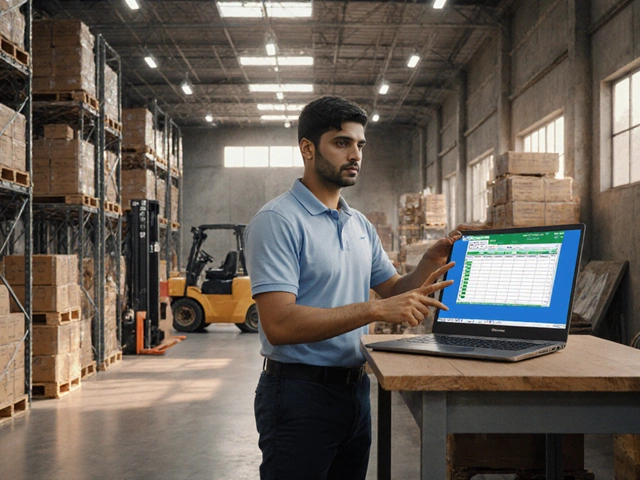
E-commerce Shipping Cost & Margin Estimator
Product & Pricing
Logistics Factors
Breakdown: Sale Price ($0) − COGS ($0) − Logistics ($0) − Return Risk ($0) = $0
When we talk about e-commerce logistics, we aren't just talking about trucks and boxes. We're talking about the entire journey a product takes from a manufacturer's floor to your front porch. It is the physical manifestation of a digital transaction. If your logistics fail, your brand reputation dies, no matter how great your marketing is.
Key Takeaways
- Logistics is the backbone of e-commerce, turning digital orders into physical deliveries.
- Efficiency in fulfillment directly impacts customer retention and profit margins.
- Last-mile delivery is the most expensive and complex part of the chain.
- Reverse logistics (returns) is a critical competitive advantage in modern retail.
The Digital Handshake: Where Sales Meet Shipping
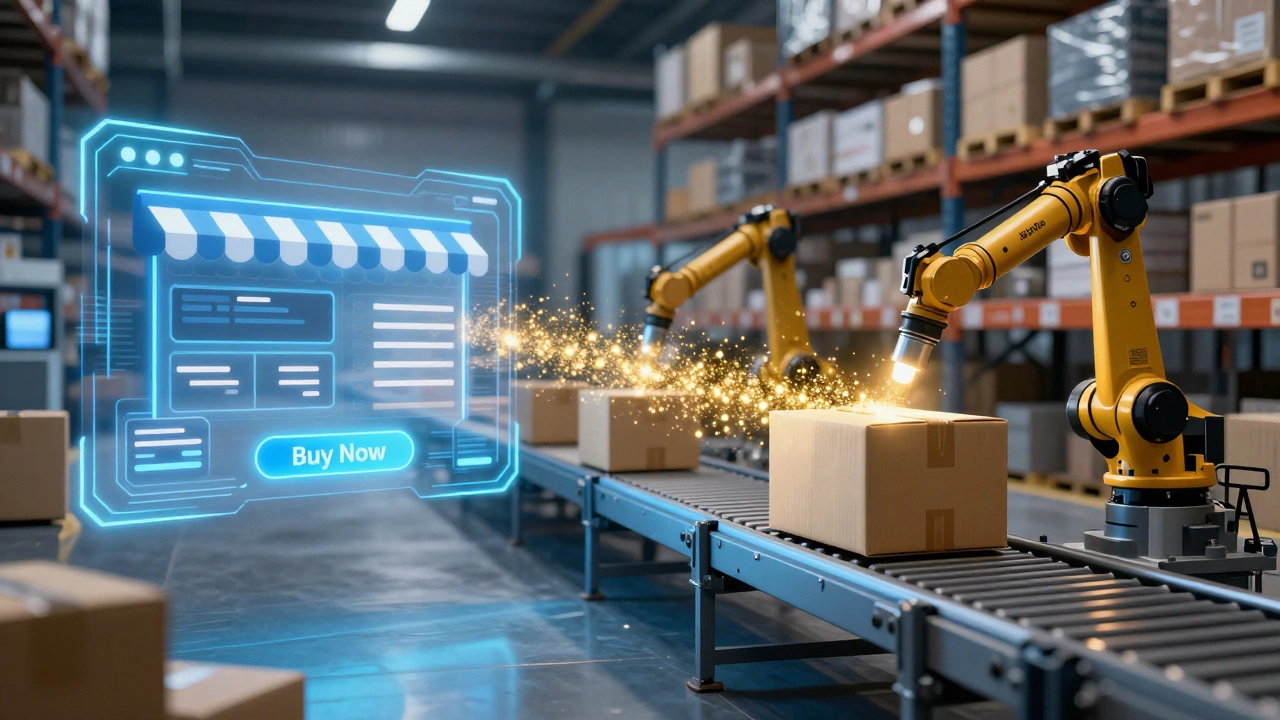
At its core, the relationship between these two is a feedback loop. E-commerce generates the demand, and logistics satisfies it. This isn't a linear process; it's a synchronized dance. The moment a customer completes a checkout, a set of triggers is sent to a Warehouse Management System (WMS). This software is the brain of the operation, telling the staff exactly where a product is located and how to get it out the door fastest.
Think about a company like Amazon. They don't just sell things; they are a logistics company that happens to have a website. Their success comes from reducing the gap between the "click" and the "doorbell." When the logistics side is optimized, the e-commerce side can promise faster shipping, which in turn drives more sales. It's a cycle where better delivery leads to more trust, and more trust leads to higher conversion rates.
Order Fulfillment: The Heart of the Operation
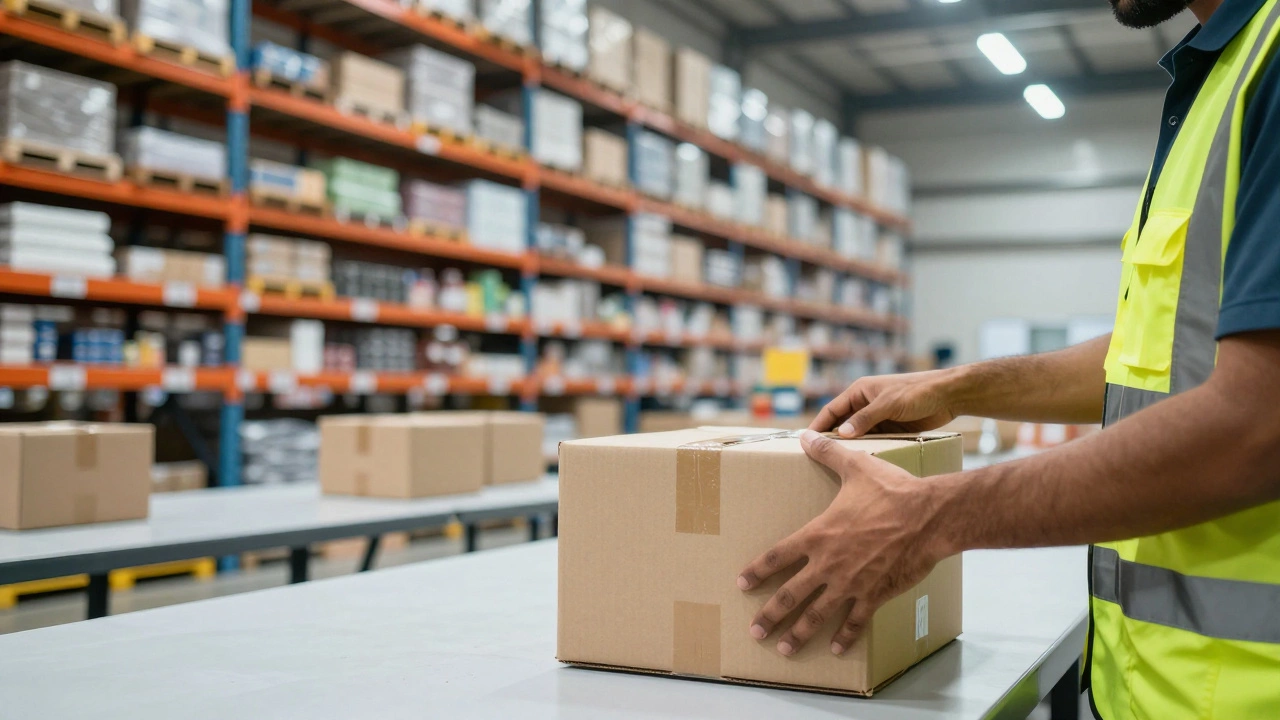
Fulfillment is where the rubber meets the road. It's the process of receiving, packaging, and shipping goods. For most small businesses, this starts in a garage or a small room. But as they grow, they move toward more sophisticated models. One common approach is Third-Party Logistics (3PL), where a business outsources its storage and shipping to a specialist. This allows the merchant to focus on branding and product development while the 3PL handles the heavy lifting.
The fulfillment process usually follows a specific sequence: picking, packing, and shipping. "Picking" is the act of finding the item in the warehouse. To speed this up, many warehouses use "zone picking" where workers stay in one area and pass boxes along. "Packing" involves choosing the right box size to avoid wasting space-and money-on shipping air. Finally, shipping is where the package is handed off to a carrier.
| Model | Control | Scalability | Upfront Cost |
|---|---|---|---|
| In-House | High | Low | High (Rent/Staff) |
| 3PL | Medium | High | Low (Pay-as-you-go) |
| Dropshipping | Low | Very High | Very Low |
The Last-Mile Challenge
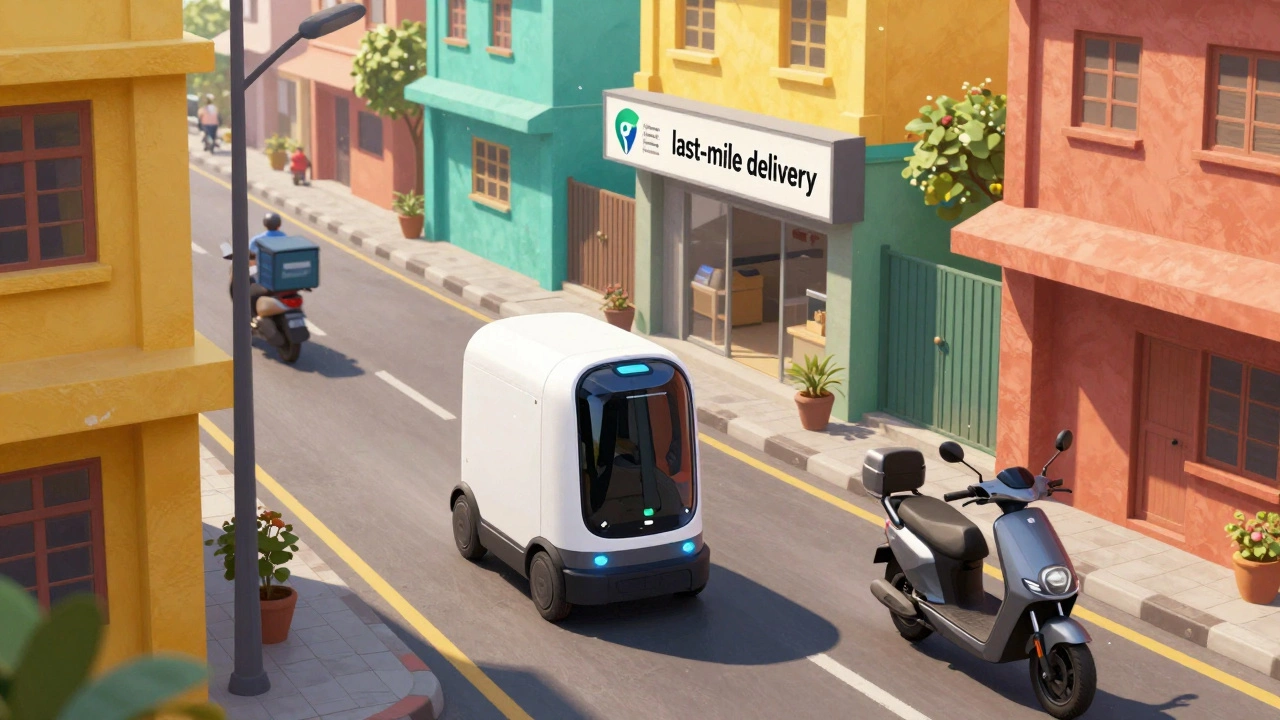
The "last mile" is the final leg of the journey-from the local distribution center to the customer's door. It is notoriously the most expensive part of the entire supply chain, often accounting for over 50% of total shipping costs. Why? Because delivering one package to one house is far less efficient than delivering 1,000 packages to one retail store.
To solve this, companies are getting creative. We're seeing the rise of Micro-Fulfillment Centers, which are tiny warehouses tucked into urban neighborhoods. By placing the inventory closer to the customer, companies can offer 2-hour delivery windows. Others are experimenting with autonomous delivery bots or lockers in convenience stores to avoid the "failed delivery" attempt, which is a huge money sink for carriers.
Reverse Logistics: The Art of the Return
In a brick-and-mortar store, a return is a quick trip back to the counter. In e-commerce, it's a logistical nightmare. Reverse Logistics is the process of moving goods from the customer back to the seller or manufacturer. With some fashion retailers seeing return rates as high as 30%, managing this flow is essential for survival.
A smart reverse logistics strategy doesn't just involve a return label. It involves deciding where the product goes next. Is it damaged? It goes to a liquidator. Is it perfect? It gets refurbished and put back in stock. If a company makes returns easy-like providing a QR code for a drop-off point-customers are more likely to buy in the first place because the risk of a "bad purchase" is removed.
Integrating Technology for a Seamless Flow
You can't manage modern e-commerce logistics with a spreadsheet. You need a tech stack that talks to each other in real-time. At the top is the Enterprise Resource Planning (ERP) system, which connects the front-end store, the accounting department, and the warehouse. When a customer changes their shipping address via the website, the ERP should instantly update the shipping label in the warehouse without a human having to send an email.
Another key player is the Transportation Management System (TMS). A TMS helps businesses choose the cheapest or fastest carrier for a specific route. For example, if a package is going from Toronto to New York, the TMS might compare the rates between DHL and FedEx in milliseconds to find the best option. This level of automation is what allows a small brand to compete with global giants.
Avoiding the Common Logistics Pitfalls
Many online businesses make the mistake of undercharging for shipping to attract customers. While "Free Shipping" is a powerful marketing tool, it's a cost that must be baked into the product price. If you don't, your logistics costs will eat your profit margins alive. Another common error is ignoring inventory accuracy. If your website says you have 5 items in stock, but the warehouse only has 2, you've just created a customer service crisis.
To keep things running smoothly, use a rule of thumb: always maintain a "safety stock" of your best sellers. This buffer prevents you from going out of stock during unexpected spikes in demand, like a viral TikTok video or a holiday rush. Consistency in delivery times is also more important than raw speed. A customer prefers a guaranteed 3-day delivery over a "maybe 1-day, maybe 5-day" experience.
Can a small e-commerce business handle its own logistics?
Yes, in the beginning. Most start with "self-fulfillment," where they store and ship items themselves. However, once you reach a point where packing boxes takes more time than growing the business, it's time to look into a 3PL (Third-Party Logistics) provider to scale operations.
What is the difference between fulfillment and logistics?
Fulfillment is a subset of logistics. Fulfillment focuses specifically on the process of receiving an order, picking the item, and shipping it to the customer. Logistics is a broader term that includes the entire supply chain, including sourcing raw materials, transportation, warehousing, and reverse logistics.
Why is last-mile delivery so expensive?
It's expensive because of the "fragmentation" of delivery. Instead of dropping 500 items at one warehouse, a driver has to stop at 500 different residential addresses. This involves more fuel, more time, and the risk of failed deliveries if the customer isn't home.
How does reverse logistics affect profit?
Returns are costly because they involve two-way shipping and labor to inspect and repackage the item. However, an efficient reverse logistics system allows companies to recover the value of the item quickly through restocking or liquidation, minimizing the total loss.
What software is essential for e-commerce logistics?
At a minimum, you need a Warehouse Management System (WMS) for inventory tracking and a Transportation Management System (TMS) for shipping. For larger operations, an Enterprise Resource Planning (ERP) system is necessary to sync sales, finance, and logistics in one place.
Next Steps for Growth
If you are currently managing your own shipping and feeling the strain, your first step should be a logistics audit. Track your "cost per order" and your "order-to-delivery" time. If those numbers are climbing as you grow, it's a sign you've outgrown your current setup. Consider starting with a hybrid model-keep your most fragile or high-value items in-house and move your high-volume staples to a 3PL.
For those already using a 3PL, the next move is optimizing your inventory placement. Instead of one giant warehouse in the middle of the country, split your stock across two or three regional hubs. This reduces the distance of the last mile, lowers your shipping costs, and gets your products to customers faster, giving you a massive edge over the competition.