TMS Software Recommendation Engine
Use this tool to identify the best Transportation Management System for your specific operational needs based on market leaders in 2026.
Running a transportation business in 2026 means you are fighting a war on two fronts: rising fuel costs and customer expectations that border on the unreasonable. You need to move goods faster, cheaper, and with more transparency than ever before. If you are still managing loads on spreadsheets or using disjointed legacy systems, you are leaving money on the table every single day. The question isn't just about finding transportation management software; it is about finding the right engine for your specific operational model.
The market is flooded with options, from enterprise giants to agile startups. Choosing the wrong one can lead to integration nightmares and wasted budget. This guide cuts through the noise to help you identify the best software for your specific size, volume, and complexity needs.
Key Takeaways
- No single "best" exists: The ideal choice depends entirely on your shipment volume, mode of transport (FTL, LTL, parcel), and budget.
- AI is now standard: In 2026, expect AI-driven lane optimization and predictive ETAs as baseline features, not premium add-ons.
- Integration is king: Your TMS must talk seamlessly to your ERP (like SAP or Oracle) and WMS without manual data entry.
- Freight Audit automation: Look for tools that automatically match rates against invoices to prevent overpayments.
Defining the Core Problem: What Does a Modern TMS Do?
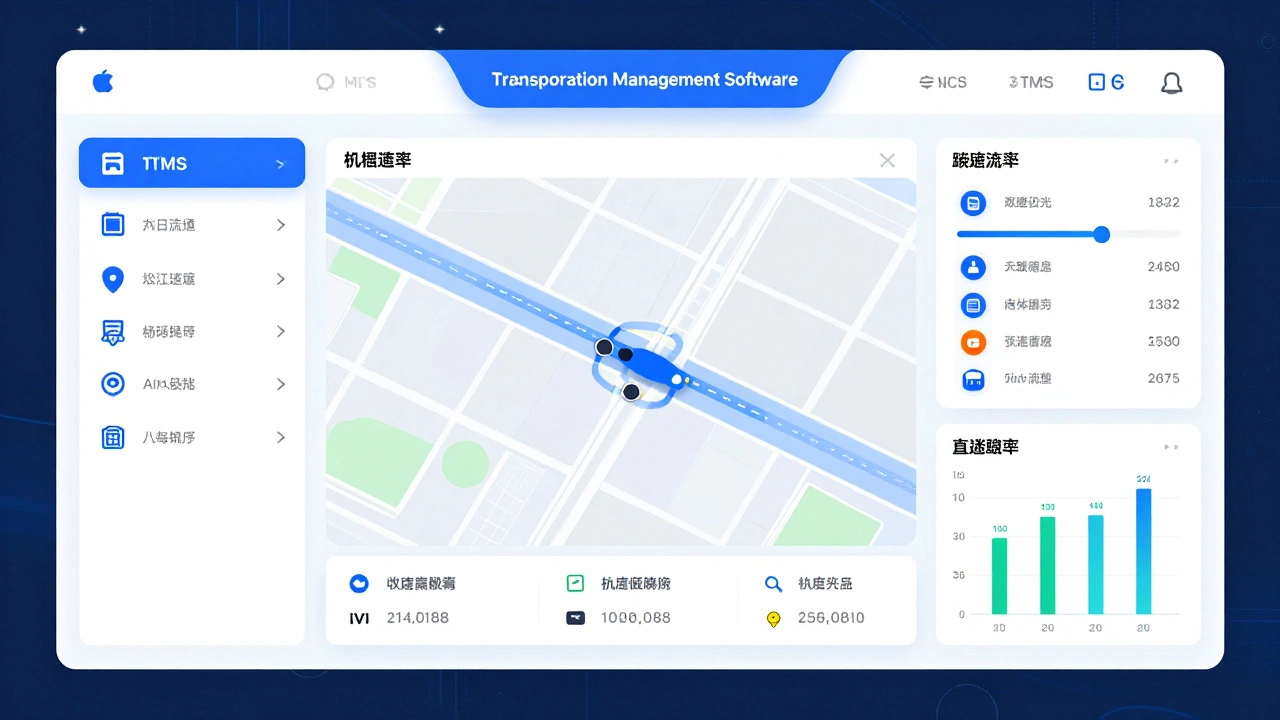
A Transportation Management System (TMS) is the central nervous system of your logistics operation. Unlike simple dispatch apps, a robust TMS handles the entire lifecycle of a shipment. It starts with planning-calculating the most efficient routes based on traffic, weather, and carrier capacity. It moves to execution-booking carriers electronically and generating documents like bills of lading. Finally, it covers visibility and settlement-tracking shipments in real-time and auditing freight bills.
Transportation Management System (TMS) is software that helps businesses plan, execute, and optimize the physical movement of goods in both upstream and downstream operations. It connects shippers, carriers, and customers into a single digital ecosystem.In 2026, the definition has expanded. A modern TMS is also an analytics platform. It tells you not just where your truck is, but why it’s late, how much carbon it emitted, and whether you should have used rail instead. If your current tool only does tracking, it is not a TMS; it is a telematics dashboard.
Top Contenders in the 2026 Market
The landscape is dominated by a few key players, each serving different segments. Here is how the major entities stack up.
| Software Name | Best For | Key Strength | Pricing Model |
|---|---|---|---|
| Ocean Connect | Mid-market Shippers | User-friendly UI, fast implementation | Subscription-based ($500-$1500/mo) |
| Oracle TMS | Large Enterprises | Deep ERP integration, global scale | Custom Enterprise License |
| Konnect | Asset-Based Carriers | Driver app, load board integration | Per-user/per-vehicle fee |
| Project44 | Visibility-First Companies | Real-time network visibility, API-first | Usage-based pricing |
Ocean Connect: The Agile Mid-Market Choice
Ocean Connect has gained massive traction among mid-sized companies because it balances power with simplicity. It offers strong modal coverage, including Full Truckload (FTL), Less-than-Truckload (LTL), and Parcel. Its standout feature is its rate management module, which allows you to negotiate and store complex carrier contracts easily. If you are shipping between 1,000 and 10,000 orders per month, this is often the sweet spot.
Oracle TMS: The Enterprise Powerhouse
If you are a Fortune 500 company with global operations, Oracle TMS is the heavyweight champion. It integrates deeply with Oracle ERP Cloud, meaning your financial data and logistics data live in the same place. It handles complex international trade compliance and multi-modal routing effortlessly. However, the implementation time is long (6-12 months), and the cost is significant. It is not for small businesses.
Konnect: Built for Carriers
Most TMS solutions are built for shippers (the companies sending goods). Konnect is built for carriers (the companies moving them). It focuses on driver efficiency, automated dispatching, and seamless integration with digital load boards. If you own your fleet, this software helps you maximize asset utilization and reduce deadhead miles.
Project44: Visibility as a Service
Project44 operates differently. It is less about booking and more about seeing everything. It aggregates data from thousands of carriers and provides a control tower view of your entire supply chain. Many companies use Project44 alongside another TMS to get superior tracking and predictive analytics.
Critical Features to Evaluate in 2026
When evaluating software, do not just look at the brochure. Dig into these specific capabilities.
- AI-Driven Lane Optimization: Can the software suggest the cheapest carrier for a specific lane based on historical performance? In 2026, algorithms should predict delays before they happen.
- Automated Freight Audit and Pay: Manual invoice checking is obsolete. The software should automatically compare the carrier’s invoice against the agreed-upon rate contract and flag discrepancies.
- Carrier Portal: Does your carrier have a self-service portal to accept loads, upload proof of delivery (POD), and update status? This reduces phone calls and emails dramatically.
- API-First Architecture: Your TMS must connect to your Warehouse Management System (WMS), ERP, and e-commerce platforms via robust APIs. Avoid point-to-point integrations that break when updates occur.
- Sustainability Reporting: With increasing regulatory pressure, you need accurate carbon emission calculations per shipment. Ensure the software calculates Scope 3 emissions automatically.
Matching Software to Your Business Size
One size does not fit all. Here is a heuristic to help you decide.
- Small Businesses (<1,000 shipments/month): Look for cloud-native, low-cost SaaS solutions like Ocean Connect or even advanced modules within QuickBooks/Xero if your needs are basic. Prioritize ease of use and quick setup.
- Mid-Market (1,000-10,000 shipments/month): You need scalability. Choose a dedicated TMS like Blue Yonder or BluJay Solutions that offers strong LTL and FTL capabilities and good customer support.
- Enterprise (>10,000 shipments/month): You need customization and global reach. Oracle, SAP TM, or Manhattan Associates are the standard choices. Budget for a lengthy implementation and dedicated account management.
Common Pitfalls to Avoid
I have seen many companies fail in their TMS rollout. Here is how to avoid their mistakes.
Ignoring Data Cleansing: Garbage in, garbage out. If your address data is messy, your routing will be wrong. Clean your master data before migrating to the new system.
Underestimating Change Management: Dispatchers and planners resist change. Involve them early in the selection process. Train them thoroughly. If they hate the software, they will find workarounds that defeat its purpose.
Choosing Based on Price Alone: The cheapest software often has hidden costs in integration, support, and inefficiency. Calculate the Total Cost of Ownership (TCO) over three years, not just the monthly subscription.
Implementation Strategy: From Selection to Go-Live
Selecting the software is only half the battle. Implementation determines success.
- Define KPIs: What does success look like? Is it 10% reduction in freight spend? 95% on-time delivery? Define this before you start.
- Phased Rollout: Do not go live globally on day one. Start with one region or one mode of transport (e.g., domestic FTL). Fix issues, then expand.
- Integrate Early: Build your API connections during the design phase, not at the end. Test data flow rigorously.
- Train Users: Provide role-based training. Dispatchers need different skills than analysts.
Future Trends: What’s Next for TMS?
The technology is evolving rapidly. By 2027, we expect to see greater adoption of autonomous vehicle integration, where the TMS communicates directly with self-driving trucks. Blockchain for secure, immutable documentation is also moving from pilot projects to production. Keep an eye on these developments when choosing a vendor; ensure they have a clear roadmap for innovation.
How much does transportation management software cost?
Costs vary widely. Small business SaaS TMS solutions can range from $500 to $2,000 per month. Mid-market solutions typically cost $2,000 to $10,000 per month. Enterprise solutions like Oracle or SAP are custom-priced, often starting at $50,000+ annually plus implementation fees that can exceed $100,000.
Can I use a TMS if I don’t own a fleet?
Yes. Most TMS solutions are designed for non-asset-based shippers. They help you manage third-party carriers, negotiate rates, and track shipments without needing to own trucks. Look for features like carrier scorecards and rate benchmarking.
How long does it take to implement a TMS?
For cloud-based mid-market solutions, implementation can take 3 to 6 months. For large enterprise systems with complex integrations, it can take 6 to 18 months. Proper planning and data cleansing are critical to staying on schedule.
What is the difference between a TMS and a WMS?
A Warehouse Management System (WMS) manages inventory inside the four walls of a warehouse. A Transportation Management System (TMS) manages the movement of goods outside the warehouse. They should integrate seamlessly so that when an order is picked in the WMS, it automatically triggers a shipment plan in the TMS.
Is cloud-based TMS better than on-premise?
In 2026, cloud-based is overwhelmingly preferred. It offers lower upfront costs, automatic updates, easier scalability, and better remote access. On-premise solutions are largely legacy systems that require heavy IT maintenance and lack modern API capabilities.