E-commerce Shipping Cost Calculator
Calculate Your Shipping Costs
Shipping Estimate
Carrier:
Destination:
Estimated Delivery:
Cost Breakdown
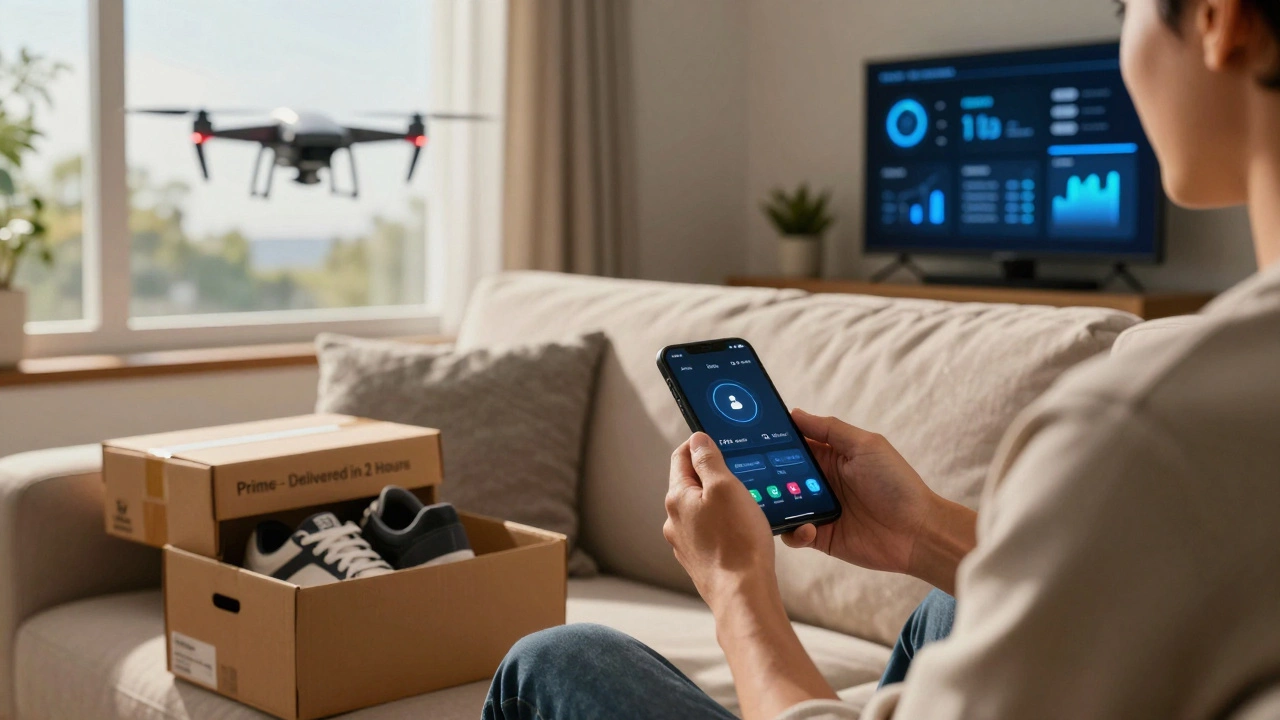
When you order a pair of sneakers from your phone and get them delivered by noon the next day, that’s e-commerce. It’s not just websites selling stuff-it’s the whole system behind it: the website, the payment, the warehouse, the delivery truck, and even the return label you print at home. E-commerce isn’t new, but what’s changed since 2025 is how fast, how personal, and how complex it’s become. If you’re wondering what e-commerce really means beyond the buzzwords, here’s the plain truth: it’s buying and selling anything online, and it’s powered by logistics you rarely see but depend on every day.
What Exactly Is E-Commerce?
E-commerce, short for electronic commerce, is the buying and selling of goods or services over the internet. It includes everything from a one-person Etsy shop selling handmade candles to Amazon processing 2 million orders an hour. The core idea is simple: no physical store needed. You browse, you click, you pay, and something gets shipped to you.
But behind that simple flow is a chain of systems working together. A customer finds a product on a mobile app. The platform checks inventory across three warehouses. Payment is processed through a secure gateway. A robot in a fulfillment center grabs the item. A carrier picks it up within 30 minutes. Tracking updates in real time. And if the item doesn’t fit? A prepaid return label appears in the app, and the package goes back-no extra cost.
This isn’t science fiction. It’s standard for major platforms today. Small businesses can now do the same using tools like Shopify, WooCommerce, or BigCommerce. All you need is a product, a website, and a logistics partner who can handle the rest.
How E-Commerce Is Different From Traditional Retail
Think of traditional retail: you walk into a store, see the item on a shelf, pay at a register, and carry it out. E-commerce flips that. You never touch the product until it’s delivered. That changes everything.
For buyers, it means 24/7 shopping, price comparisons in seconds, reviews from thousands of people, and delivery to your door. For sellers, it means lower overhead-no rent, no cashiers, no in-store staff. But it also means you’re competing globally, not just locally. And if your shipping takes longer than three days, customers leave.
Here’s the real difference: in physical stores, you sell to people who walk in. In e-commerce, you sell to people who find you through Google, Instagram, TikTok, or a search result. Your product page is your storefront. Your delivery speed is your customer service.
Real-World Examples of E-Commerce in 2025
Let’s look at five types of e-commerce businesses that are thriving right now:
- Amazon - The giant. It sells everything, from books to refrigerators, and runs its own logistics network. Over 40% of all U.S. online purchases go through Amazon. Its Prime delivery promise-often same-day or one-day-is what raised the bar for everyone else.
- Shopify stores - Thousands of small businesses use Shopify to build their own branded stores. A Toronto-based company sells organic dog treats online. They don’t have a physical shop. Their warehouse is a 1,000-square-foot space in Mississauga. They ship 300 orders a week using Shopify’s integrated shipping labels and carrier discounts.
- ASOS - A fashion retailer based in the UK that sells directly to customers in over 200 countries. They manage returns like a science: customers get a QR code to drop off packages at any UPS store. Returns are processed in under 48 hours.
- Etsy - Focused on handmade, vintage, and custom goods. A ceramic artist in Vancouver sells mugs on Etsy. She packs them herself, prints labels from Etsy’s system, and drops them at Canada Post. Her customers get tracking and delivery in 5-7 days across North America.
- Walmart.com - Even big-box stores are online now. Walmart offers same-day delivery from local stores in over 1,500 U.S. cities. You order milk and diapers at 2 p.m., and a driver drops them off by 6 p.m. using their own fleet.
These aren’t outliers. They’re the new normal. Even local bakeries in Toronto now sell birthday cakes online through Instagram DMs and WhatsApp orders, then deliver them with Uber Connect or local couriers.

How E-Commerce Relies on Logistics
You can’t have e-commerce without logistics. That’s the hidden engine. Every click leads to a package moving somewhere.
Here’s how it breaks down:
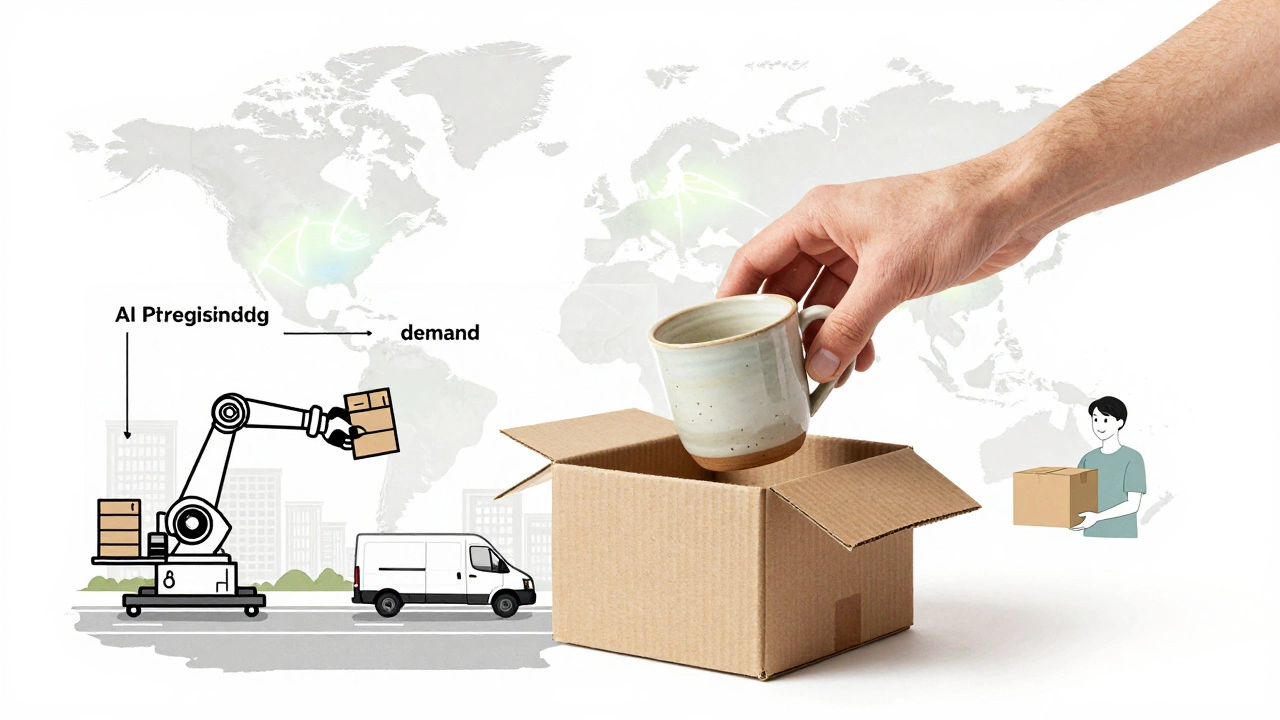
- Inventory management - Products are stored in warehouses, often in multiple locations. AI predicts what will sell where, so items are already near the buyer before they even click buy.
- Fulfillment - When an order comes in, robots or workers pick the item, pack it, and label it. Some warehouses process 10,000 orders a day.
- Shipping - Packages go to carriers like FedEx, UPS, Canada Post, or regional players. E-commerce brands negotiate bulk rates. Many now use hybrid models: local couriers for same-day, national carriers for longer distances.
- Tracking and delivery - Customers expect real-time updates. A package stuck in transit? That’s a complaint. A delivery at 9 a.m. with a photo proof? That’s loyalty.
- Returns - Up to 30% of online clothing orders get returned. Companies now design return processes to be as easy as buying. Prepaid labels, drop boxes, and automated refunds are standard.
Logistics isn’t just a cost center anymore-it’s a competitive advantage. If your shipping is slow, your customers will go elsewhere. If your returns are messy, they’ll never come back.
What Makes a Good E-Commerce Experience?
It’s not just about having a website. It’s about the entire journey.
Think of it like this: a customer finds your product on Google. They land on your page. They read reviews. They compare prices. They add it to cart. They pay. They wait. They get it. They open it. They use it. Maybe they return it. Then they decide whether to buy again.
At every step, something can go wrong:
- Slow website load time? They leave.
- Hidden shipping costs? They abandon cart.
- No tracking info? They call customer service.
- Wrong item shipped? They leave a bad review.
- Return takes two weeks? They never shop with you again.
The best e-commerce brands fix these before they happen. They use tools like:
- Automated inventory sync across channels
- Real-time shipping rate calculators
- AI-powered customer service chatbots
- Integrated return management systems
It’s not magic. It’s planning. And it starts with understanding that your product doesn’t end when the customer clicks buy. It ends when they’re happy with what they received.
What’s Next for E-Commerce?
By 2026, e-commerce will be even more personal and faster. Here’s what’s coming:
- Same-day delivery in more cities - Not just big metros. Even mid-sized towns in Ontario and Quebec are getting same-day service.
- AI-generated product recommendations - Instead of “customers also bought,” you’ll get suggestions based on your weather, your recent walks, even your social media posts (with permission).
- Drone and robot deliveries - Companies like Amazon and Uber are testing autonomous delivery bots in Toronto, Calgary, and Montreal. They’re slow, but they’re here.
- Carbon-neutral shipping - More customers care about sustainability. Brands now offer “green delivery” options, using electric vans or carbon offsets.
- One-click returns - No forms, no labels. Just tap “return” in the app, and a courier picks it up within two hours.
The future isn’t about selling more. It’s about making the experience so smooth, customers forget they’re shopping online at all.
Frequently Asked Questions
Is e-commerce the same as online shopping?
Yes, online shopping is a type of e-commerce. But e-commerce includes more than just shopping. It also covers digital services like software subscriptions, online courses, streaming memberships, and even digital downloads like music or eBooks. Online shopping is the most visible part, but e-commerce is the full system behind it.
Do I need a big budget to start an e-commerce business?
No. You can start with under $500. Platforms like Shopify let you build a store for $29/month. You can source products from suppliers like AliExpress or local wholesalers. Use free tools like Canva for product photos and Instagram for marketing. The real cost isn’t the website-it’s shipping, returns, and customer service. Start small, test one product, and scale when you find what sells.
Why do some online stores have slow shipping?
Mostly because they’re trying to cut costs. Big brands like Amazon and Walmart pay for fast shipping because they sell enough volume to negotiate better rates. Small sellers often use cheaper carriers or ship from a single warehouse far away. That adds days. To fix this, use fulfillment centers near your customers. Many platforms offer warehousing services that automatically ship from the closest location.
Can I sell internationally with e-commerce?
Yes, but it’s complicated. You need to handle customs, taxes, currency conversion, and international shipping rules. Platforms like Shopify and BigCommerce have built-in tools for this. But the biggest hurdle is returns. Sending a return from Germany back to Canada costs more than the item. Many sellers use local return partners or offer store credit instead of refunds for international orders.
What’s the biggest mistake new e-commerce sellers make?
They focus too much on the website and not enough on logistics. You can have the prettiest store in the world, but if your orders take a week to ship or your returns are a nightmare, customers won’t come back. The best e-commerce businesses treat shipping and returns as core parts of their product-not afterthoughts.
Next Steps for Starting Your Own E-Commerce Store
If you’re thinking about launching your own online store, here’s what to do next:
- Choose one product you can source reliably. Don’t try to sell 100 things at once.
- Sign up for Shopify or WooCommerce. Both have free trials.
- Take clear photos and write honest product descriptions. No stock images.
- Set up shipping rates using your local carrier’s API. Offer free shipping over $50.
- Test your return process. Print a fake return label and see how easy it is.
- Launch to 10 friends. Ask them to buy, return, and tell you what was confusing.
- Use Facebook or Instagram ads to reach 500 people in your city. See what converts.
Don’t wait for perfection. Start with a minimum viable store. Fix the problems as you go. The e-commerce world moves fast. The people who win aren’t the ones with the most money-they’re the ones who listen to their customers and ship faster than everyone else.