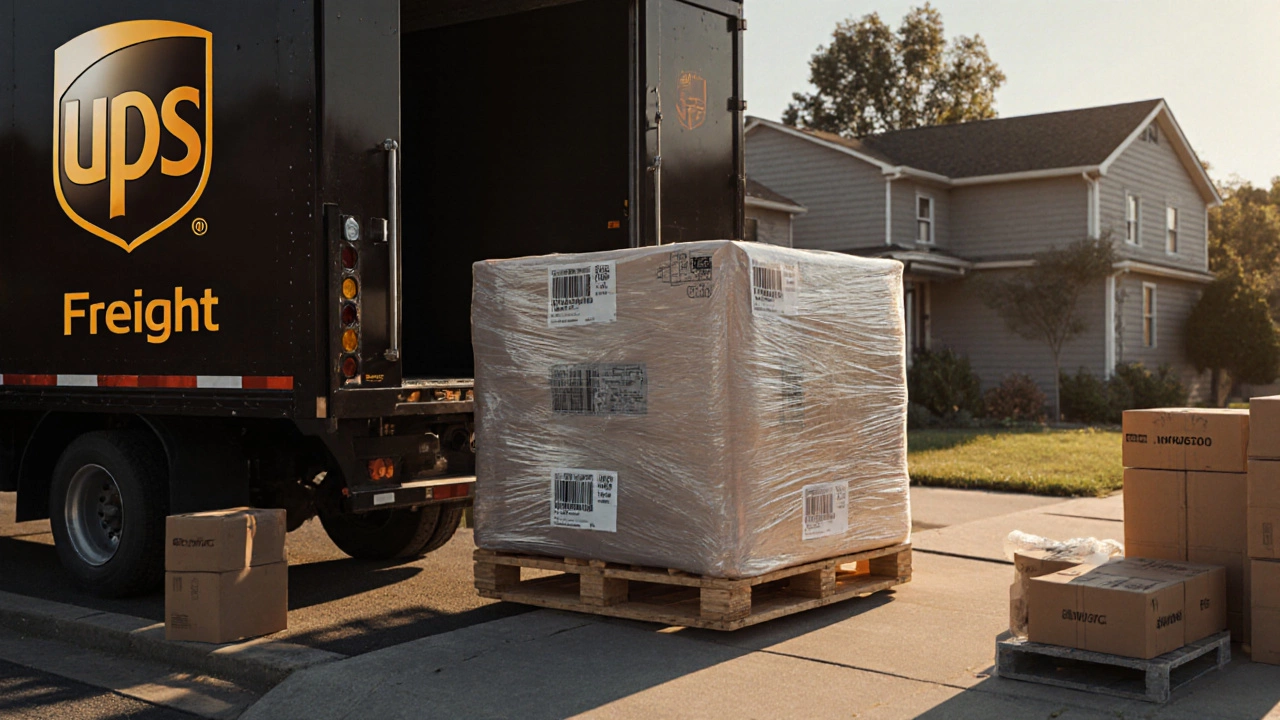
UPS Freight: What It Is, How It Works, and What You Need to Know
When you need to ship something heavy—like a motorcycle, industrial equipment, or a pallet of goods—you’re likely looking at UPS Freight, a specialized service within UPS that handles large, heavy, or palletized shipments that standard couriers can’t move. Also known as LTL (Less Than Truckload) shipping, it’s the go-to option for businesses and individuals who need to move items too big for a box but not enough to fill a full truck. Unlike regular UPS ground delivery, which handles small packages under 150 lbs, UPS Freight steps in when your item weighs 150 lbs or more. It’s not just about size—it’s about how the item is loaded, secured, and transported across long distances using dedicated freight networks.
UPS Freight works with a network of terminals, trailers, and trained handlers who manage everything from pickup to doorstep delivery. It’s used by warehouses, manufacturers, and even people moving homes with heavy bikes or equipment. The service connects to other major logistics players like FedEx Freight, a direct competitor offering similar LTL services with overlapping coverage areas, and DHL Freight, a global option often chosen for international heavy shipments. What sets UPS Freight apart is its integration with the broader UPS system—you can track your freight the same way you track a small package, and you can often combine it with other UPS services for end-to-end logistics.
People often ask if UPS Freight is cheaper than hiring a full truck. The answer? Usually yes—if you don’t need the whole truck. LTL shipping means your shipment shares space with others, cutting costs. But pricing isn’t just about weight. Dimension, distance, freight class, and pickup/delivery locations all play a role. That’s why you’ll see big price swings even for similar items. If you’ve ever shipped a bike across the country, you know how confusing it can get. That’s why many turn to tools like UPS WorldShip, a software platform used by businesses to manage bulk UPS Freight shipments, print labels, and schedule pickups automatically to get accurate quotes and avoid surprise fees.
What you won’t find in most ads is how messy things can get if you don’t prepare. Loose items, poor packaging, or incorrect weight estimates can delay your shipment or cost you extra. That’s why the best users—whether they’re moving a Harley or shipping spare parts—take time to measure, label, and document everything. And if you’re comparing carriers, don’t just look at the quote. Check delivery windows, insurance coverage, and whether the service includes lift-gate or inside delivery. These extras matter more than you think.
There’s no single "best" freight carrier. But if you’re in the U.S. and need reliable, trackable, and widely available heavy shipping, UPS Freight is one of the top choices. It’s not perfect—delays happen, and customer service can be hit or miss—but it’s consistent. And with UPS’s massive network, it’s hard to beat for nationwide coverage.
Below, you’ll find real guides and comparisons that break down how UPS Freight stacks up against other carriers, what it actually costs to ship heavy items, and how to avoid common mistakes. Whether you’re shipping a bike, a machine, or just trying to understand your bill, these posts give you the facts—not the fluff.