Logistics Software Cost Estimator
Use this tool to estimate your monthly and annual costs. Pricing varies by vendor, but these estimates reflect average market rates for 2026.
You are staring at a spreadsheet that looks like a game of Tetris gone wrong. Orders are piling up, drivers are calling in with vague updates, and your customers are asking where their packages are. If this sounds familiar, you are not alone. The logistics industry has changed dramatically since the early 2020s, and trying to manage modern supply chains with legacy tools or manual entry is a recipe for disaster.
Choosing the best logistics software isn't about finding a magic bullet. It is about matching specific tools to your biggest pain points. Do you need to track trucks in real-time? Do you need to optimize warehouse picking routes? Or do you just need a better way to bill your clients? In 2026, the market is crowded with options ranging from simple dashboards to complex enterprise suites. This guide cuts through the noise to help you pick the right tool for your operation.
Defining Your Core Needs Before You Buy
Before looking at brand names, you need to know what problem you are solving. "Logistics software" is an umbrella term. Underneath it lie several distinct categories, each serving a different function in your supply chain. Buying a Warehouse Management System (WMS) when your real issue is last-mile delivery visibility is like buying a fancy hammer to fix a leaky faucet.
Start by identifying your primary bottleneck:
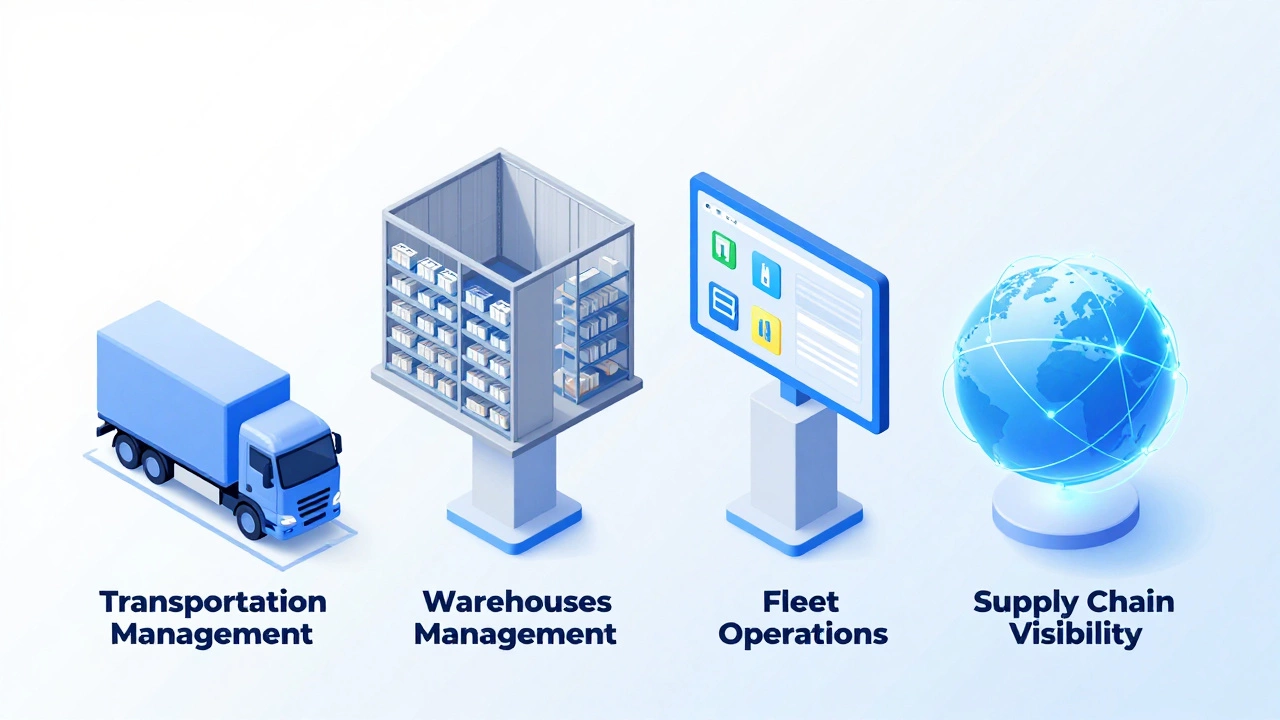
- Transportation Management: If your headaches involve route planning, carrier selection, and freight auditing, you need a Transportation Management System (TMS).
- Inventory & Storage: If items are getting lost in the warehouse, picking errors are high, or stock counts never match reality, you need a WMS.
- Fleet Operations: If you own the vehicles and struggle with maintenance schedules, driver compliance, and fuel costs, you need Fleet Management Software.
- End-to-End Visibility: If you manage multiple modes of transport and need a single view of goods moving from factory to doorstep, you need a Supply Chain Control Tower platform.
Most mid-sized companies start with one of these pillars and expand later. Trying to implement a full-suite ERP on day one often leads to project failure due to complexity and user resistance.
Top Contenders in the Logistics Software Market
The landscape shifts quickly, but certain platforms have established themselves as leaders due to reliability, integration capabilities, and user experience. Here is how the top contenders stack up in 2026.
| Platform | Primary Strength | Best For | Integration Ease |
|---|---|---|---|
| Oracle NetSuite | Full ERP + Logistics Suite | Growing mid-market companies needing finance and ops unified | High (Native ecosystem) |
| SAP Business One | Structured Data & Reporting | Manufacturers and distributors with complex BOMs | Medium (Requires partner setup) |
| ShipStation | E-commerce Fulfillment | DTC brands selling via Shopify, Amazon, eBay | Very High (Plug-and-play) |
| Descartes | Freight & Route Optimization | Third-party logistics providers (3PLs) and large fleets | High (API-first) |
| Manhattan Associates | Advanced Warehouse Automation | Large-scale distribution centers with robotics | Low (Complex implementation) |
Oracle NetSuite is a cloud-based business management suite that integrates financials, CRM, and inventory. It shines because it eliminates data silos. When a sale happens, inventory adjusts automatically, and shipping labels can be generated without switching apps. However, it comes with a steep learning curve and significant monthly costs.
On the other end of the spectrum, ShipStation dominates the e-commerce space. If you are running a DTC brand, its ability to compare rates across carriers instantly and print labels in bulk saves hours every week. It is less useful if you are managing palletized freight or international customs clearance.
Key Features That Matter in 2026
Technology moves fast. Features that were standard five years ago are now table stakes. When evaluating software today, look for these non-negotiable capabilities.
Real-Time Visibility and Tracking
Your customers expect Amazon-level transparency. They want to see exactly where their package is, not just "in transit." Modern logistics software must integrate with GPS telematics and carrier APIs to provide live location updates. Look for platforms that offer proactive exception management-alerts that tell you a truck is stuck in traffic before the customer calls you to complain.
AI-Driven Route Optimization
Manual route planning is dead. Algorithms now consider traffic patterns, weather, driver break laws, and vehicle capacity to create optimal paths. Tools like Route4Me or built-in features in larger suites use machine learning to reduce fuel consumption and improve on-time delivery rates. In 2026, static routing is considered negligent due to rising fuel costs and carbon regulations.
Seamless Integrations
Your logistics software does not exist in a vacuum. It must talk to your e-commerce platform (Shopify, Magento), your accounting software (QuickBooks, Xero), and your warehouse hardware (scanners, conveyors). Check the app marketplace. If the software requires custom coding to connect to your existing stack, walk away. API documentation should be clear, and webhooks should be supported for real-time data sync.
Mobile Accessibility
Drivers and warehouse staff do not sit at desks. They need robust mobile apps that work offline in basements or remote areas. The interface must be thumb-friendly and intuitive. If your team needs a two-hour training session just to scan a barcode, the UX is flawed.
Budgeting and Pricing Models
Pricing in logistics software varies wildly. Some vendors charge per user, others per shipment, and some use a hybrid model. Be wary of hidden fees.
- SaaS Subscription: Most common. Expect $50-$500 per month for small businesses, scaling to thousands for enterprise tiers.
- Implementation Fees: One-time costs for setup, data migration, and training. These can range from $1,000 to $50,000+ depending on complexity.
- Transaction Fees: Some platforms charge a small fee per label printed or per order processed. Calculate this based on your volume. High-volume shippers can get crushed by these micro-fees.
Always ask for a total cost of ownership (TCO) estimate for three years. A cheaper monthly subscription might hide expensive support contracts or mandatory upgrades.
Common Pitfalls to Avoid
I have seen too many logistics projects fail because companies rushed into implementation without proper planning. Here is how to protect yourself.
Over-customizing early on. Vendors will promise they can build any feature you want. Resist this urge. Standard processes are easier to maintain and upgrade. Only customize when a feature directly impacts your competitive advantage.
Ignoring change management. Software is only as good as the people using it. If your warehouse staff hates the new scanner app, they will find workarounds, and your data will become garbage. Involve end-users in the selection process. Let them test the interface. Their buy-in is critical.
Underestimating data cleanup. Migrating messy data into a clean system is painful. Spend time cleaning your product master data, customer addresses, and supplier information before you switch. Garbage in, garbage out applies doubly here.

Future-Proofing Your Choice
The logistics industry is heading toward greater automation and sustainability. Choose software that supports these trends.
Automation Readiness: As warehouses adopt autonomous mobile robots (AMRs) and automated storage and retrieval systems (AS/RS), your WMS must communicate with them. Ensure the vendor has partnerships with major robotics providers.
Carbon Footprint Tracking: Regulations in the EU and North America are tightening around Scope 3 emissions. Modern logistics software should calculate carbon emissions per shipment and suggest greener alternatives, such as consolidated loads or electric vehicle routes.
Scalability: Can the system handle 10x your current volume during peak seasons? Ask for stress-test results. Cloud-native architectures generally scale better than on-premise solutions.
Making the Final Decision
Selecting the best logistics software is a strategic investment. Start by defining your core problems. Shortlist three vendors that specialize in those areas. Request demos using your own data-not their sanitized sample sets. Talk to their existing customers, especially those in your industry. Finally, negotiate the contract carefully, ensuring exit clauses and data portability are included.
The right tool will turn chaos into clarity. It will give you control over your supply chain, delight your customers with accurate ETAs, and free up your team to focus on growth rather than firefighting. Take the time to choose wisely. Your bottom line depends on it.
What is the difference between TMS and WMS?
A Transportation Management System (TMS) focuses on the movement of goods outside the four walls of your facility. It handles carrier selection, rate shopping, route optimization, and freight auditing. A Warehouse Management System (WMS) manages inventory inside the facility. It controls receiving, put-away, picking, packing, and shipping. Many companies need both, and they often integrate tightly.
Is cloud-based logistics software safer than on-premise?
Generally, yes. Major cloud providers invest billions in cybersecurity, redundancy, and disaster recovery. On-premise solutions rely on your internal IT team to manage backups and security patches. Cloud software also offers easier access for remote teams and automatic updates. However, ensure your vendor complies with relevant data privacy regulations like GDPR or CCPA.
How long does it take to implement logistics software?
Simple tools like label printing apps can be set up in days. Mid-market TMS or WMS implementations typically take 3 to 6 months, including data migration, configuration, and training. Large enterprise ERP deployments can take 12 months or more. Rushing implementation often leads to errors and user rejection.
Can I use free logistics software for my small business?
Yes, but with limitations. Free versions of tools like ShipStation or Freightos offer basic functionality for low-volume shippers. However, they often lack advanced reporting, multi-user access, and priority support. As your volume grows, the inefficiencies of free tools usually cost more in labor time than a paid subscription would.
What integrations are most important for logistics software?
The most critical integrations are with your sales channels (e.g., Shopify, Amazon Marketplace), your accounting software (e.g., QuickBooks, Xero), and major carriers (e.g., FedEx, UPS, DHL). Additionally, integrations with email marketing platforms allow for automated shipping notifications, which significantly reduce customer service inquiries.