International Shipping Rate Estimator & DIM Calculator
Package Details
Dimensions (Inches)
Enter dimensions to check Dimensional Weight charges.
Estimated Results
Your package is large but light. Carriers may charge you for size, not weight.
- Enter details and click Calculate to see estimates.
Shipping internationally used to be a guessing game. You’d call three carriers, get three different quotes, and hope the package actually arrived. Today, with global e-commerce exploding, you need more than just luck-you need a strategy that keeps your margins intact while getting products across borders quickly.
If you are asking which carrier has best international shipping rates, the short answer is: it depends entirely on your package weight, destination, and speed requirements. There is no single "cheapest" carrier for every scenario. However, by understanding how each major player structures their pricing, you can consistently find the lowest rate for your specific shipment.
The Big Four: A Quick Breakdown of Pricing Models
To navigate international shipping costs, you first need to understand who you are dealing with. The market is dominated by four primary entities, each with a distinct pricing philosophy.
USPS is the United States Postal Service, a government-operated postal service known for low-cost entry-level international options. It relies on bilateral agreements with other countries' postal services, which often keeps costs down for small packages but results in slower delivery times and less tracking visibility once the package leaves the US.
UPS is United Parcel Service, a private logistics company offering robust global networks and reliable tracking. They charge based on dimensional weight and distance, making them expensive for light, bulky items but competitive for heavier, dense shipments.
FedEx is a multinational express transportation company specializing in air freight and time-definite deliveries. Like UPS, they focus on speed and reliability, often commanding premium prices for next-day or two-day international delivery.
DHL Express is a German-owned logistics provider that dominates non-US international markets. For shipments originating outside the US, DHL is often the cheapest and fastest option due to its extensive European and Asian hub network.
Weight-Based Winners: Who Wins at Each Tier?
Pricing isn't linear. A carrier that is cheapest for a letter might be the most expensive for a box. Here is how the rates typically stack up in 2026 based on package weight.
Lightweight Packages (Under 4 lbs / 2 kg)
For items like jewelry, documents, or small accessories, USPS usually takes the crown. Their Global Priority Mail service offers a flat-rate structure that is hard to beat for small, dense items. If you are shipping a 1-pound package to Canada or Mexico, USPS Global First Class Package International is often $5-$10 cheaper than any private carrier.
However, if you need faster delivery or better tracking, UPS’s SurePost or FedEx Home International may offer competitive rates through negotiated discounts, especially if you ship volume.
Medium Packages (4-20 lbs / 2-9 kg)
This is the "sweet spot" for e-commerce. Here, the gap between USPS and private carriers narrows. DHL Express becomes highly competitive, particularly for destinations in Europe and Asia. While USPS might still be slightly cheaper on paper, DHL’s transit times are often half as long, reducing the risk of lost packages and customer service headaches.
UPS and FedEx compete head-to-head here. Check both; sometimes one has a promotional rate for a specific region that the other doesn’t.
Heavy Packages (Over 20 lbs / 9 kg)
For heavy items, private carriers often become more cost-effective per pound because they optimize air freight loads better than postal services. UPS Ground Saver or FedEx International Economy can offer significant savings over USPS Priority Mail for weights above 20 pounds, especially when shipping to major urban centers.
| Carrier | Best For Weight | Avg. Delivery Time | Tracking Quality | Price Range (Est.) |
|---|---|---|---|---|
| USPS | Under 4 lbs | 7-21 days | Moderate | $Low |
| DHL Express | 4-20 lbs | 1-3 days | Excellent | $Moderate |
| UPS | 20+ lbs | 3-7 days | Excellent | $Moderate-High |
| FedEx | All weights | 1-5 days | Excellent | $High |
The Hidden Cost: Dimensional Weight
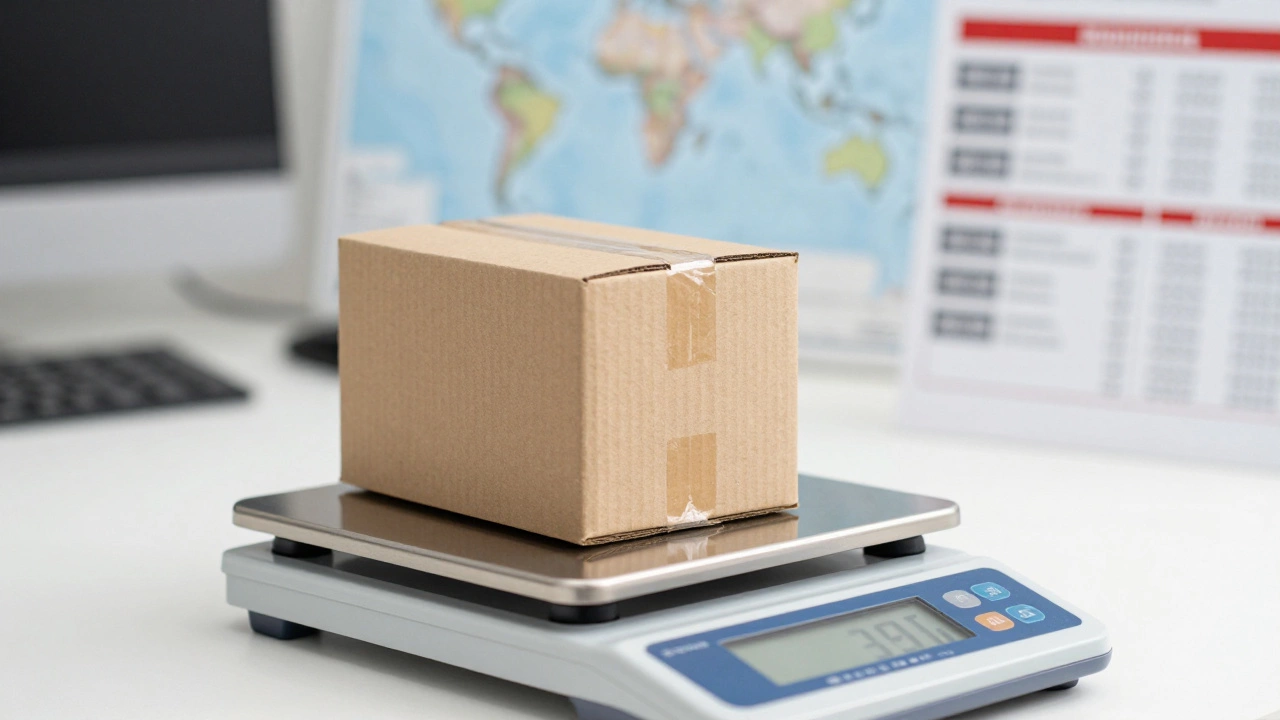
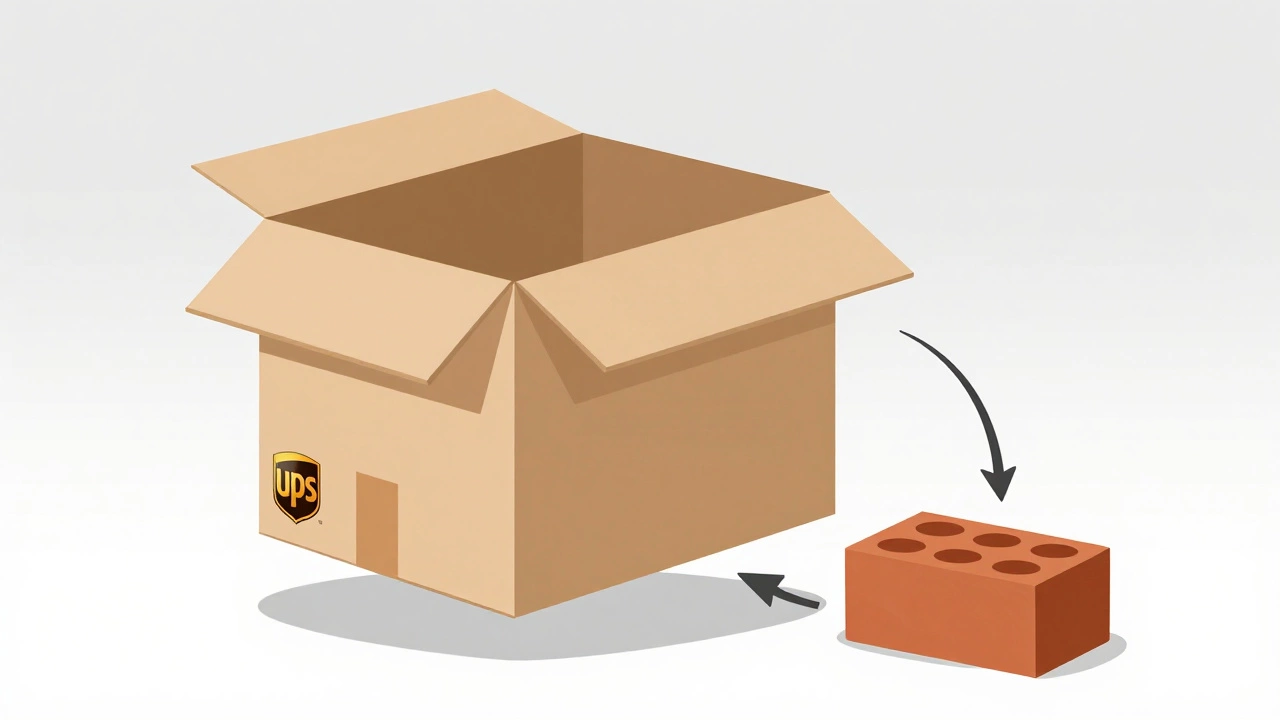
You cannot talk about rates without discussing dimensional weight (DIM). This is where many shippers get burned. Carriers like UPS, FedEx, and DHL do not just charge by what your package weighs on a scale. They charge by what it *could* weigh based on its size.
The formula is generally: (Length x Width x Height) / Divisor. The divisor changes by carrier and region (often 139 or 165 for domestic, but varies internationally).
If you ship a lightweight pillow in a large box, USPS might charge you by actual weight. UPS will likely charge you by dimensional weight, potentially doubling your cost. To save money, shrink-wrap your items and use the smallest possible box. This simple step can reduce your shipping bill by 20-30%.
Negotiated Rates vs. Retail Prices
The rates you see on the carrier websites are "retail" prices. These are designed to be uncompetitive for businesses. If you ship more than 10-20 packages a month, you should never pay retail.
You can access discounted rates through:
- Account Discounts: Opening a free account with UPS, FedEx, or DHL often gives you an immediate 10-20% discount off retail rates.
- Third-Party Aggregators: Services like Pirate Ship, Shippo, or EasyShip negotiate bulk rates with carriers and pass those savings to you. Pirate Ship, for example, offers deeply discounted USPS rates that are often lower than what even large businesses pay.
- Freight Forwarders: For high-volume shippers, working with a freight forwarder can unlock even lower rates by consolidating shipments.
Regional Nuances: Where Are You Shipping?
Your destination matters more than you think. Carrier networks are not uniform globally.
Canada and Mexico: USPS remains very strong here due to proximity and established postal treaties. UPS and FedEx are competitive for faster delivery but often charge border crossing fees.
Europe: DHL Express is the king. Because DHL is headquartered in Germany, their network in Europe is unparalleled. They often have lower fuel surcharges and better customs clearance processes than US-based carriers.
Asia and Australia: DHL and FedEx dominate. UPS is also strong, but check local delivery partners. In some remote areas, a local courier contracted by DHL might deliver faster and cheaper than a direct UPS truck.

Customs Duties and Taxes: The Silent Budget Killer
When comparing rates, remember that the shipping cost is only part of the equation. Customs duties, import taxes, and brokerage fees can add 10-30% to the final cost for the recipient.
DHL and UPS often include "Delivered Duty Paid" (DDP) options, where they handle customs clearance and collect duties from the buyer upfront. This reduces delays but adds a fee. USPS typically uses "Delivered Duty Collect" (DDC), meaning the recipient pays duties upon arrival. This can lead to unhappy customers who refuse to pay unexpected fees, resulting in returned packages and lost revenue.
Always calculate the total landed cost (shipping + insurance + duties) before choosing a carrier. Sometimes a slightly higher shipping rate from a carrier with better customs handling saves you money in the long run.
Pro Tips for Lowering International Shipping Costs
Beyond choosing the right carrier, these strategies can significantly reduce your expenses:
- Use Flat-Rate Boxes Wisely: If your item fits in a USPS Global Express Box, use it. You pay the same rate regardless of weight (up to 4 lbs), which is great for dense, heavy items.
- Consolidate Shipments: Sending two packages separately incurs two sets of base fees. Combining them into one larger package often reduces the per-unit cost.
- Remove Packaging Waste: As mentioned, dimensional weight kills profits. Use poly mailers for clothing instead of boxes whenever possible.
- Leverage Technology: Use shipping software that automatically compares rates from all carriers in real-time. Manual checking is slow and prone to error.
Final Verdict: Which Carrier Should You Choose?
There is no single winner for everyone. Here is your decision matrix:
- Cheapest Overall: USPS (via Pirate Ship or similar aggregators) for packages under 4 lbs.
- Best Balance of Price and Speed: DHL Express for medium-weight packages going to Europe or Asia.
- Best for Heavy Items: UPS or FedEx for packages over 20 lbs, especially with negotiated accounts.
- Best for Reliability and Tracking: FedEx or UPS when customer satisfaction and proof of delivery are critical.
Start by auditing your last 100 shipments. Look at the weight, dimensions, and destinations. Then, run those same details through a rate comparison tool. You’ll likely find that switching carriers for specific routes could save you thousands annually.
Is USPS cheaper than UPS for international shipping?
Yes, for lightweight packages under 4 pounds, USPS is typically significantly cheaper than UPS. However, for heavier packages or those requiring fast delivery, UPS may offer better value due to faster transit times and more reliable tracking.
Which carrier is best for shipping to Europe?
DHL Express is widely considered the best carrier for shipping to Europe. Due to its European headquarters and extensive network, DHL often provides faster delivery times and lower rates compared to US-based carriers like UPS and FedEx for this region.
How can I get discounted international shipping rates?
You can get discounted rates by opening business accounts with carriers like UPS, FedEx, or DHL, which offer immediate percentage discounts. Additionally, using third-party shipping platforms like Pirate Ship, Shippo, or EasyShip allows you to access pre-negotiated bulk rates without needing high volume yourself.
What is dimensional weight and why does it matter?
Dimensional weight is a pricing method used by carriers to account for the space a package occupies relative to its actual weight. It matters because if your package is large but light, you may be charged based on its size rather than its weight, leading to higher costs. Using smaller packaging can reduce these charges.
Does FedEx offer better tracking than USPS for international shipments?
Yes, FedEx generally offers superior tracking visibility for international shipments. USPS tracking often stops updating once the package enters the destination country's postal system, whereas FedEx maintains end-to-end tracking through its own global network or partner couriers.